

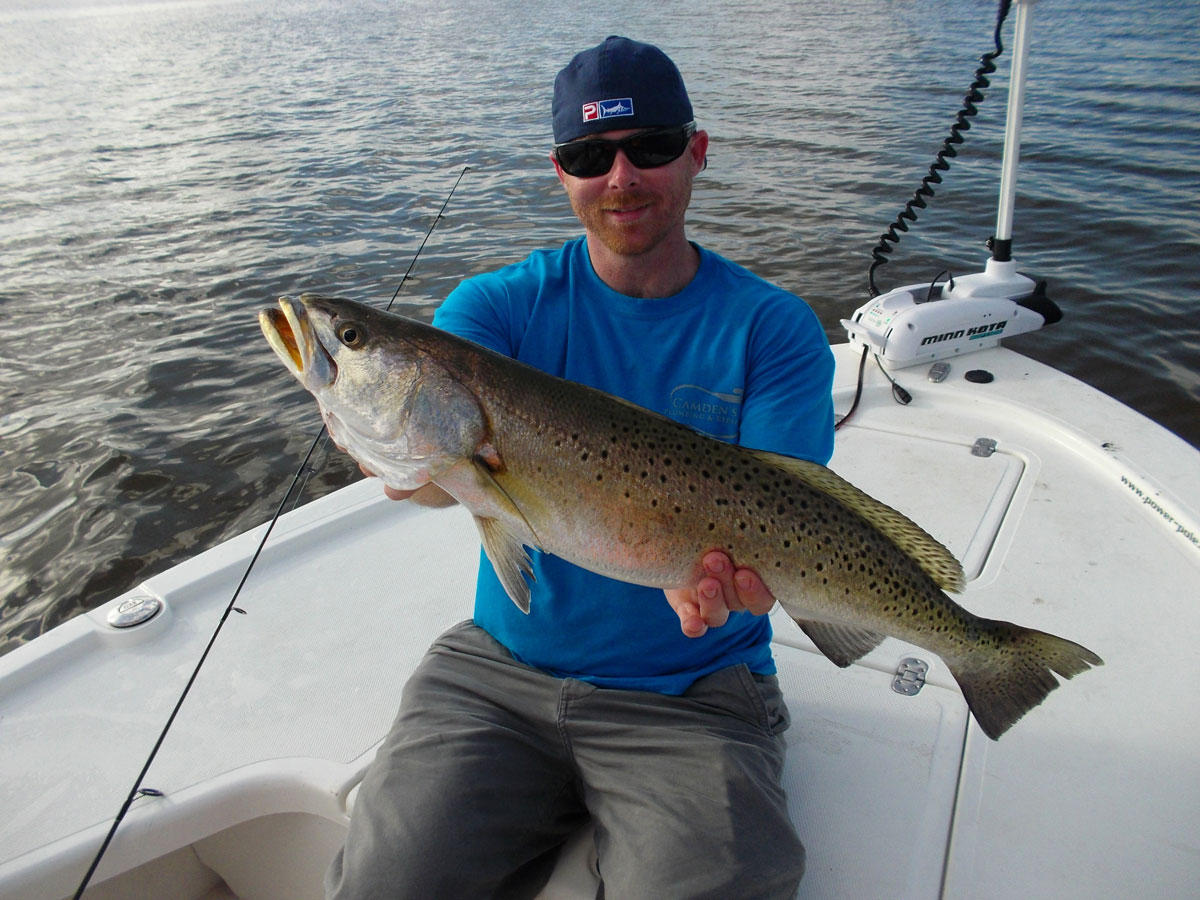
Several factors play into a special topwater bite for redfish, specks on coastal New River
The morning was so calm the fishermen could hear the clacking of the rattles in the topwater lures they were working across the shallow bay off the Intracoastal Waterway a few miles south of Sneads Ferry. Capt. Allen Jernigan was coaching the fishermen on correct speed and the “walking-the-dog” motion when he noticed a small wave appear behind one of the lures. Jernigan had difficulty containing his excitement at the red drum stalking the lure, but he managed to stay calm and continued coaching the fisherman.
That’s it,” Jernigan said. “Just leave that little bit of slack line and lightly pop the rod to tighten it. That will make the lure move side to side and look like an injured mullet. The object isn’t to see how quickly you can retrieve it. You want to cover ground, but be careful not to work the lure too fast or you’ll pull it away from fish.
“You’ve got a drum following your lure now,” Jernigan said, without changing the tone of his voice. “Don’t change anything, just keep it coming, and we’ll see pretty soon if it’s hungry or just looking.”
The red followed the lure almost all the way to the boat before striking. When it decided to attack, it crashed the lure hard. The strike was sudden, and the fishermen hadn’t spotted the fish, so he didn’t know it was there until it hit, and he drove the hook point home perfectly.
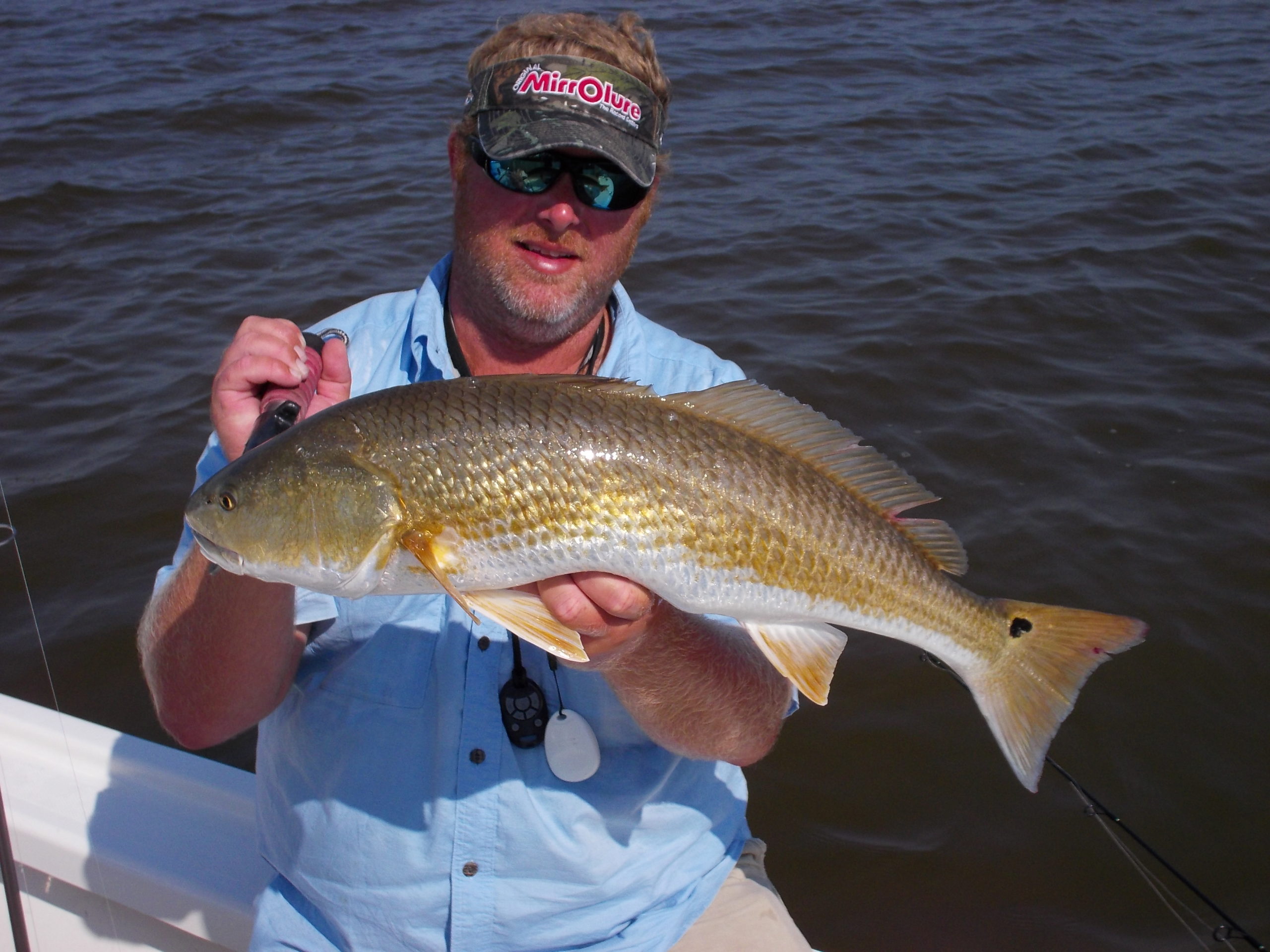
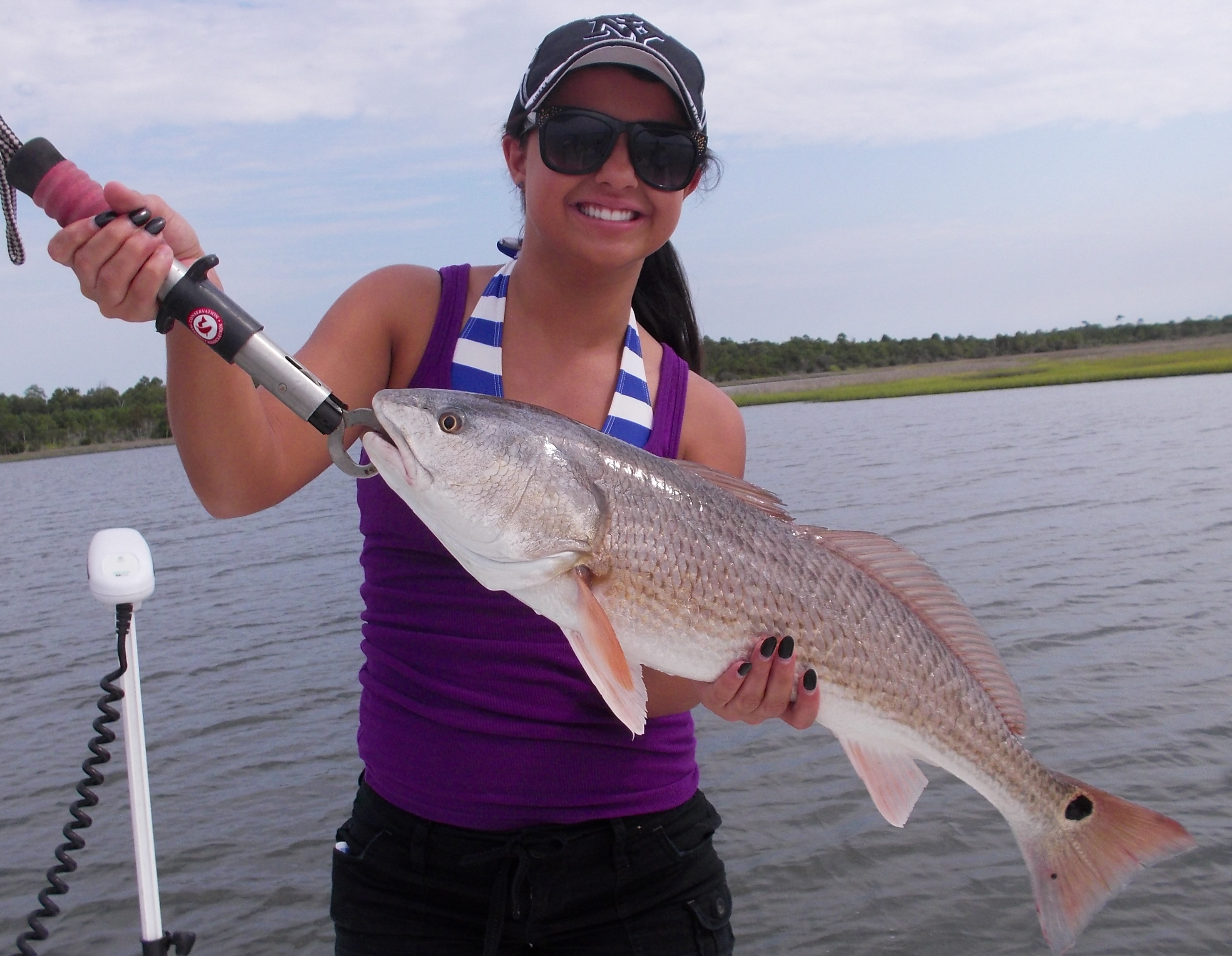
The fish surged away but tired after a few runs and allowed itself to be led back to the boat and landing net. Jernigan was as happy as the fisherman and was smiling broadly when he scooped up the tired fish, pronounced it as a 20-incher and released it.
“You did that just right,” Jernigan said to the fisherman. “You let it grab the lure and then set the hook after you felt it. There are a lot of experienced fishermen who would have missed that fish because they tried to set the hook when the fish charged the lure rather than waiting until they felt it.”
A few more puppy drum were spread across the shallow bay, and with the action slow, Jernigan switched to gold spoons and soft plastics, hoping the reds might hit better below the surface and trout and flounder might also show some interest.
Sure enough, the action picked up, with a few keeper flounder that were added to the livewell, and a few lower-slot drum that were released.
“Some days, these drum go nuts after topwaters, and sometimes they’re just not as interested,” Jernigan said. “These bays hold flounder and a few trout, too, and when we made the switch, we caught a few. Once the sun gets up a little more, we’ll move and see if we can’t find a good topwater bite.”
If the idea of fishing topwater baits and expecting a good bite in the middle of July, in the middle of the morning, seems unusual, it is, but it’s a bite that Jernigan, who runs Breadman Ventures Charters, has come to expect and count on.
Working his boat back to the ICW as the tide dropped, Jernigan’s party caught a few more red drum and flounder, but the fishing was far closer to steady than stellar, so Jernigan decided to head for the New River. Running up the river, he left the channel and moved closer to the bank, running just off the flat that extends out from the bank, looking for feeding fish.
Several miles up the river, Jernigan spotted what he was looking for and turned towards a place where the water looked disturbed. He ran to within a hundred yards or so and slowed, then cut off the outboard and eased over the trolling motor.
“This is what we’re looking for,” Jernigan said, pointing to where a school of mullet minnows was running across the surface, fleeing as if their lives depended on it — and they did. Right behind them, fish cut the water in hot pursuit.
“We’re back to the topwaters here,” Jernigan said, passing out rods rigged with MirrOlure Top Pups and She Pups. “They’re feeding much more aggressively here than we saw earlier. You still need to wait until you feel the fish to be able to set the hook, but they’ll be chasing it hard.
“Those are mostly red drum, but there are usually also some big trout feeding with them. Occasionally the trout will get up in the thick of things, but they like to work around the edges. Pay attention to the water, and you may see some swim out toward us. When drum bust these schools of minnows, they go everywhere, and fish will be chasing them. This should be a lot of fun.”
Jernigan cast a few feet in front of one streaking fish and was hooked up after a single twitch of his lure. Another fisherman got excited, tried to set the hook early and jerked his lure away from one fish, only to have another attack as soon as it settled. The fish were feeding so wildly they didn’t spook even when they ran right past the boat.
“That’s one you might want to keep,” Jernigan said after netting a big red. “It will be 25 1/2 to 26 inches, and the top of the slot is 27.”
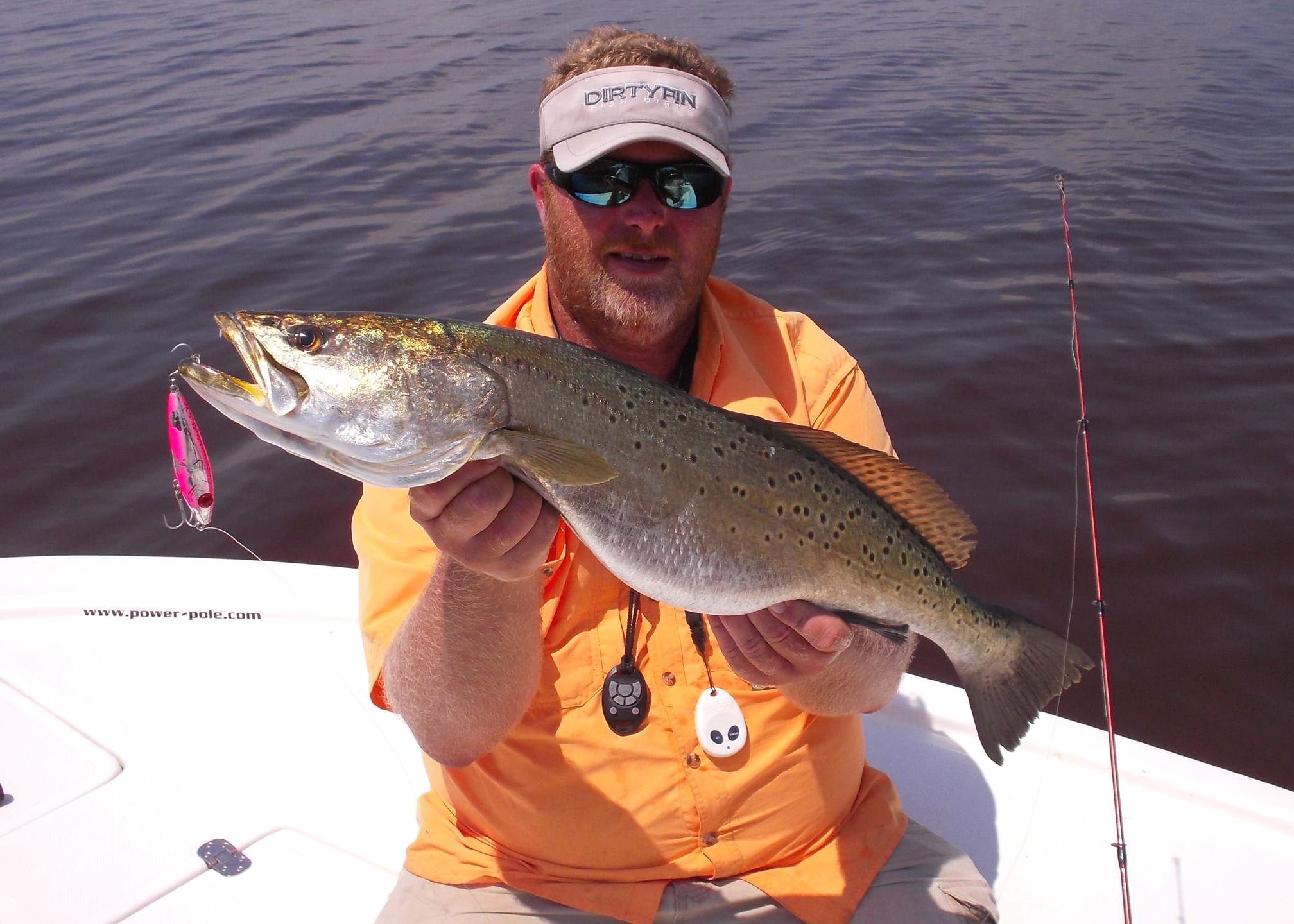
The crazy action produced mostly red drum, but also a couple of nice speckled trout. After the water calmed, Jernigan said he thought the fish were still there but had scattered the minnows and were feeding below the surface. When several more minutes fishing spoons, suspending baits and soft plastics, Jernigan headed upriver again to try and find another school on top.
Our summer topwater fishing is different than most people think,” Jernigan said. “I guess it goes with the New River, which is different than most other rivers in North Carolina and maybe a lot of the coast.
“Most people think the best topwater action should be early mornings and late afternoon, and I understand that’s the way it is many places,” Jernigan said. “However, I have found the best action here to be during the middle of the day. When those big schools of red drum start chasing mullet minnows and menhaden, the deal is on, and for some reason that usually happens during the middle of the day.
“We see mostly red drum, but there are usually a few hog trout mixed in around the edge of the red,s and we sometimes also see big bluefish and black drum. This is a unique area and a unique fishery.”
Several miles upriver, Jernigan spotted another school busting minnows on the surface. This school kept moving, but he stayed in front of them, fighting a couple, then pickin gup and pulling back in front of them and repeating the scene three times.
DESTINATION INFORMATION
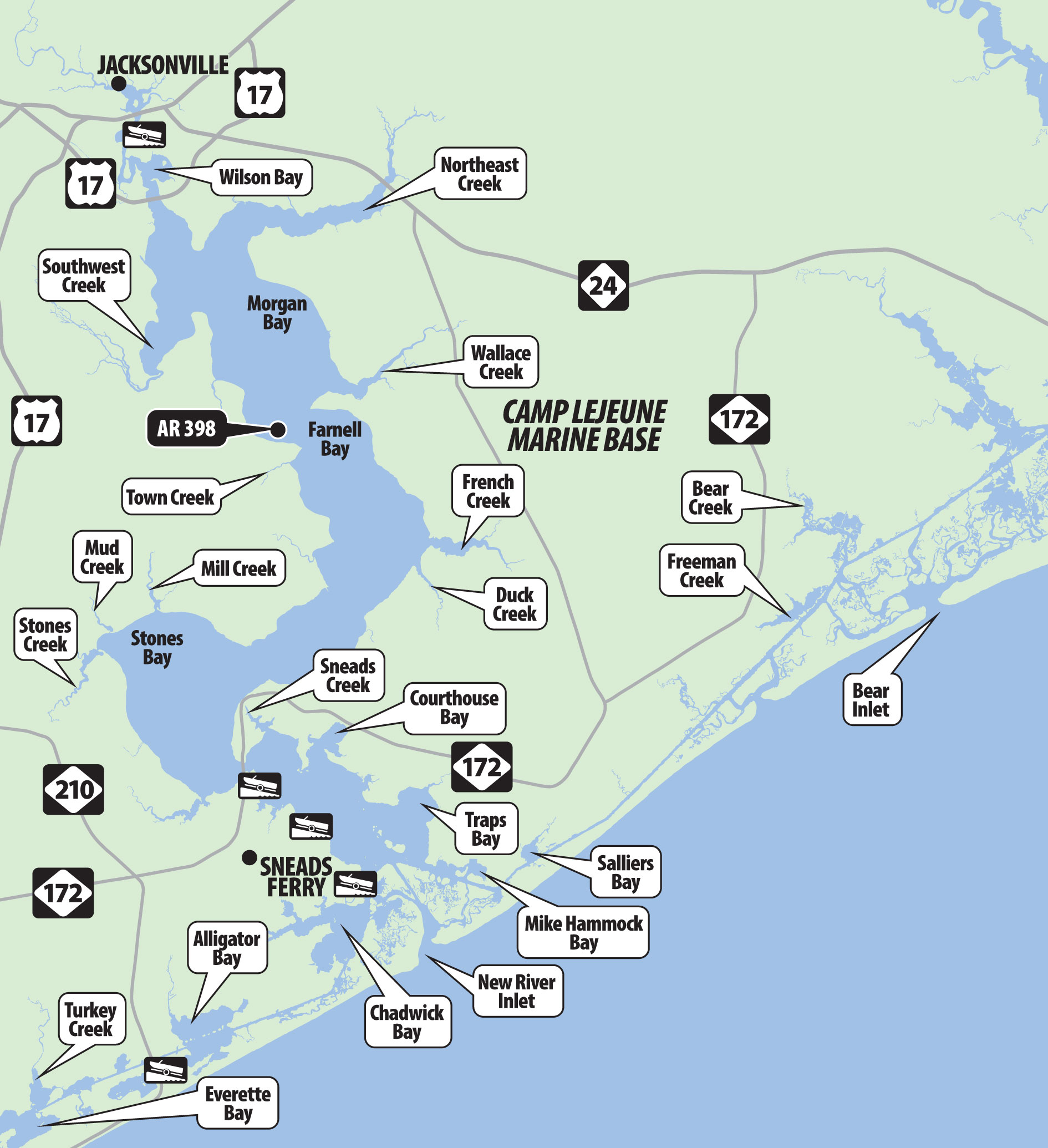
HOW TO GET THERE — Sneads Ferry is at the junction of the New River and Intracoastal Waterway in Onslow County. NC 172 skirts the edge of town as it runs from US 17 to the southern gate at Camp Lejeune. US 17 is the easiest way to reach Sneads Ferry from the north; several highways cross I-40 to the south and run to US 17. An NCWRC ramp is at Fulcher’s Landing on SR 1557, a mile off NC 172. Another NCWRC ramp is under the NC 210 bridge on the Topsail Beach side of the ICW.
WHEN TO GO — Flounder, trout and red drum reside in the waters around Sneads Ferry year-round, but the action is most exciting during the summer, when reds and specks are feeding aggressively and will hit topwaters.
TACKLE/TECHNIQUES — Medium-light to medium action spinning or baitcasting tackle is ideal. Reels should be spooled with 10- to 17-pound line; mono will work, but braided line is more sensitive. An 18-inch section of fluorocarbon leader is preferred. Good topwater baits include Top Pugs, She Pups and Top Dog Jr.s. When fishing below the surface, go with MirrOlure MR 17s and 27s, MirrOdines, weedless spoons in black and gold, and soft plastics.
FISHING INFO/CHARTERS — Capt. Allen Jernigan, Breadman Ventures Charters, 910-467-1482, www.breadmanventures.com; New River Marina, 910-327-2106; East Coast Sports, 910-328-1887, www.eastcoastsports.com, 910-328-1887. See also Guides and Charters in Classifieds.
ACCOMMODATIONS — Holiday Inn Express Hotel and Suites, Sneads Ferry, 888-465-4329, www.hiexpress.com/sneadsferrync; The Seaward Inn, 910-347-0469, www.theseawardinn.com; Topsail Shores Inn, 910-685-0969, www.topsailshoresinn.com; Onslow County Tourism Office, www.onslowcountytourism.com.
MAPS — Capt. Segull’s Nautical Charts, 888-473-4855, www.captainsegullcharts.com; Sealake Fishing Guides, 800-411-0185, www.thegoodspots.com; GMCO’s Chartbook of North Carolina, 888-420-6277, www.gmcomaps.com.
Be the first to comment