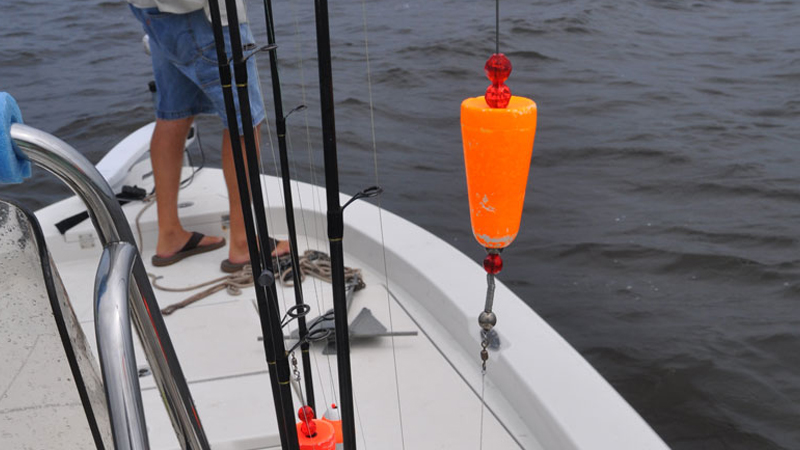
Popping corks have been in use much longer than most people think
Rupert D. Cochran of Houston, Texas, was granted the first popping-cork design patent Jan. 9, 1940. However, other sources point to another Texan, Jack Devoti, getting a patent for a popping cork on April 17, 1956. Cochran’s patent includes the cork design and wire running through it, but not the full rig.
However, Cochran wrote in his patent application, accompanied by a drawing: “An object of the invention is to provide a float of the character described for use on fishing lines and which will tend to remain at the same location while fishing. Another object of the invention is to provide a float of the character described which is so shaped as to cause an unusual ripple or agitation at the surface of the water when the line is jerked.”
That’s exactly what a popping cork does when used properly
Dennis and Wes Barbour of Carolina Beach’s Island Tackle & Hardware use popping-cork rigs to fish for spotted seatrout in water 2 to 8 feet deep, but red drum also will hit baits fished under popping corks, which keep live baits from free-swimming into trouble, keep them off the bottom where they can snag, and create a sound similar to a shrimp jumping or another gamefish chasing its prey — two sounds that attract predators.
The Barbours prefer Cajun Thunder popping corks, but Wes Barbour said he alters his corks slightly.
“I replace the wire that comes on rigs with 4-strand, 7×7 stainless-steel shark leader cable,” he said. “It’s flexible, but it won’t foul your leader (when you cast). It also helps when you’re throwing into the wind. When there’s no wind, you don’t even notice you have a popping cork rig tied on.”

Click here to see a unique popping cork that solves the problem of the occasional fish striking the cork.