

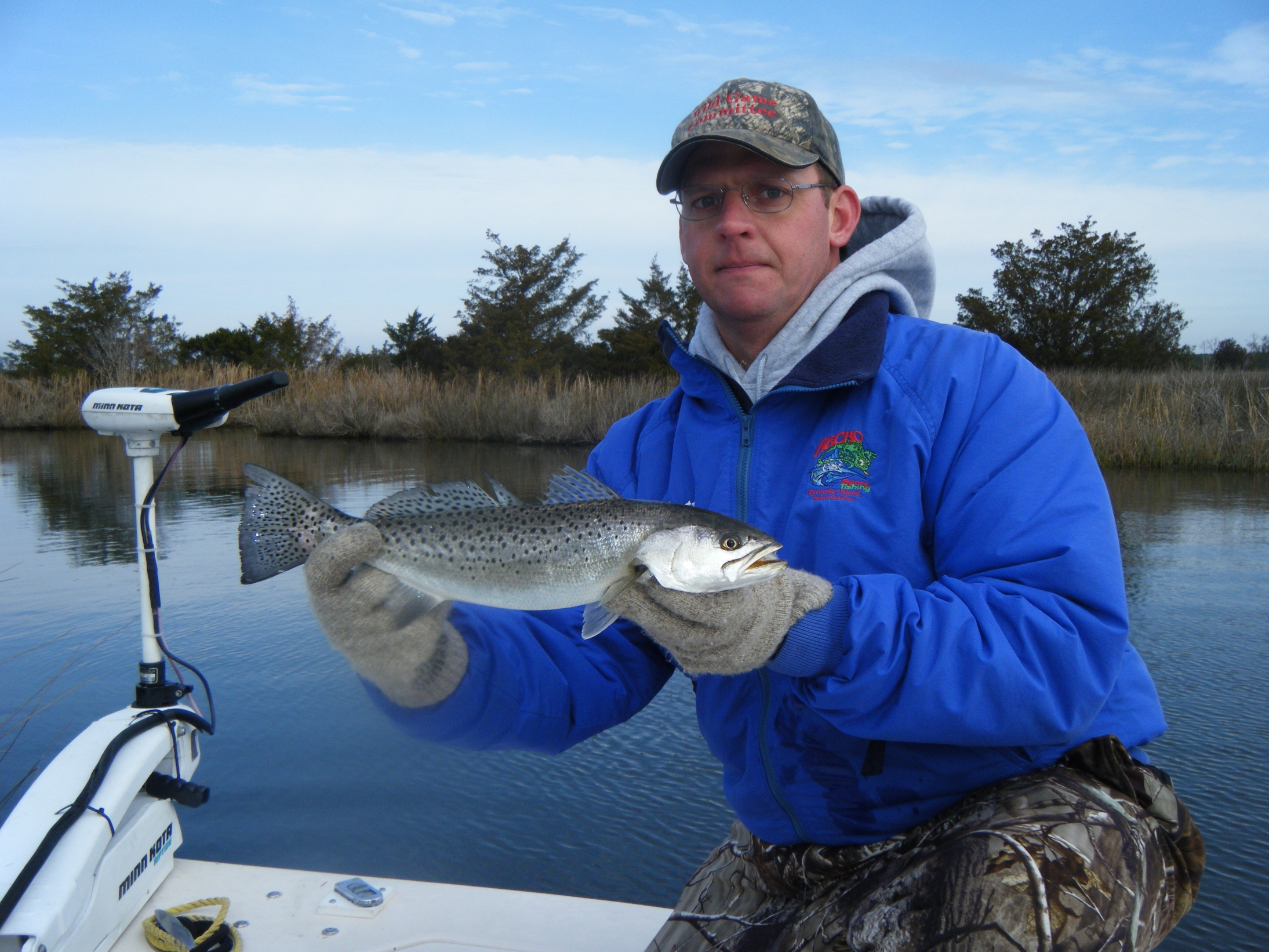
Anglers targeting the Pamlico Sound’s speckled prize during the winter will have more to worry about than which color of MirrOlure to tie on. Wintertime fishing and its chilly water and blustery weather can be hazardous to one’s health.
When temperatures plummet to seasonal lows, most fishermen stay home, and probably for good reason. Even the smallest of issues can leader to disaster in extremely cold conditions. The cold water harboring the winter trout is dangerous for any angler taking an unexpected dip, especially, if unconscious or unable to get out of the water quickly and off to safety.
As soon as anyone falls into the bone-chilling river water, the clock begins ticking, with only a limited amount of time available to get to safety.
While the risks are increased in winter, anglers can offset them with increased safety procedures and a collection of critical and recommended safety gear.
Communication is vital, and boaters should ensure there is a functional marine radio (or VHF) and a cell phone on board. Fully-charged batteries and waterproof housings are recommended. An itinerary provided to a loved one or a party onshore will help; it should include an approximate travel plan of all places expected to be fished, and an approximate time of return. An EPIRB (Emergency Position Indicating Radio Beacon) with GPS is helpful, allowing emergency personnel to find boaters in distress.
Boaters running into engine or boat trouble on the water won’t have as many other boaters to call on for help, but commercial towing services are available. Any boater should have a commercial towing membership, and Tow Boat U.S. (800-888-4869) is one of the best companies out there, because of the size of its fleet and the fact that franchise owners are paid for each emergency call, creating an incentive to get to boaters in distress quickly.
It never hurts to inspect all required safety gear and add some special wintertime gear that will provide critical treatment to winter issues. Instant heat packs, emergency blankets and a change of clothes are always good items to have on-board as air and water temperature falls to seasonal lows.

Be the first to comment