

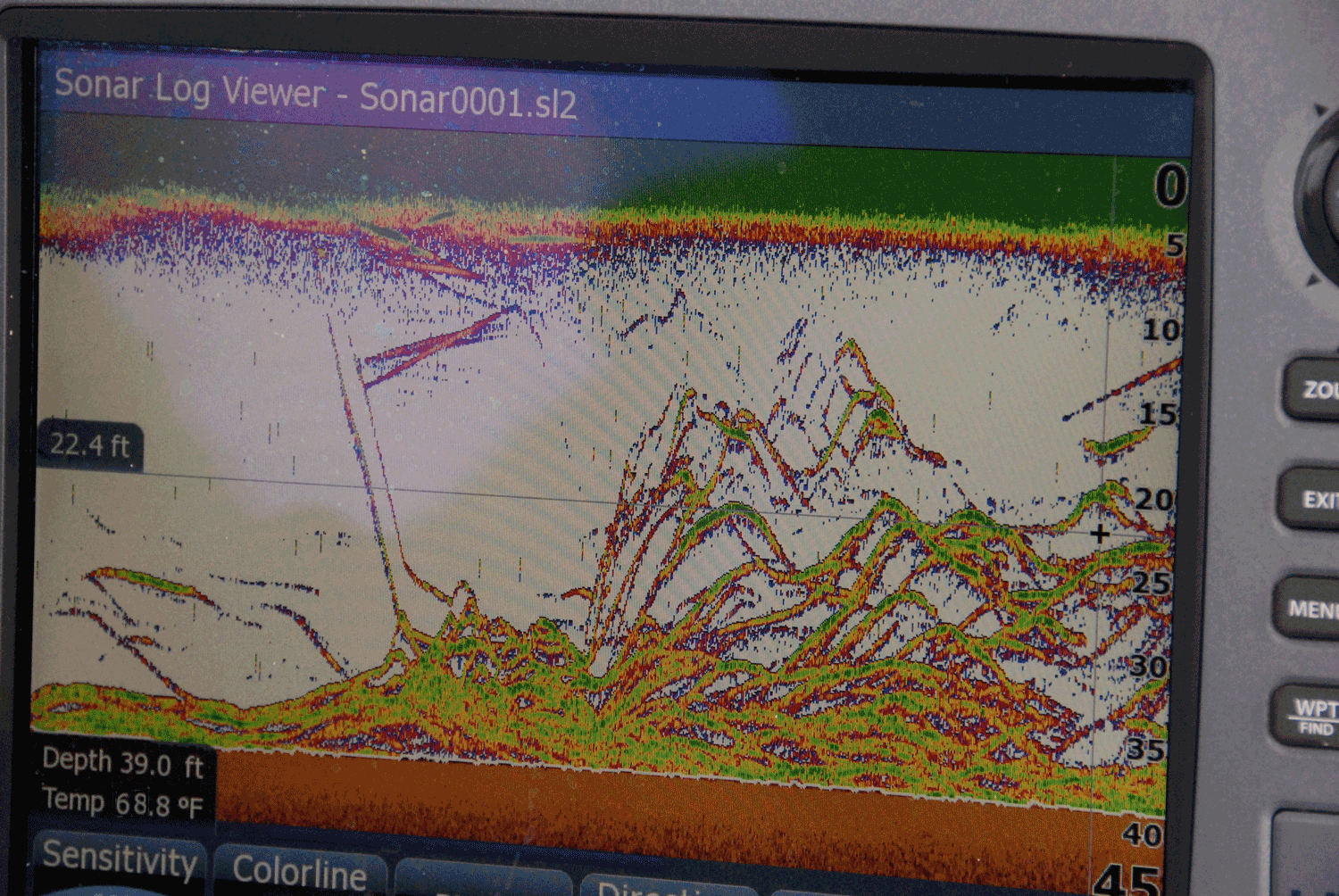
Drifting is a great way to catch Lake Monticello’s big blue catfish through most of the fall, according to guide Chris Simpson, but as the weather starts to really cool off, he catches more fish anchored up.
“There is a drift bite that’s good on into December when they’re in transition, but it’s not the most-consistent way to catch fish after that,” he said. “They get concentrated the farther you go into December.
“The baitfish will get in one spot in late December; they get real confined to gullies in Monticello because there isn’t any river channel. And the catfish will get to where they won’t move a whole lot to chase a bait. They just sit there and gorge themselves.”
Simpson likes to anchor over points or humps, and he wants to fish baits at a number of different depths using a Carolina rig with a 2- or 3-ounce egg sinker above a barrel swivel. He’ll still tie in a small cork a few inches above the hook to keep the bait slightly off the bottom.
“For the most part, the gizzard shad and threadfin shad will be fairly deep: 30 to 60 feet,” he said. “What I try to do is place my baits according to where I see baitfish. If I mark a school of baitfish in 40 feet of water, I try to place my baits to where I’ll have them scattered from 30 to 50 or 60 feet.
“Some days, you’ll notice a big difference in where they bite. If the baitfish are at 40 feet, you may get all your bites at 30 feet, on top of the hump or point. Some days, you get all your bites at 50 feet, below the baitfish. Some days, you’ll catch them above, below and right in the baitfish.”

Be the first to comment