
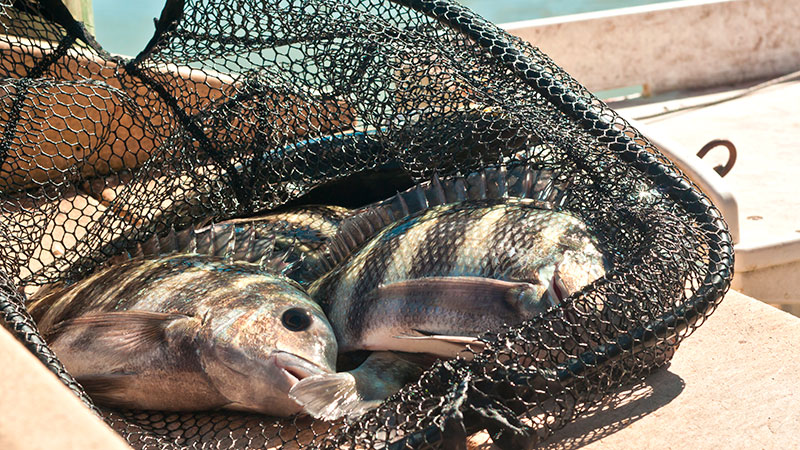
Fishing for sheepshead in the Carolinas during December is a cold-weather pursuit that rewards patience, finesse, and a good understanding of how these structure-oriented fish behave as winter takes hold.
When the water temperature drops, sheepshead become more concentrated, making them easier to locate, even if they remain just as tricky to catch.
For anglers willing to brave brisk winds and chilly tides, December offers steady action and the chance at some of the year’s largest fish.
Sheepshead thrive around structure year-round, but in December their reliance on it becomes even more apparent. Bridges, rock jetties, oyster beds, and deepwater docks serve as magnets when the fish retreat from shallow flats in search of consistent food sources.
Find the food
Barnacles, small crabs, and some shrimp stick close to hard structure, so sheepshead rarely stray far from these areas. In the cooler season, they often gather in slightly deeper pockets where temperatures fluctuate less, making vertical presentations particularly effective.
Presentation, however, is only part of the challenge. Sheepshead are notorious bait thieves, capable of stripping a hook clean without the slightest tug on the line. December’s cold water only sharpens their deliberate feeding style. Successful anglers rely on sensitive rods, light but durable fluorocarbon leaders, and small, strong hooks, usually in the No. 1 to No. 4 range. Fiddler crabs are the classic bait of choice, but live or fresh shrimp, sand fleas, oyster meat, and barnacle chunks also work well. The key lies in offering a natural presentation and maintaining constant contact with the bait.
Watch the tides
Tides play a major role in locating productive sheepshead spots during this month.
Slack tides, whether high or low, allow anglers to feel subtle bites without having to fight strong current.
During moving water, sheepshead still feed, but presenting baits close to structure becomes more challenging. Many experienced anglers prefer the last hour of the outgoing tide and the first of the incoming, when current softens and fish orient tightly to pilings or rocks.
Though the bite remains consistent this time of year, patience is essential. Cold water slows sheepshead activity, leading to light, nearly imperceptible taps. A common strategy is to set the hook the instant the bait feels different, even if the rod tip doesn’t twitch.
Going after sheepshead this time of year offers a combination of clear water, concentrated fish, and quieter coastal landscapes. It’s a unique season where persistence often pays off with a cooler full of thick “convict fish,” and the satisfaction of mastering one of the region’s most cunning winter species.
Be the first to comment