

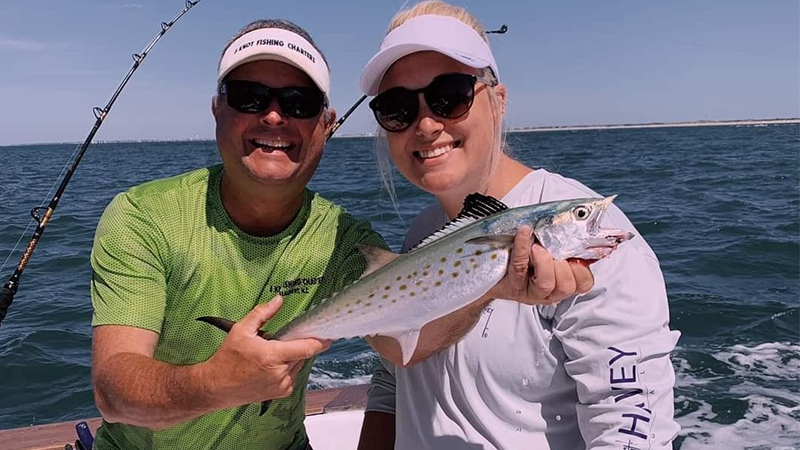
It’s Ralph Mason’s time of year
Mention Spanish mackerel to Ralph Mason, and his eyes light up.
They’re about to stay lit up for about six months, and that’s just fine with Mason, who runs 6 Knot Fishing Charters out of Beaufort, NC where the sleek, “prince mackerel” is his primary target.
That target really comes into focus this month, as fish begin to flood into the nearshore waters off North Carolina’s Crystal Coast, from Bogue Inlet north to Beaufort Inlet and to the hook of the great cape.
“I am passionate about catching those things,” said Mason, who got his captain’s license 20 years ago and hung out his shingle in Beaufort in 2019 after retiring from a long career in law enforcement. “If a guy will (troll) 6 knots, he’ll about make a living catching Spanish.”
Seek warm water
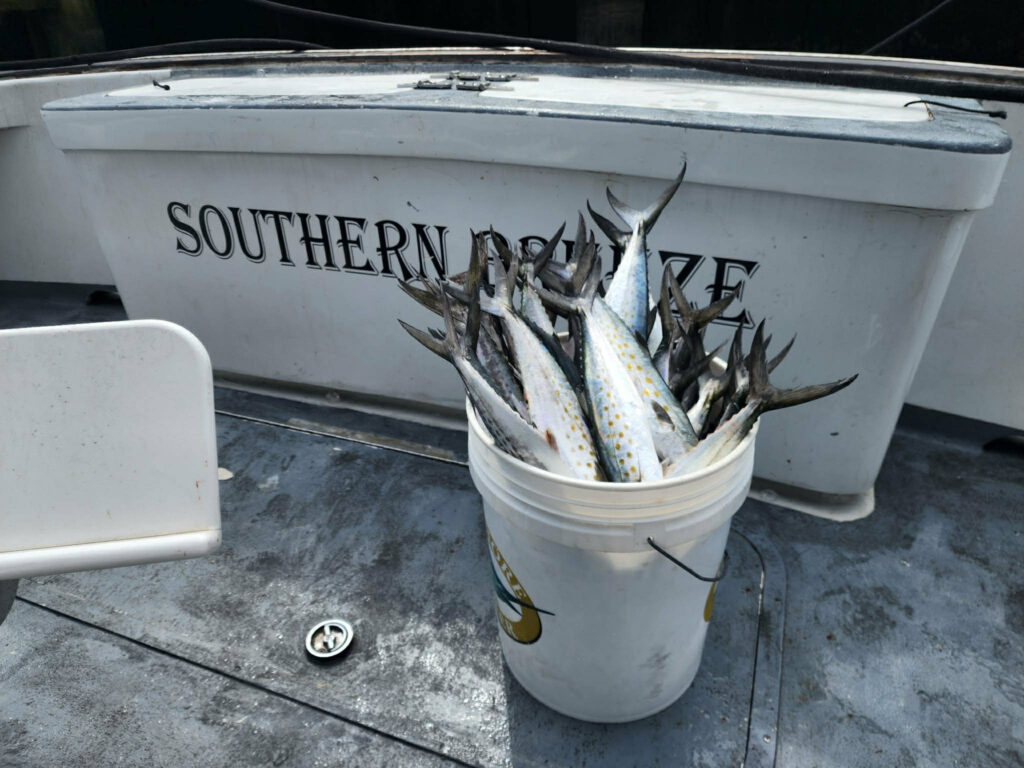
At least that’s the idea. Although he’ll seasonally target Atlantic bonito, false albacore and king mackerel from his 34-foot Southern Breeze, a Buddy Harris sportfisher, Mason (252-648-1412, www, 6knotfishingcharters.com) primarily targets Spanish mackerel, trying to fill that 15-fish daily creel limit (12-inch size minimum) for his customers.
That becomes a real possibility at the end of April and throughout May into the summer.
“They’re really going to start (biting) when the water temperature gets into the mid-60s,” Mason said. “The bite will start to the south – the warmer water is down there first – and they’ll work their way up, all the way to Cape Lookout.
seek clear water
“They follow that warmer water as it works our way. A lot of times, there is a huge eddy along the cape that will reach out and push warm water to the beach, and all the Spanish, bonito and albacore will move in.
“They are moving north, following those big schools of glass minnows and other little baitfish they eat. They can be anywhere from right off the beach to 8 miles out, depending on the water temperature. I constantly see situations where all the fish will be in a certain depth range, and they will stay there until they start to scatter out.
“I keep up with all of the weather apps that will tell you where the different water temperatures are.”
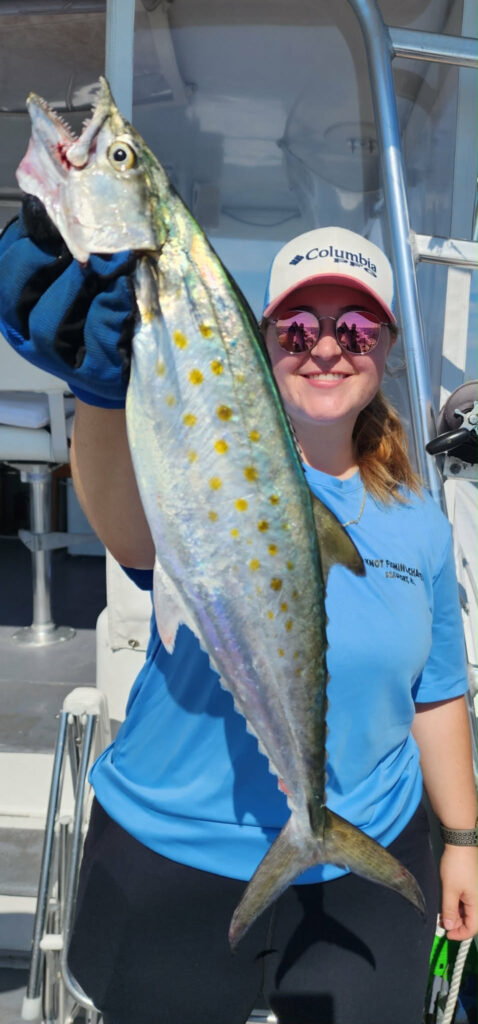
If water temperature is factor No. 1 in finding Spanish, water clarity is No. 1A. A sharp-eyed, slashing predator, Spanish want clear water where they can hunt and find their prey, attacking by sight. While you might find them in dirty water, they probably won’t be biting.
“I am looking for that combination of warm and clear water,” Mason said. “Most of the year you can find it and pay attention to it. They don’t like dirty water, and fresh water will shut them down within 24 hours. If you have some storms inland, up around Raleigh, all that water will run down the Neuse River, down Core Creek and out Beaufort and Bogue inlets, and it dirties the water as far south as Indian Beach and Pine Knoll Shores. It will take about a week to straighten it out. When that happens, you can move offshore out to about 8 miles and get away from that dirty water.”
Check the reefs
Mason said Spanish will show up in some places that have traditionally held fish for years, including two nearshore reefs – AR315 and AR320 in front of Atlantic Beach – the shoals on the east and west sides of Beaufort Inlet, the nearshore waters off Shackleford Banks all the way to Cape Lookout, even the area from Morehead City’s turning basin out through Beaufort Inlet.
“There have been days when I’ve fished between the Atlantic Beach bridge and the Radio Island bridge and never left, and even the ICW can be productive – but you’ve got to have your head on a swivel because of all the recreational boat traffic, jet skis and all.”
He uses one other tool to find mackerel: birds.
“Definitely look for birds; they will tell you where the bait is, and the fish will normally be around the bait,” he said. “When you see birds circling and dropping, go find out what they’re feeding on. And when you find Spanish, don’t just keep going straight, trolling right through them. You can circle them and pick them off two or three every circle. It’s great if one of your buddies is out there and you can team up, circling around that acre or two of water they’ll stay in for an hour or so.”
Stagger the spread
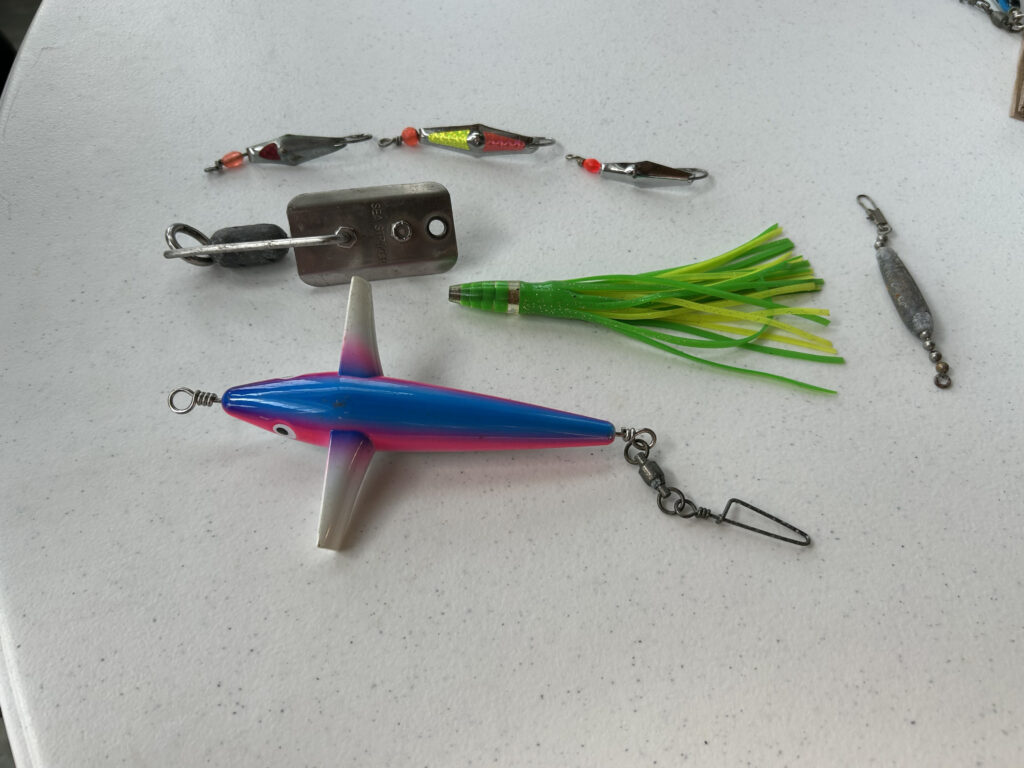
Mason pulls a spread of six lures staggered between the surface and 12 feet of water, typically at a speed of 6 knots. His boat is equipped with outriggers, so he can spread his baits more effectively.
His outside lines on both sides will be No. 0 Clarkspoons fished at the surface behind trolling birds about 150 feet behind the boat. Just inside are two lines on the short riggers with Clarkspoons about 100 feet behind the boat, maybe 4 or 5 feet deep behind 2- to 5-ounce bead chain weights, heavier on rough days.
Directly behind the boat are another pair of Clarkspoons fished on 25-foot leaders behind No. 1 planers about 60 feet behind the boat.
gold and pink/chartreuse are his favorites. There are days, he said, when fish will key on one particular color. Don’t be afraid to switch all of your spoons to that color when the preference becomes evident. Mason keeps a dozen or so plastic bait wheels, complete with spoon and leader, so he can switch them out quickly.
“I will always have about 10 or 12 bait wheels rigged so I can switch them out quickly, and I’ll always have a spool of line ready in case you get kinks or breakoffs. That way, you are only 2 knots away from being back in action.”
Mason fishes 20-pound tackle, typically with 25-foot leaders of 30-pound mono, except during the summer when fish get a little spooky. Then, he’ll drop to 17-pound leaders and go to a smaller, No. 00 Clarkspoon. If he starts running into a lot of big Spanish – 2- to 3-pounders or bigger – he may go with a bigger lure behind the trolling birds, maybe a smaller Green Weenie or duster, fished on slightly heavier, 30-pound class tackle because of the chance or running into a bigger nearshore battler like a king mackerel or cobia. Everything is tied together with a standard fisherman’s knot.
“If you have the right equipment, you can be catching 2-pound Spanish and take advantage of the opportunity and catch a couple of 15-pound kings that will almost weigh as much as all the Spanish you’ve caught.” ■


Be the first to comment