

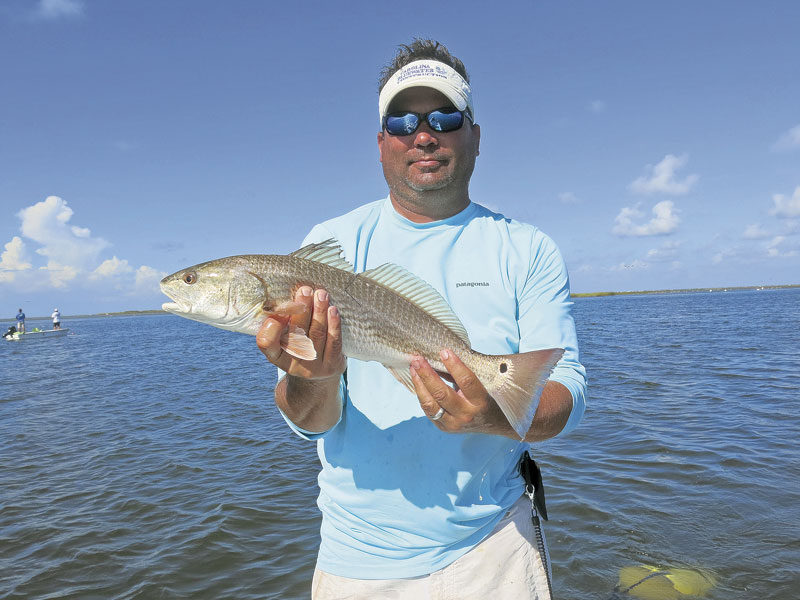
Redfish feed like mad during spring
In May, water temperatures are climbing every week with bait and predator fishes running free and rambunctious. And while many flounder anglers are trying to intercept every new wave of fish coming in the inlet, the redfish are chomping all over the place with vengeance.
Except for porpoises, redfish are the top predators of the inshore lair. And by May, most marine mammals have shifted their focus from the spot-tailed meals to other food sources. Redfish will still be a little spooked when a group of dolphins comes cruising the shorelines. But reds are able to spread out this time of year to ambush any available baitfish and crustaceans pouring into the estuaries.
Capt. Dan Connelly of Capt. Dan’s Fishing Company out of Murrells Inlet, S.C. is a year-round inshore guide that targets mostly redfish and speckled trout. And for Connelly, redfish are amped up in May and can be solid targets for a spring day on the water.
“Redfish exit their winter pattern in the spring when the water warms up and spread out to various ambush positions all over the inlet,” Connelly said. (843-241-7022) “The water temps are in the 70s in May. They can swim faster and can eat and digest a lot more food.”
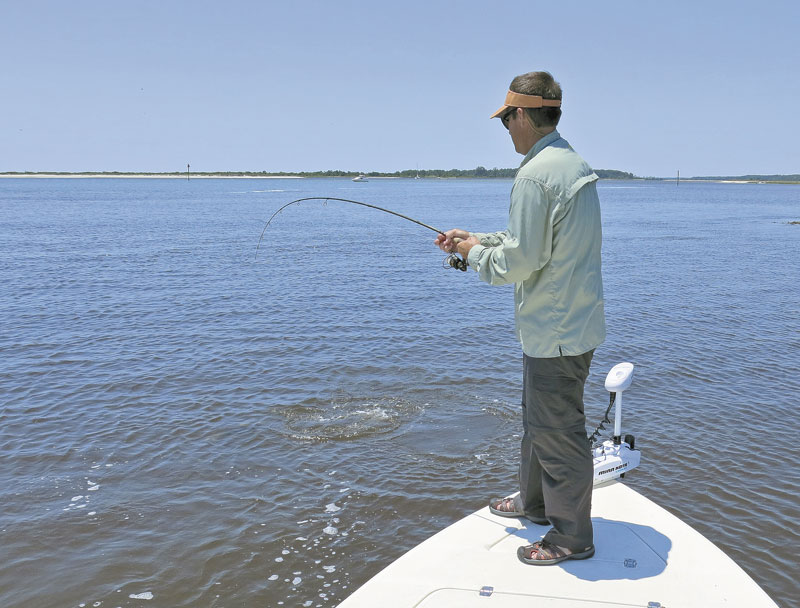
Redfish expand their diet in May
The availability of baitfish and food in the estuaries is limited in the winter season. But as the water temperatures start to rise in early spring, shrimp and baitfish begin to reestablish residency in the estuaries. And by May, small shrimp are around along with a wide variety of juvenile fishes. This creates a smorgasbord of culinary delicacies for inshore predators like redfish, speckled trout, and flounder.
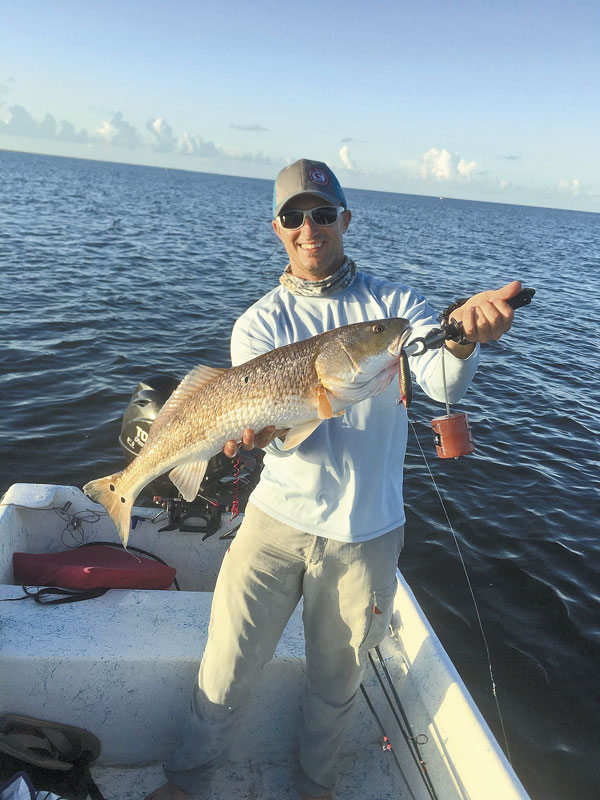
Due to the widespread availability of food and with less dolphin predation pressure, redfish will no longer hunker down in large, triple-digit schools in the super shallow backcountry waters.
“Redfish get happier and are more comfortable being in smaller groups or in pairs,” he said.
In May, finding huge schools of reds is a rarity. But they will also be found in more places than before. From the jetties to the backcountry oyster flats, redfish are chasing bait all over the place. Mullet are generally sparse yet. And the creek shrimp are going to be very small this time of year, but still a valid food source and something for reds to gobble up in shallow water. Creeks are going to have several species of mud minnows present. And lots of arriving juvenile fishes, such as pinfish, spots, croakers, and others.
Finding a place to intercept a redfish in the spring is less of a challenge than in other times of the year. Yet, some places are certainly better than others. And Connelly surely knows how to find them in the spring season.
“Redfish are spread out eating shrimp, crabs, or whatever they can find to eat. I typically fish for them at the jetties, docks, or along big oyster beds found between grass lines and deep water drop offs,” he said.
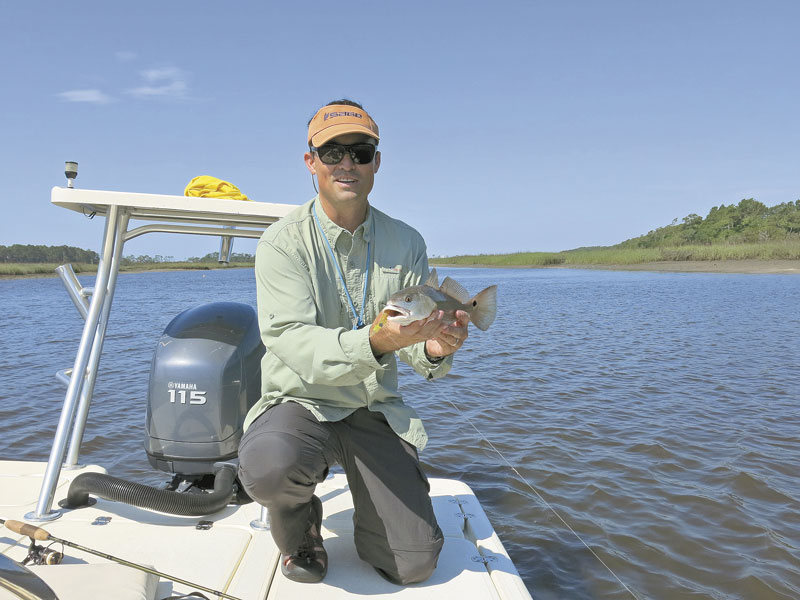
Ambush feeding
Reds are known as ambush feeders. But they certainly will not just wait in the shadows all the time for food to come rolling by in the current either. They will swim around along grass edges and oyster beds to pick off a small shrimp, fiddler crab, or little fish scurrying in and around structure.
Naturally, redfish can be caught on every type of fresh or live bait imaginable and especially during the spring when they are feeling good and eating about everything in sight.
“Redfish are smart, but when they are feeding and hungry, they will eat about anything that resembles food.” he said.
Connelly’s go-to bait any month of the year is always going to be a live shrimp on a slip cork because there isn’t anything that will turn their lip up at a live shrimp. But they are a little harder to produce than mud minnows and other types of fresh bait. Again, redfish aren’t very picky eaters. Fresh cut shrimp, frozen shrimp, or other cut fish will quickly get the attention of a passing red.
One of the best baits in the springtime is a creature that doesn’t swim much at all.
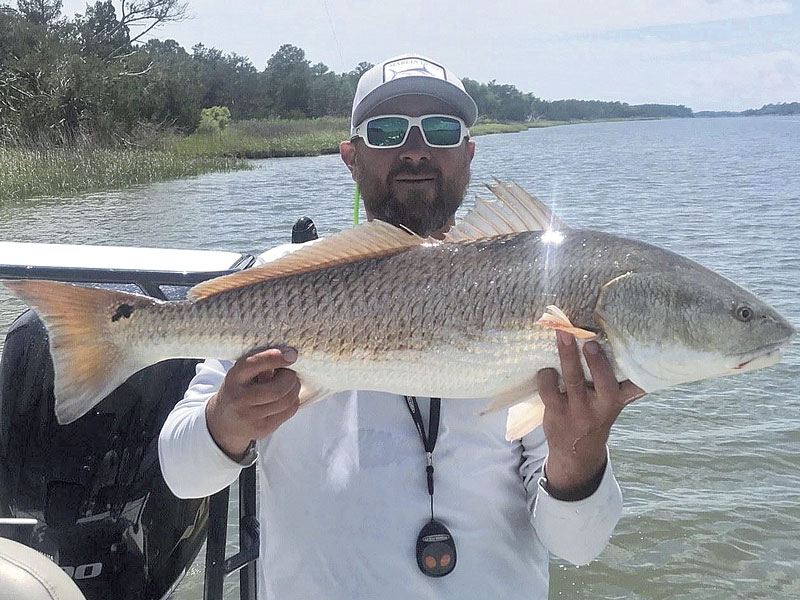
Get crabby
“Chunks of blue crab work really well in springtime and can be a great alternative to live shrimp due to the abundance of pickers around in May and June,” he said.
Blue crabs are a large part of a redfish’s spring diet due to the abundance of molting activity in the spring months. The crabs will molt from the spring through the late summer, but the spring molt is quite intense.
Blue crabs will dig out of the mud in March and start scurrying across the seafloor looking for food. And as the peak moons come around in April and May, every blue crab in the estuary begins molting nearly at the same time. And redfish just go mad for a few weeks gorging themselves on these vulnerable and soft delicacies.
Connelly will cut up an adult blue crab into quarters and put them on an octopus circle hook at the end of a Carolina rig.
Artificial lures are also quite productive in the spring season. And especially scented soft plastics such as Berkley Gulp.
“I will dead stick Gulp around docks in areas with good current flow. I catch a lot of fish that way,” he said.
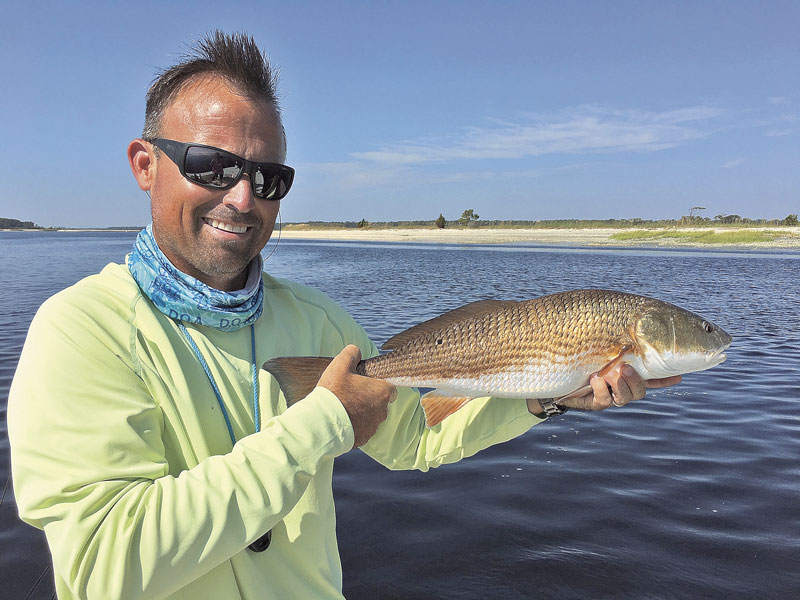
Poppers for redfish
Redfish are essentially the largemouth bass of the salt. Lures that produce bass around lily pads and cypress stumps on Lake Marion will also get quite the attention of a hungry redfish. And when redfish are out of their winter slumber and feeding heavily on whatever they can find, a gurgling topwater lure is too attractive to go sailing by without an attack.
Redfish have subterminal placement of their mouth. And they are typically known for feeding along the bottom. But they will not think twice about crashing on a bait swimming along the water’s surface. And when reds are aggressively feeding on anything they can find, a topwater option is a solid choice.
Surface lures come in a wide variety of shapes, colors, sizes, and actions. Most commonly, topwater lures are either poppers or surface walkers. Both types of lures can bring a redfish to the top. And a new hybrid style of topwater lure is among the best of both worlds that provides a sweet gurgling noise.
Chop it up
Berkley makes a prop-style lure called the Choppo. It can be fished slowly on top and it produces the perfect gurgling noises that redfish can’t resist. Even though redfish can feed on top regularly, it is a little tougher for them to feed upwards. As a result, a slower pace lure will get the job done. And the Berkley Choppo is one of the best options out there to be fished slowly in a stop-and-go fashion. Or it can be fished using the same action as a popper. Either way it produces a gurgling action redfish just can’t resist.
Topwater surface lures tend to produce the most success if fished along shallow water adjacent to grass edges, mud flats, or just above or next to oyster beds. And the spring period can be deadly and a load of fun with surface options.


Be the first to comment