

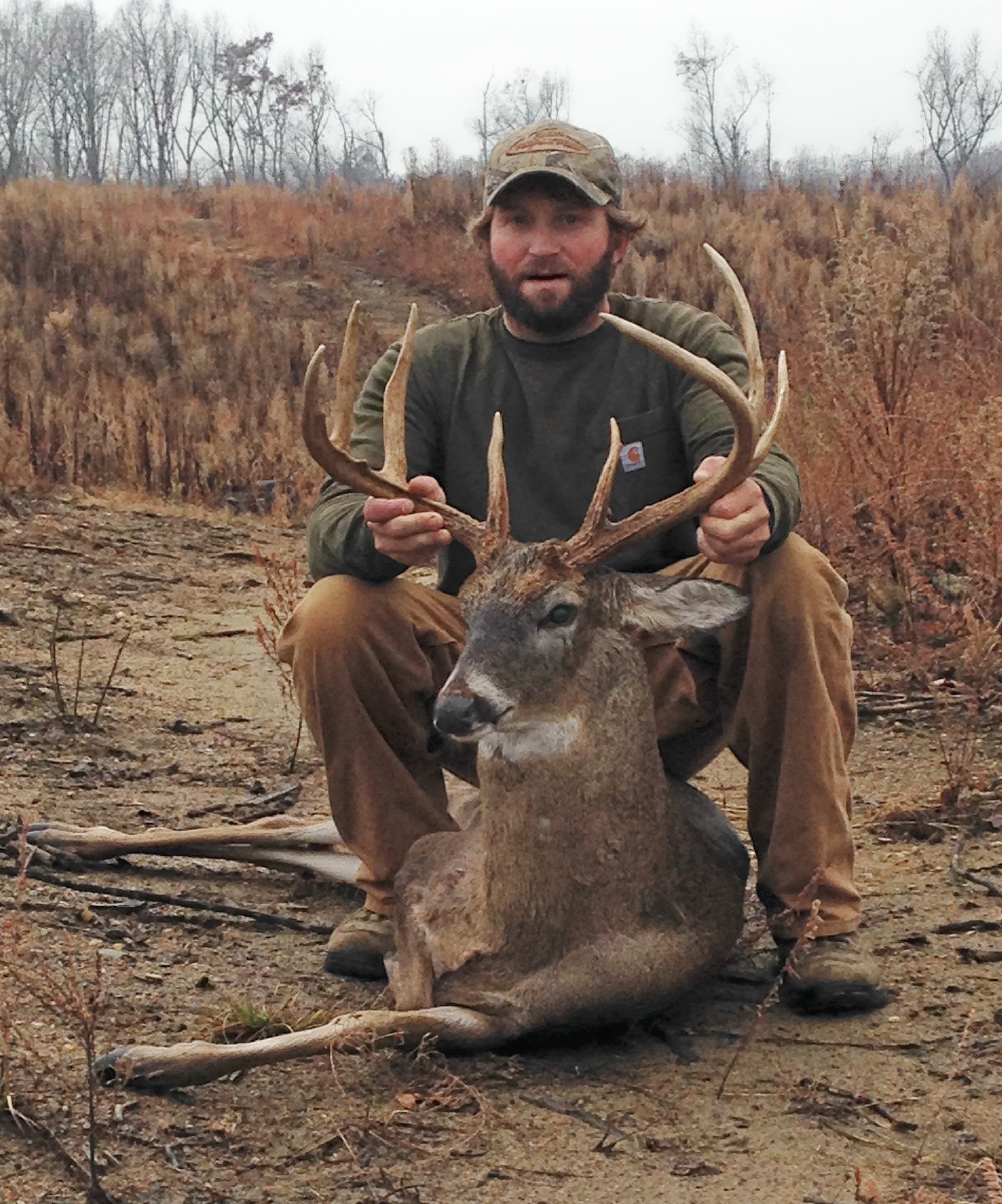
Nick House has no misgivings about hunting in December because fewer hunters are applying pressure to deer in his local area. He figures secretive, mature bucks may be more inclined to bed down on sunny hills or walk during daylight hours, especially when the secondary rut arrives, usually around the middle of the month.
But he also uses observations gained during 28 years of hunting to help him punch his final deer tags. He relies on:
• Trail cameras that tell him where big bucks are living and traveling and point him to the best tree-stand locations.
• Late-winter fields planted in rye and wheat that attract deer because acorns are gone by December.
• Young cutovers that provide security for deer walking in tall weeds to and from fields, and, if they have south-facing slopes, also provide deer with warm bedding areas.
• Man drives to push bucks toward open areas and hidden hunters.
• Creek bottoms and field edges that grow honeysuckle that deer love.
• Tack-driving rifles, that can drop big bucks at long distances.
• Cover scent for himself and buck-urine drag rags to attract rutting deer.
• Rattling horns, grunt and doe calls and snort wheezes. House said during the secondary rut, rattling horns and snort wheezes mean a hot doe is near.
“The snort-wheeze really got my December buck last year moving up a hill toward me from 400 yards away,” he said. “A couple years earlier, I’d rattled a 10-pointer from 550 to 80 yards and shot him with my blackpowder gun.”
Be the first to comment