

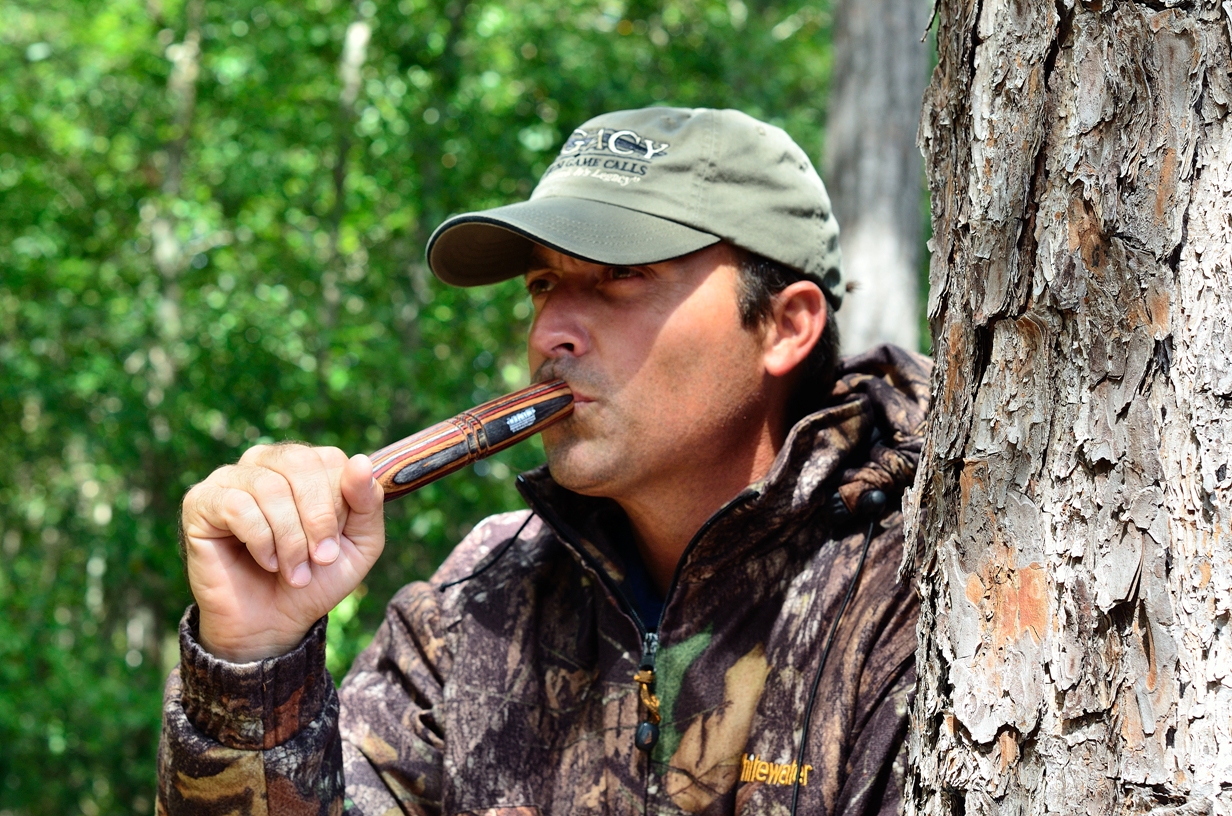
Deer and other wild animals communicate through scent, body language and, of course, vocalization. Even though deer are not recognized as the chatterboxes of the forest, they communicate vocally, and hunters can use these calls to improve their chances of an encounter.
Deer use bleats, snorts, grunts, snort-wheeze and other non-defined vocalizations in their language. While humans will never fully-understand this cryptic dialect, reverberations of these common calls are quite beneficial. At certain times, deer are curious and gullible animals; during the rut, any sound or scent indicator from a receptive doe will gain the attention of a juiced-up buck looking for a mate. When bucks are on the prowl, they are using all of their senses to find that doe and they will explore any lead with the slightest hope for mating.
William Terry of Legacy Game Calls (www.legacycalls.com) uses the buck’s vulnerability to his favor.
“I will use doe bleat every time I get into the stand,” said Terry, who will blow his bleat call three times every 15 minutes throughout his hunt. Most of the time, a solitary buck on the prowl will come in to investigate.
Often, bucks will be traveling with a group of does and may not respond to a doe bleat as effectively as another type of vocalization. The narcissistic buck traveling with his harem intends to breed each of his does when they become receptive. At the sound of another buck, feelings of anger and dominance will take over, raising the effectiveness of grunt calls. Terry will grunt at bucks to get their attention when the doe bleat fails to bring them in.
Terry will got back and forth between doe bleats and grunts, but he disliked carrying two calls into the stand, which led to his invention of the Stag-Queen; which is both a doe bleat and buck grunt on the same tube.
“You inhale to bleat and exhale to grunt, but it can be tuned either way by reversing the insert,” said Terry, who has brought bucks into range using the call the past three years.


Be the first to comment