

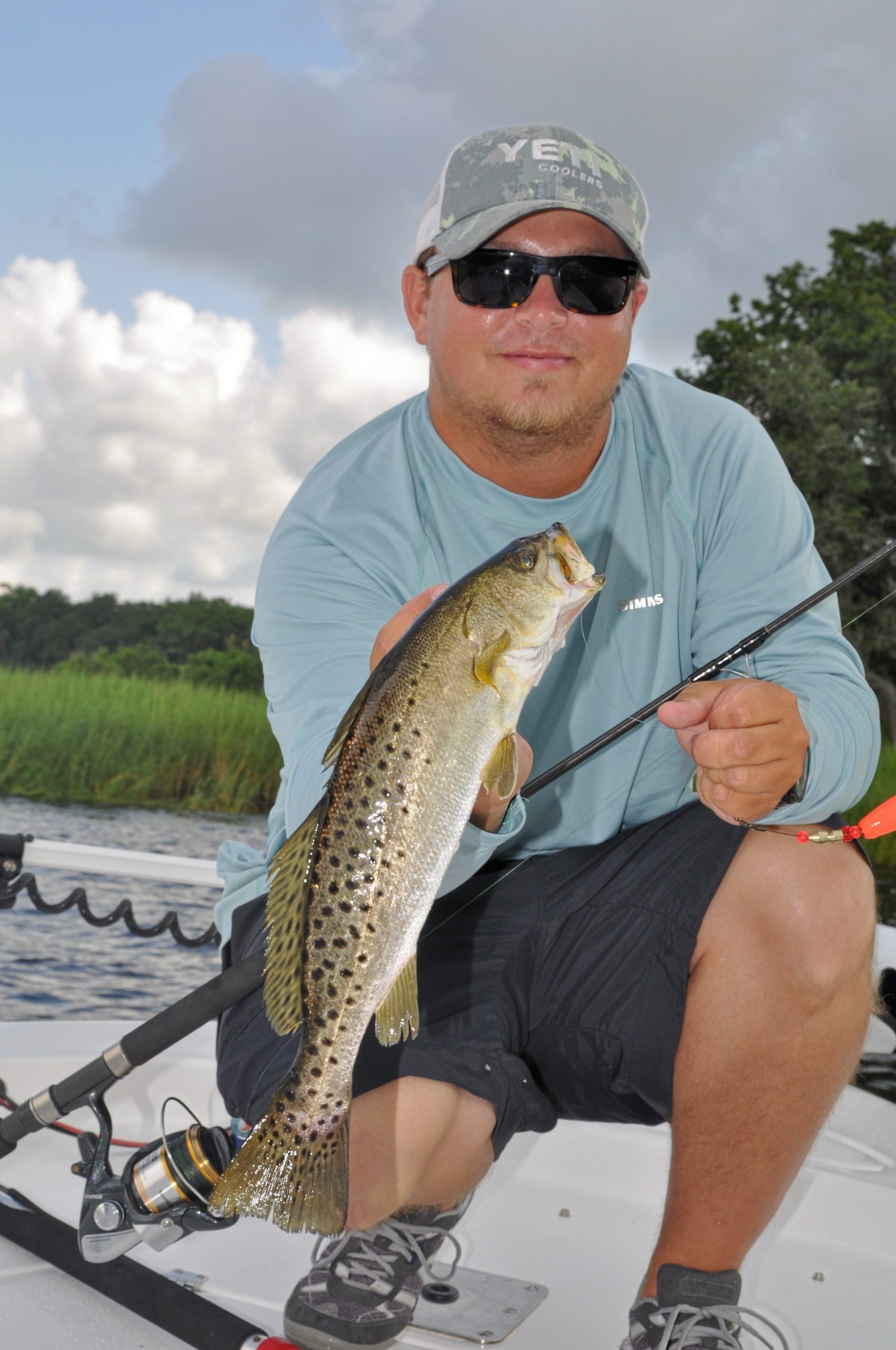
It seems odd to find spotted seatrout 10 miles north of the mouth of the Cape River and approximately 3 miles inland from the Atlantic Ocean, but that’s possible near Carolina Beach.
A series of “spoil” islands across from the western entrance to Snow’s Cut have unique habitat for specks and red drum. Even a flounder may show up from time to time.
They’re called “spoil” islands because in the days of sailing ships, round rocks weighing 15 to 20 pounds were used as ballast during sea voyages. These rocks, which came from Africa or Caribbean islands, kept ships from rolling and pitching in heavy swells. But when maneuvering up the river, they were a detriment in the relatively shallow water.
So sailors dumped overboard the rocks, usually about the size of a volleyball, to let their ships ride higher by keeping their keels off the bottom.
Later, with the invention of power dredges, shovels scooped up tons of discarded ballast rocks while deepening the river channel up to Wilmington, and they deposited them on the edge of the river channel. Piled at several places, they created islands, mostly in “Radar Bay” — the old Fort Fisher Air Force Base that once had a radar installation in the bay, thus the name).
This rare rocky habitat created great homes for baitfish, trout and red drum.
Ballast rocks also were used for building material in the 1700s by masons at coastal towns because the only rocks to be found were hundreds of miles inland.

Be the first to comment