


The current system may be undermining the recovery it’s meant to protect
The flounder situation in North Carolina has been quite convoluted for several years now. And Capt. Harvey Wall of Salty Dawg Fishing Charters has a different way of looking at it than most.
Wall said even though the science that led North Carolina to closing the year-round flounder fishery was flawed, the impact has led to more and bigger flounder.
However, that progress, he said, is quickly undermined during the short recreational harvest seasons the state has gotten anglers used to.
Is the data accurate?
“The NC Division of Marine Fisheries (NCDMF) declared southern flounder ‘overfished,’ and implemented the Southern Flounder Fishery Management Plan to rebuild the stock,” said Wall. “Those assessments led to strict harvest limits, closed seasons, and even complete moratoriums in certain years.”
But that science, he said, is under scrutiny, in part because the stock assessments that labeled flounder overfished are several years old. And it relies on pre-moratorium data that Wall said no longer reflects the current state of the fishery. He said that is evident to many anglers.
“Anglers up and down the coast are catching more and bigger fish than ever, which suggests the population has rebounded substantially,” he said. “Yet that progress is quickly undermined each year during the short, fast-and-furious harvest season when most of those mature fish are removed, almost all at once.”

Recognizing that anecdotal observations don’t replace formal stock assessments, Wall said the discrepancy between what biologists predicted and what anglers are witnessing firsthand suggests a new assessment will offer data that is much different than what is currently available.
And that new “fish count,” he said, is required to be completed no later than July 1, 2026.
New info coming
“That should finally give a clear, up-to-date picture of the flounder population’s true health,” he said.
He expects that to show a strong, healthy comeback for North Carolina’s flounder.
“But at the very least,” he said, “we’ll finally have recent data, rather than relying on figures from years ago, when the fishery looked far different than it does today.”
The 2026 flounder recreational harvest season has not been announced, and it may look vastly different than what anglers had in 2025.
Wall certainly hopes so, in part because he believes a short season does more harm than a year-long fishery.

“The short, two-week season is a perfect storm for overharvest,” he said. “As soon as it opens, flounder fishing turns into a statewide event. Boats launch before dawn, ramps overflow, and pressure skyrockets.”
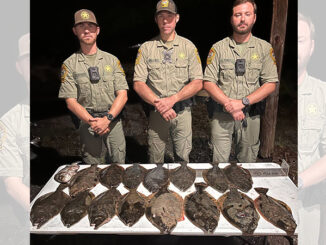
He said in the weeks after the 2025 season, the damage brought on by this “race to harvest” system, which encourages maximum effort all at once, was noticeable.
“Within days,” he said, “the same creeks that held dozens of keeper-sized flounder are fished nearly clean.”
Rules disparity
According to Wall and many other anglers, the perception of imbalance between recreational and commercial harvest rules adds another layer of frustration. He doesn’t say that in order to drive a rift between the two groups, and he acknowledges that commercial fishermen have their own sets of challenges, and that their catches are monitored and limited by law.
“To be fair,” said Wall. “Most commercial fishermen face their own challenges, from costly gear, fuel and insurance, to tight regulations and unpredictable weather windows.”

Aside from that, Wall said it’s discouraging to see either side pitted against the other.
“Commercial anglers aren’t the enemy,” he said. “They’re fellow stewards of the same resource, and any sustainable plan must account for their livelihoods alongside recreational access.”
Wall said Marine Fisheries is making progress in that area, planning to equal out the share of flounder between recreational and commercial anglers.
“The planned gradual move toward a 50/50 allocation will go a long way toward restoring faith and fairness between both user groups, ensuring that conservation responsibility (as well as access) is shared equally,” he said.
Strong population
Wall’s thoughts on the state of flounder come from what he sees on the water daily. And that’s true whether flounder season is open or closed.
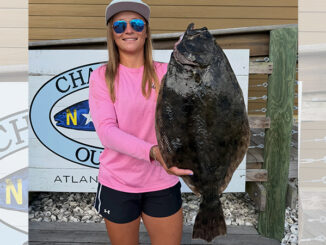
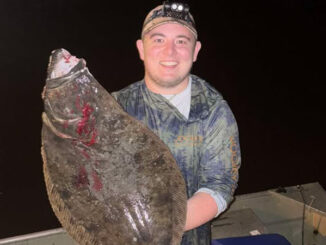
“Even during closed seasons, we’re catching plenty of flounder, and they’re big,” he said. “Fish in the 20- to 24-inch range are very common. And my charter clients landed flounder up to 29 inches this summer.”
This shows a strong population of flounder, but as stated earlier, that population takes a big hit during the extremely short seasons North Carolina has implemented in the past few years.
“The short season leads to quick depletion once harvest resumes,” he said. “In my area, I’ve watched rivers go from loaded with flounder in late August to nearly empty a week after the season opens.”
What’s next?
Flounder anglers are clueless right now as to when the next open season will take place, how long it will run, and what the daily creel limit will be. But Wall is hopeful Marine Fisheries will get it right this time.

And in his mind, a year-round open season makes much more sense. It would also help the level of accuracy with periodic stock assessments.
“A slower, steadier harvest model would maintain those healthy numbers year-round, and would prevent sharp swings in flounder abundance before or after stock assessments,” he said.
He’d also like to see the minimum size limit increased, which he said would give each flounder the opportunity to spawn before being harvested.
“One logical framework would be to reopen the season year-round (or for at least 6 months), but raise the size limit to 20 inches and maintain the one-fish-per-day rule,” he said. “This allows flounder to reach maturity and spawn at least once before being harvested, while giving anglers a realistic opportunity to keep a fish here and there.”
Wall encourages other anglers to stay informed and attend hearings, and to continue practicing catch-and-release conservation.
“The upcoming NCDMF flounder stock assessment will be a defining moment. If it confirms stock recovery, we could finally move toward data-driven management instead of legacy restrictions,” he said. “And with solid science and level-headed leadership, we can find the middle ground — a thriving fishery and fair access to all.
_______________
If you’d like to book a fishing trip with Capt. Harvey Wall, give him a call at 910-250-8459.
Be the first to comment