

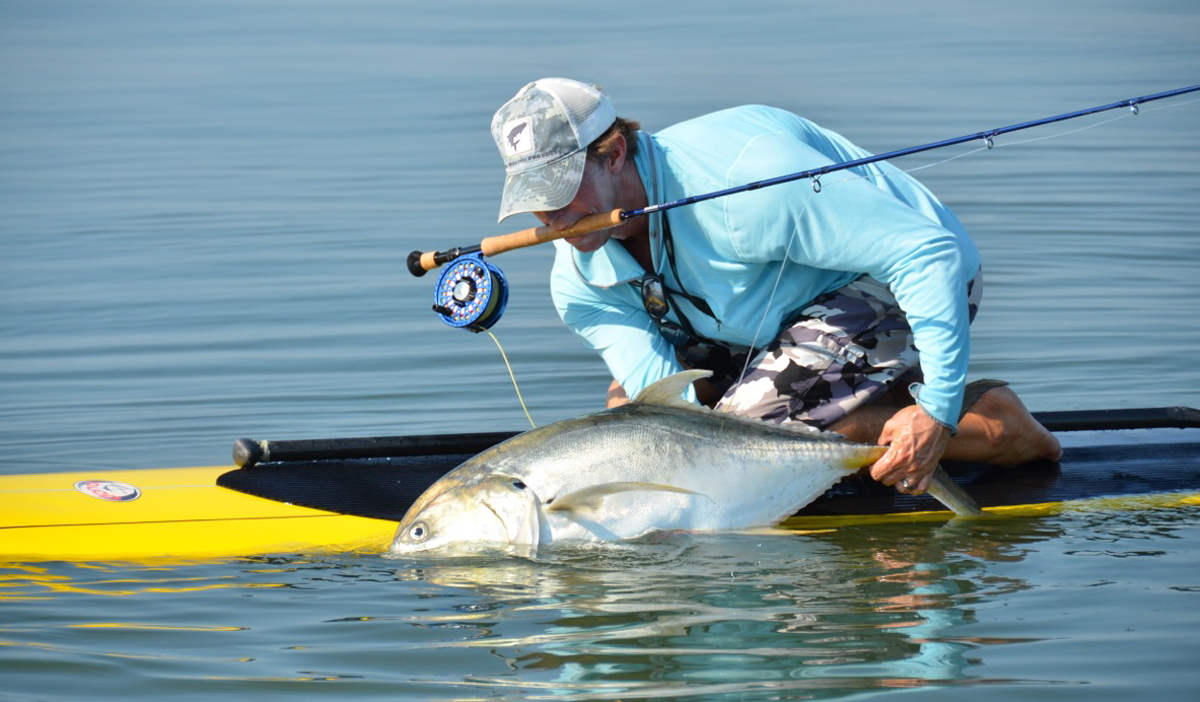
Hard-fighting fish like jacks expend a lot of energy trying to evade capture, sometimes to the point of critical exhaustion. Minimal handling and proper revival is necessary to ensure survival upon release.
To put it in easy to understand terms, think about running a marathon and then having your head held under water for a minute or two while someone takes a few photos; that is almost exactly what is happening to a fish after a hard fight. Everyone likes to admire a fish after it is caught, especially good-looking ones like jacks, but anglers should take heed they do not admire them to death. If at all possible, it is best to release a fish while it is still in the water, but if pictures are desired then do it quickly as possible.
It seems only natural to grab a jack in front of its tail, where the body is at its thinnest, then pull it from the water, but that can result in damage to both the fish and fisherman. Sharp fins at the base of a jack’s tail can easily rip an ungloved hand, and the weight of the fish pulling against its tail can injure the fish.
Capt. Brian Vaughn recommends using a lipping tool such as a boga grip, or grabbing the tail with a gloved hand.
“Try to avoid holding the fish straight up or down so the bones in the mouth or tail are not damaged,” Vaughn said. “Support the fish under the belly for photos, and then release (it) as soon as possible.”
Having a camera and other gear at the ready before landing a jack is a great way to insure that the time spent out of water is kept to a minimum. When the end of the fight nears, the camera needs to be ready, and pliers and gloves or a boga grips should be at hand. Often, with preparation, landing, photographing and releasing can take less than a minute, greatly increasing the jack’s chances of survival.
Place the fish into the water so the most water possible runs across its gills while holding it lightly until it’s ready to swim away under its own power.
As jacks gain in popularity, the need for proper handling also increases. By making an effort to catch and release fish with as little damage as possible, anglers ensure that this resource is around for future generations to enjoy as well.


Be the first to comment