

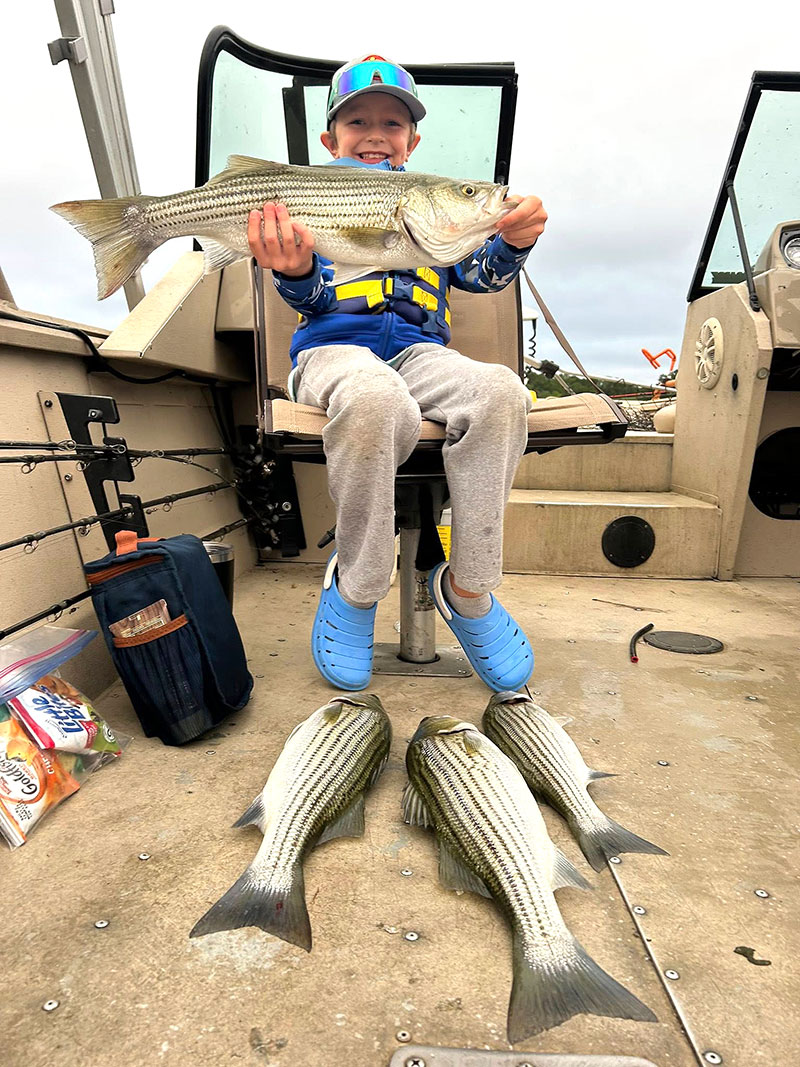
Clarks Hill Lake is spitting out quality rockfish
Fishing for striped bass at Clarks Hill Lake in September offers anglers an exciting and often action-packed experience, especially when using topwater and subsurface lures. As summer gives way to early fall, striper patterns begin to shift in response to changing water temperatures and bait movements. One of the most important environmental influences at Clarks Hill during this time is the cold-water release coming from the dam. This cooler outflow means even on the hottest days of the month, stripers flock to the tailwaters to enjoy the cool water, and to feast on the baitfish doing the same.
The cold water released from the bottom of the Lake Russell dam creates a plume of cooler, oxygen-rich water that spreads into the lake’s lower basin. Stripers, which are highly sensitive to temperature and oxygen levels, will often concentrate in or near this zone. As a result, September becomes a prime month to target these fish as they stack up along points, humps, and drop-offs near the dam and downstream areas. The influx of colder water also encourages baitfish to gather in these regions, making it easier to locate active predators.
Up top and below
Topwater action can be outstanding as long as water is being released from the dam. Anglers should look for nervous baitfish schools, or the explosive strikes of feeding fish. Popular topwater lures like pencil poppers, walking baits, and chuggers can trigger aggressive reactions, especially when worked with a steady cadence across the surface. The visual aspect of topwater fishing for stripers is part of what makes this technique so exhilarating. Even short feeding windows can provide incredible action if you’re in the right place at the right time.
When the topwater bite slows, subsurface lures become crucial. These lures allow anglers to probe deeper areas where fish may be holding just beneath schools of bait. Swimbaits, flukes rigged on jigheads, and soft plastic jerkbaits are all effective for targeting stripers suspended in the water column or lurking near submerged structure. The key is to locate bait using electronics and then present your lure just above or through the school at the right speed. Slow, steady retrieves or vertical jigging can entice strikes from less aggressive fish.
Another effective tactic is to target the transition zones where the cold water meets warmer surface temperatures. These thermocline edges often hold concentrated numbers of stripers and baitfish. Anglers using sonar can pinpoint these zones and adjust their presentations accordingly. Fish are frequently more active in these areas during periods of current or water generation from the dam, which stirs up the water and ignites feeding activity.

Be the first to comment