

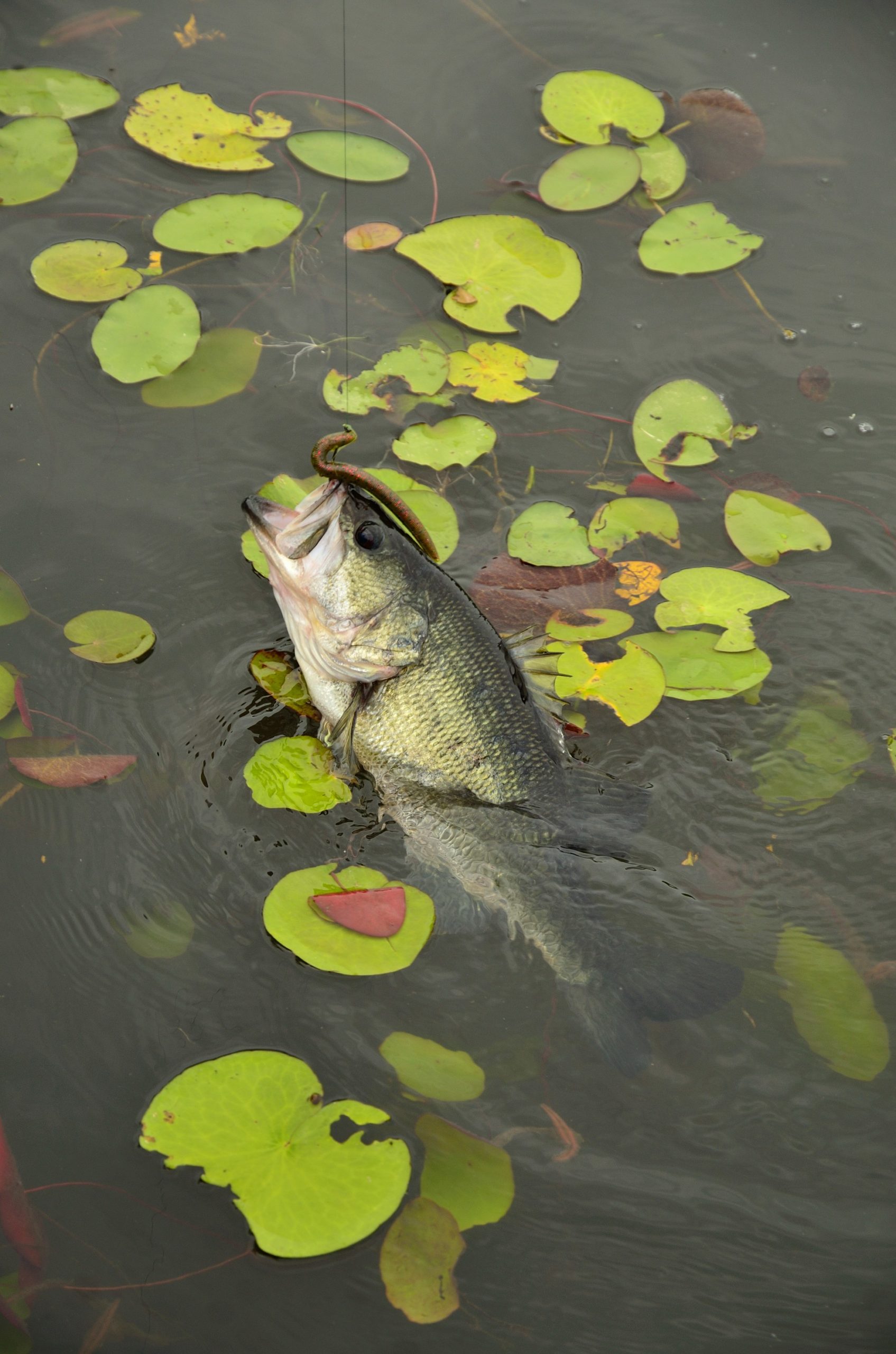
When the shallow areas of the Santee Cooper lakes green up in the spring, they provide ideal places for small fish to hide and spawners to being their annual ritual. Even after the eggs hatch, these places quickly turn into a dinner table with thousands of food choices available for predators, and the largemouth bass is right at home and ready to eat.
During the spawn, bass move into the shallows to lay and guard their eggs from predators. After about a week, the eggs hatch and the fry become mobile, and the new parents of the tens of thousands of bass fry are relieved of their parental duties and begin to look for a tasty meal. In the fish-eat-fish world, a small bluegill, shad or even the newly-spawned fry are fair game for the famished largemouth bass on the prowl.
Since the bass will spawn over a 3-month period, newly-hatched fry are constantly becoming available in the shallows, along with the fry from crappie and even redear sunfish later in the season. So shallow places are not only good for spawning but are perfect places for bass to feed.
When looking for beds in the shallows, always look for pods of fry slipping in and out of the dense cover. There will usually be a fat largemouth bass licking his chops and preparing to gobble up a mouthful of fishy goodness.


Be the first to comment