

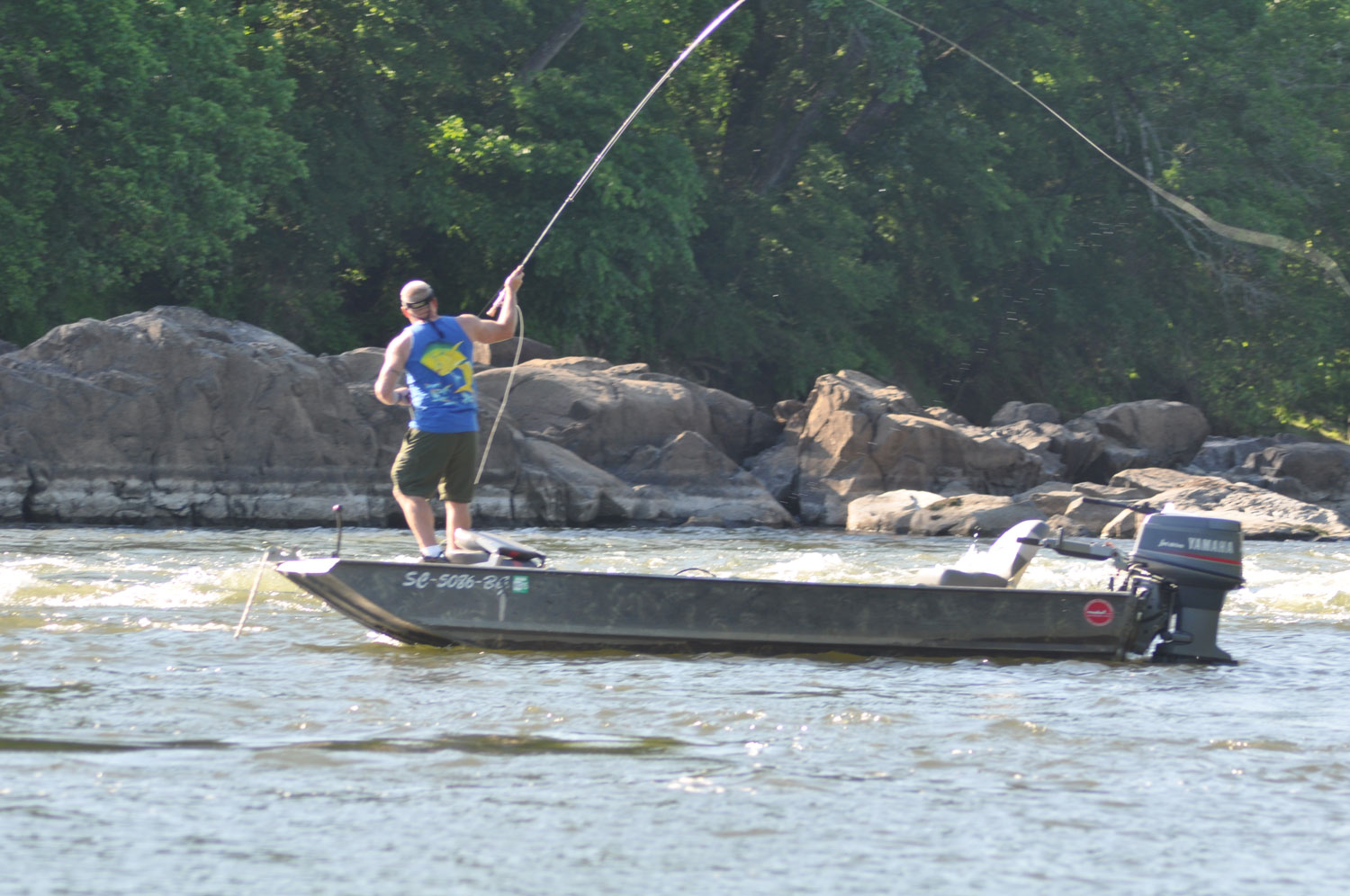
The Roanoke River is a catch-and-release fisherman’s paradise.
Regulations allow anglers to keep two fish per day, none between 22 and 27 inches. The minimum keeper size is 18 inches, only one fish longer than 27 inches can be creeled, and the season lasts only from March 1 to April 30.
The growth of the resource — estimates put the Roanoke’s striped bass spawn at more than 2 million fish — has attracted people fishing mostly for the experience and not with a goal of filling an ice chest. That also means many fly-rod anglers are attracted each spring for the annual rockfish spawning migration.
Veteran Roanoke River striper anglers prefer 9-foot, 7- or 8-weight rods spooled with 300- to 350-grain sinking line.
Favorite lures include 2/0 Clousers in yellow or chartreuse and white colors. Some fly anglers like Deceiver flies as well.
Sinking line is needed because most stripers are caught near the bottom, except when conditions are perfect at the boulders above the Weldon boat ramp.
Fly-rod retrieval techniques vary, depending on whether an angler is anchored or drifting; a majority prefers to anchor.
“Fishing from a stationary boat means casting slightly upcurrent and stripping line to pull the fly toward the boat in short bursts,” said veteran guide Clark Purvis. “The stripers usually hit the fly when it’s falling.”
While drifting, a good technique is to cast, let the line sink, then make three quick strips to pop a fly off the bottom. The stripping of line bounces a fly. Some experts make a slight pause after three strips.
Anglers should keep their lines taut at all times, because sharp line movements often indicate a striper strike. Striper bites while drift-fishing usually occur while a fly is on the fall.

Be the first to comment