

Go fishing, or repair, replenish your equipment
January and February usually are the harshest months, with cold, ice and snow, but the sun shines frequently enough, even in the dead of winter, to provide pleasant fishing respites from the cold. On those gloomy days when you can’t go fishing, take a little time to prepare for the times when you can. Being prepared often can make the difference in an enjoyable fishing outing or a frustrating one.
Here are some tips from the pros on what to do when you can’t go fishing.
Waders. If you fish often, waders will get a lot of wear and, inevitably, a few leaks, especially if you fish backcountry streams and have to walk through streamside brambles. Shane Buckner, manager of Hunter Banks fishing outfitters in Asheville, recommends taking an hour or so and giving your waders a thorough examination.
“If the waders are made of Gore-Tex,” he said, “turn them inside out, hang them upside down and spray the inside with rubbing alcohol. Puncture holes will show up as black dots.’’
For non-Gore-Tex waders, turn them inside out and fill them with water to locate puncture holes. Wader patching material is inexpensive and can be purchased at most fly fishing outfitters.
Fly line. Clean and condition your fly line. If it has cracks, nicks or is showing age, replace it, and don’t scrimp when purchasing new line. Go with a good, quality line such as Scientific Anglers Sharkwave or Rio’s In-touch. Quality fly line can cost between $65 and $100, depending on the brand, but the investment is well worth it. With proper care, a top-quality fly line can last for years. If the line doesn’t need replacing, clean and condition it with a cleaning kit such as Umpqua Glide, Loon or Russ Peaks line dressing. Line cleaning kits cost between $5 and $20. Strip the line from the reel, and give it a thorough examination. If it doesn’t need replacing, wash it in warm water and a mild dish detergent. After it has had time to soak, dry it with a soft, cotton cloth. Once the line is clean, apply line conditioner.
Leaders/Tippets. These items can be costly if you fish often. A good way to save money is to make your own. Buy several spools of leader material and several spools of tippet material of various sizes and lengths so you can fish in a variety of conditions. In most mountain streams, you’ll need tippets starting at 4X (6-pound-test), down to 8X (1.75-pound-test). Tippets should match the size of fly being used. To determine the appropriate tippet size, divide the size of the fly by three. For example, a No. 18 fly would require a 6X; a No. 22, a 7X. Leader and tippet material usually runs $5 and up per spool, but you can make dozens of leaders with one spool.
Fly boxes. After a heavy season of fishing, fly boxes get cluttered. Organize your fly boxes — dry-fly hatch patterns and attractors in one box, nymphs in another. Make sure you have flies from the five basic groups: Mayflies, stoneflies, caddis, midges and terrestrials. Use waterproof boxes to better protect your flies.
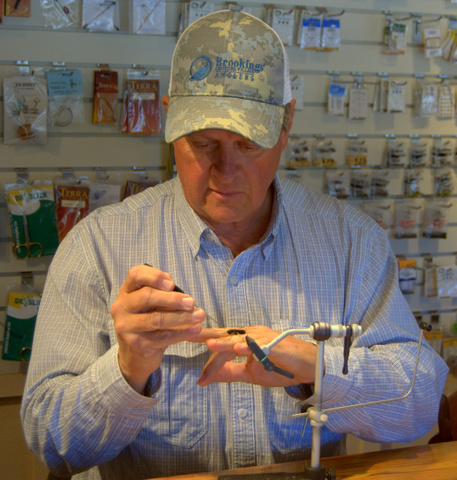
Learn to tie your own flies. Many fly-fishing outfitters offer fly-tying classes during the winter. Call and schedule a class or contact your local Trout Unlimited chapter to see if it offers fly-tying classes. Most outfitters supply all the equipment needed. It’s a bit costly getting set up to tie your own flies, but the satisfaction of catching a trout with a fly you’ve made yourself is great enough to overcome the expense.
Educate yourself on fly patterns. Several good fly guides are available. Don Kirk’s “Hatches and Fly Patterns of the Great Smoky Mountains,” Don Howell’s “Tying and Fishing Southern Appalachian Flies,” Jeb Hall’s “Southern Appalachian Fly Guide,” Roger Lowe’s “Fly Pattern Guide to the Great Smoky Mountains” and “Flies for Trout” by Dick Stewart and Farrow Allen are all excellent resources. And every trout fisher should have a copy of the classic “Trout” by Ray Bergman.
Organize your fishing gear. Brandon Apodaca, a guide at Davidson River Outfitters in Brevard, said he keeps his fishing gear in a box ready to go whenever he feels the urge to fish. He also keeps a Tupperware tub packed with extra clothes: socks, gloves, shirts, pants and rain jacket. “When I get ready to fish, all I have to do is throw the boxes in my truck and go,” he said.
Explore new places to fish. National Geographic has software that shows trails and streams of the southern Appalachians. Using the software, you can print copies of specific areas you plan to fish. The N.C. Wildlife Resources Commission has an interactive online map “Go Fishing in North Carolina” that gives locations and other information about trout streams in the western area of the state.
When you can’t fish, the next best thing is to get ready to fish.

Be the first to comment