

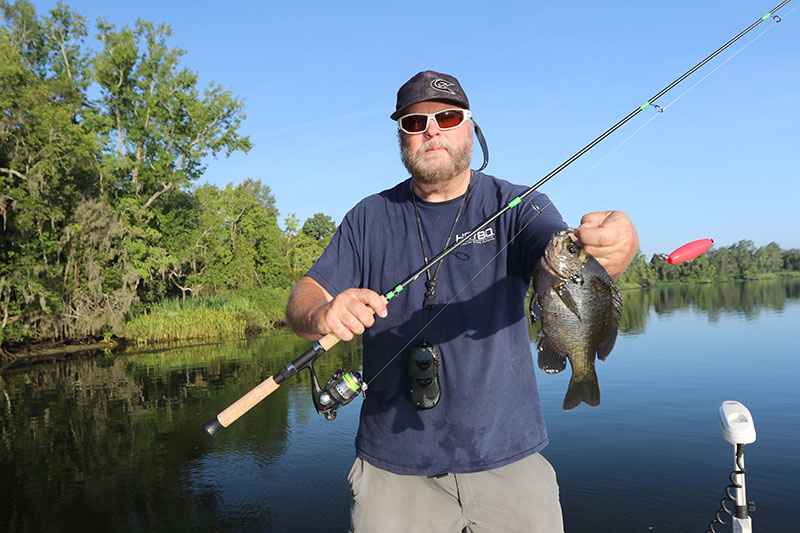
These rivers hold good populations of bream
Fishing for bream in the rivers of the Carolinas during July can be a highly productive and enjoyable experience. The warm water temperatures make bream like bluegill, shellcracker and redbreast more active and willing to bite.
In North Carolina, top river picks include the Neuse, Cape Fear, and Tar Rivers, while in South Carolina, the Edisto, Broad, and Pee Dee Rivers offer fantastic opportunities. Each river presents a mix of moving current and slack-water bends, and knowing how to approach each type of water can make all the difference.
When fishing in current, look for areas where the flow is broken or slowed, such as behind boulders, fallen trees, or bridge pilings. Bream will often hold in these eddies and seams to conserve energy while waiting for food to drift past. Cast slightly upstream and allow your bait to drift naturally into these areas. A small split shot can help keep your bait down without making your presentation too heavy. In these zones, using live bait such as crickets or red wigglers on a size 8 or 10 hook is highly effective. A lightweight spinning rod with 4- to 6-pound test line offers the sensitivity needed to detect light bites in the current while still giving you enough control.
In slack-water bends, the key is subtlety and stealth. These calmer pools allow bream to see more clearly and inspect bait more thoroughly, so finesse becomes important.
Find your depth
Look for undercut banks, submerged stumps, and overhanging vegetation where bream are likely to seek cover. In these spots, casting a small popping bug with a fly rod can produce great topwater action early and late in the day. Alternatively, use a float rig with a small piece of nightcrawler or cricket suspended about a foot off the bottom. Adjust your depth until you find where the fish are feeding.
The Neuse River in North Carolina offers a good mix of both current and still water, especially near Goldsboro. The Cape Fear River near Fayetteville features deeper holes with submerged structure ideal for targeting larger bream. The Tar River, especially around Rocky Mount, provides accessible bank fishing and is known for its aggressive redbreast sunfish.
In South Carolina, the blackwater Edisto River is famous for its scenic bends and abundant panfish. Focus on slack water along the cypress-studded edges. The Broad River, especially near Columbia, has rocky shoals and deeper pools perfect for drifting bait through current seams. The Great Pee Dee River in the eastern part of the state supports a healthy bream population and offers productive fishing around creek mouths and slow-moving backwaters.

Be the first to comment