

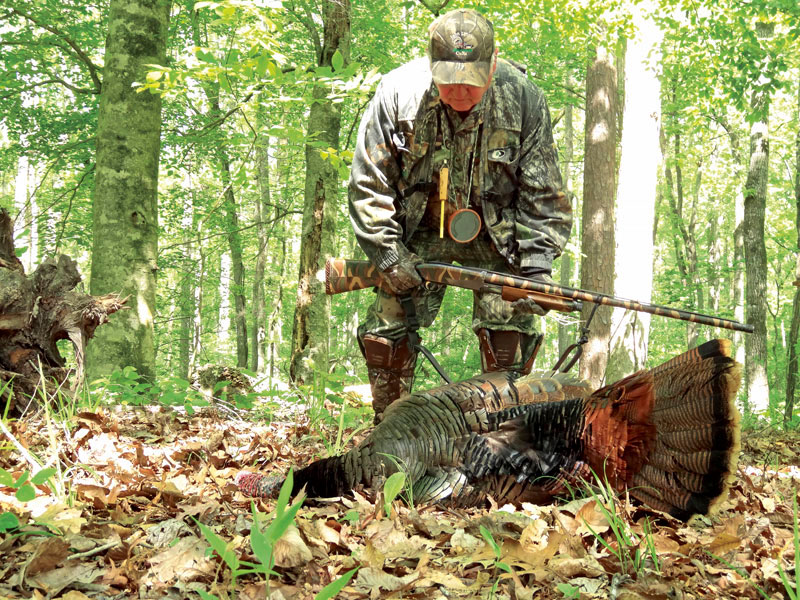
A pro’s guide to bagging educated turkeys
The early days of turkey hunting season typically provide gobble-filled mornings and exciting times in the woods. So it’s natural for turkey hunters to gravitate to early season hunting in big numbers.
But as the season continues, many hunters move on from hunting turkeys. And bypassing the late-season means losing great opportunities to tag a gobbler.
Tyler Chappell, from Gray Court, SC, is a turkey hunting guide and as such, he understands having great turkey hunting experiences for his clients late in the season is just as essential as early season.
Chappell said many hunters think turkey hunting becomes more difficult during the late-season. But that’s not the way he approaches turkey hunting.
Late-Season Strategies
“It’s not about becoming more difficult, or harder to call a gobbler,” he said. “It’s about adapting to a vastly different hunting situation than what existed early in the season.”
Chappell said as a guide he must adapt his strategies to meet what’s changed in the world of turkeys.
“First, hunting pressure has taken a toll in a couple of ways,” he said. “One, a lot of gobblers that were gobbling on opening day are now dead. Second, the surviving gobblers are much more wary.”
Plus, the turkey mating season has morphed from gobblers having an abundance of hens eager to breed, to many hens sitting nests late in the season and now unavailable for breeding.
“That’s a key factor working in a hunter’s favor. The available numbers of hens for breeding are down, with gobblers still in the breeding mode,” he said. “For the most part, the aggressive strategies that worked well in the early season are typically not as effective. But hunters can employ several different tactics to help them get a gobbler close.”
Calling Strategies
Chappell said calling strategy typically must change late in the season for consistent success.
“I tailor my hunting style toward playing a gobbler’s late-season attitude to my favor,” he said. “Gobblers have heard just about all calls and have been in a lot of situations with hunters. And they’ll develop individual patterns. It becomes a daily cat-and-mouse game to get a gobbler.”
“Late-season calling must be good to fool a gobbler,” he said. “A hunter must sound like a live hen, but a pressured hen.”
Professional call-maker John Tanner from Hemingway, SC said to be successful, a hunter must change from the norm of early-season calling.
“Generally, less is more during the late season,” Tanner said. “The softer, more subtle sounds and less calling overall are typically best. I significantly reduce the amount of yelping with calls because everyone has been yelping all season.
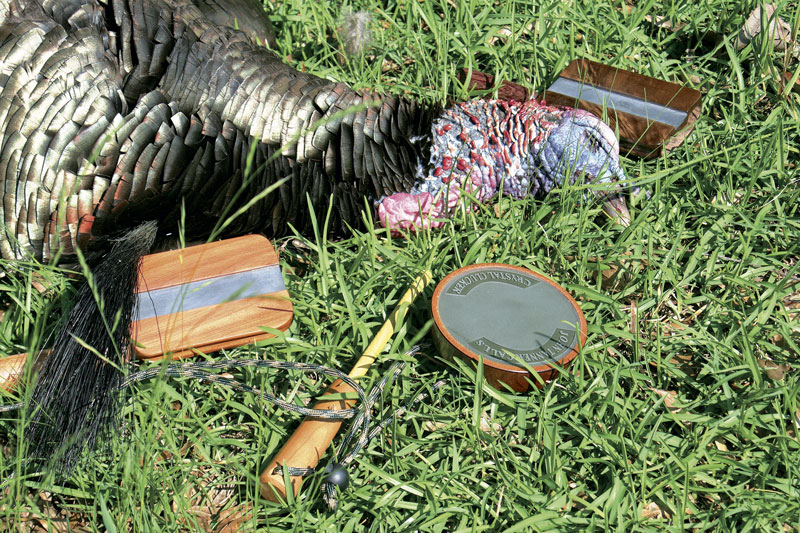
“One thing I’ll do is employ pot-type calls that make wonderful, subtle, realistic sounds,” he said. “Another type call that’s excellent includes suction, or trumpet, calls. It’s a realistic, but seldom utilized call.”
Tanner’s latest creation in his line of calls is a combination slate/trumpet call that provides both options in one call.
“It’s effective all season, but is ideal for late-season gobblers,” he said.
“Late-season turkeys tend to be quiet, sometimes totally silent as they approach,” he said.
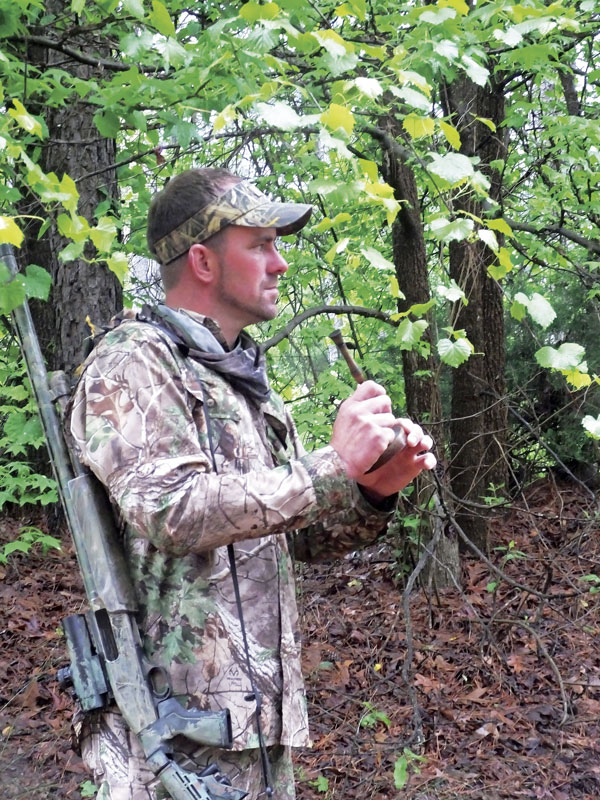
Tanner (843-373-8434) said by late-season a gobbler isn’t only looking for a hen. His eyes are trained to spot a hunter. And any unnatural sound in his world is a reason to vanish.
Chappell said he’s all in to use one of his favorite calls more often in late season; a simple dose of silence.
“If I get his attention and he lets me know he’s coming, I may just go silent and watch and wait,” he said. “He’s probably coming if I don’t mess it up.”
Do your Homework
Chappell said preparation for a hunt on a specific property is part of his planning strategy.
Chappell (864-419-1462) is a not only a professional turkey hunting guide, but he operates a property management business that designs plans to transform property into elite hunting areas. His hunting philosophy incorporates property knowledge as a core strategy throughout the season.
“Knowing the property you’re hunting is crucial to late-season strategy,” he said. “I’ll scout prior to hunting season and get a read on as many gobblers as possible. I’ll continue scouting to stay tuned-in to gobbler movement patterns.”
Tanner said that when hunting a gobbler in late-season, he’ll hunt him where he already wants to be. That simplifies the task.
“Late-season and food plots are a wonderful combination for gobblers,” he said. “It’s a place where hens not sitting nests are likely to visit. Plus the gobbler has excellent safety vision. I’ll slip in to food plots and that’s where I’ll often find late-season gobblers.”
Chappell employs modern technology, such as utilizing access to detailed maps on his cell phone, as another advantage. When a bird gobbles on the roost, he’ll use those maps to plan his strategy on how to best approach that bird without getting too close, and using available topography to shield his movements.
Stealth Mode
Chappell said woodsmanship skills are crucial to late-season success, and a serious hunter spares no effort.
“The woods and fields are a turkey’s home and they know it intimately,” he said. “We’ll never learn it as well as they do. But we can be diligent enough to kill turkeys.”
Chappell said during late-season, silence in approaching a gobbler’s location is truly golden.
“If a thief breaks into your home, he’s going to sneak in as quietly as possible,” Chappell said. “We’re sneaking into his home to hunt him. We don’t sound like anything else natural in the woods. We must be in stealth mode. When setting up, I use as much natural cover to hide as possible. I’ll usually use branches and limbs, as well as a tree, to conceal my location.”
He said a lazy turkey hunter limits their opportunities because they’re going to take short-cuts that impair their odds of success.
He literally goes the extra mile to become a part of the turkey’s world. Or better yet, to leave no trace that he’s even in that world.
“I’ll get up 45 minutes early to slip in to my targeted area via the best route, regardless of how long or difficult, and be in position to hunt a gobbler long before sunup,” he said. “I’ll be still, quiet and part of his world before he first stirs on his limb.”
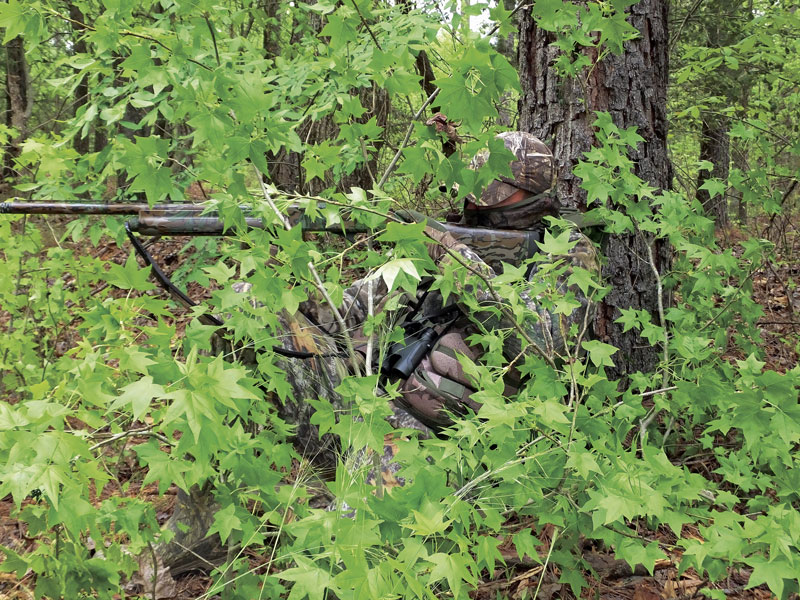
Chappell said he’ll use a creek to approach a gobbler almost silently if it’s dry and leaves are crunchy, because he can slip in quietly in the water. He’ll limit use of lights to travel. But if a light is needed, it’ll be a green or red light pointed to the ground.
Chappell said he prefers to be in position to hunt the bird from the roost. But the bird’s location can make that difficult occasionally.
“Rather than risk a pre-dawn approach that may bust the gobbler and end the hunt, I’ll opt for Plan B and get to where the gobbler is likely going after fly-down and wait on him,” he said. “Knowledge of the gobbler’s likely movement is based on previous scouting.
“Other stealthy ideas include, instead of using an ATV to approach within 300 yards of your target, simply walk in, use a bicycle, or an electric golf cart to arrive in silence,” he said. “The electric golf cart is an awesome tool for large tracts of land to quietly cover a lot of area using the road network for mobilized travel.”
Late-Season turkey hunting provides excellent hunting opportunities. But the hunting challenge is different from early season strategies. Chappell said it’s even more rewarding when a client “jellyheads” a gobbler late in the season.
“Late-season gobblers require more from me to be successful. But the satisfaction of killing late-season birds is always worth that effort,” he said.
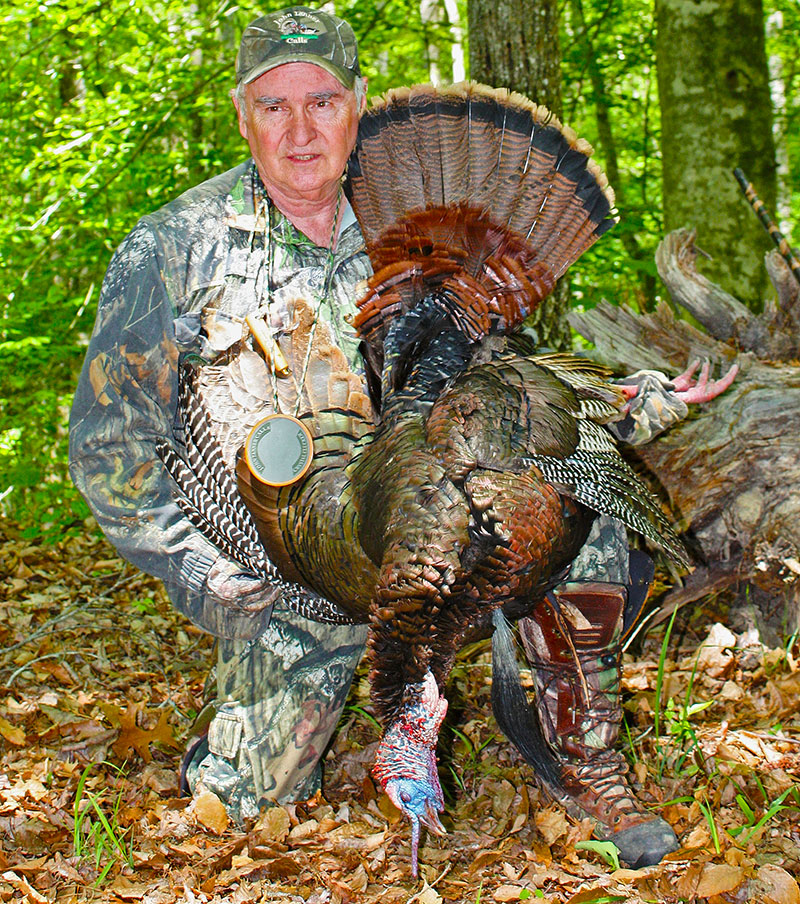
Utilize the sounds of nature
Chappell said we all want to hear gobbles and lots of them, but in late-season it’s not always going to work out that way.
“One change I make during late season is I no longer use an owl call to get a gobbler’s roost location,” he said. “They’ve heard owl hoots all season. I’ll switch to a goose call, a common sound in many areas. Plus, the goose call is an effective locator throughout the day.”
Listen to natural sounds and let other critters help you track a gobbler’s travel.
“If a gobbler answers my call and he’s on the ground, I believe he’s interested,” he said. “By listening for natural sounds, such as a squirrel barking or crows cawing, especially multiple crows cawing, I can track his travel route. I can determine if he’s headed in my direction, or if I need to make a quick move to intercept him.”
“If I deem silence is my best calling weapon, I’ll pay close attention to any sounds around me as I scan the woods,” Chappell said. “It may not be my eyes that alert me to a gobbler’s presence. The sound that often tells me he’s close may be drumming, or the flap of his wings as he goes into strut.”
Chappell said listen to the natural sounds to help you, because the gobbler will certainly utilize natural, or unnatural, sounds to his benefit.

Be the first to comment