


Why Carolina’s best bait shops are switching to the original house cricket
The phrase “pass the cricket cage” brings up fond memories of simpler times. I’ve heard it many times over the years, and said it many times too.
For many anglers, fishing for bream with crickets under a cork marked the beginning of their fishing careers, and a good percentage moved on to bass, crappie, catfish, or a number of saltwater species, leaving behind the old-school fishing that sparked their passion for catching fish.
That didn’t happen to me. Even though I often do pursue other species from time to time, I still love catching bream with crickets.
In my lifetime, I have noticed some changes in cricket behavior. I convinced myself it was just in my mind, but I discovered later that it wasn’t. Crickets really had changed, and not for the better.
What changed?
At some point, I started noticing crickets bite! It’s not terribly painful, but when your main concentration is on a bobber already in the water while you’re preparing to bait another hook, it’s a little startling. And it certainly can make it difficult to get kids involved in fishing. That little bite is just one more reason a kid can come up with to want to do something else with their time.
I also noticed crickets just weren’t lasting on the hook as long. As soon as you put them on a hook, they seem deflated, and reeling in a time or two from unproductive water often spells their demise, even without a fish biting them.
Why the changes?
I thought maybe those things were always problems, and I just didn’t notice it in my younger years. But the truth is, the original cricket used for bait, known as the Acheta cricket, was nearly entirely wiped out by a virus. Acheta crickets didn’t bite. They also couldn’t jump clear out of a cricket cage, another change among crickets I noticed in my lifetime.
When the virus hit the Acheta cricket population, most bait companies switched to banded crickets. And it’s the banded crickets that bite, jump, get lethargic at certain temperatures, and don’t last as long on a hook. They are also much less active and boring, which is great for feeding reptiles, but not so great for enticing fish into biting.
Even before the big Acheta die off, many bait companies had already switched to banded crickets, mainly because the fishing season is short in many areas throughout the United States, so they dropped Acheta crickets and focused on banded crickets to cater to the reptile market. It made financial sense for them to do that. But for a bream fisherman like me, it was not a good move.
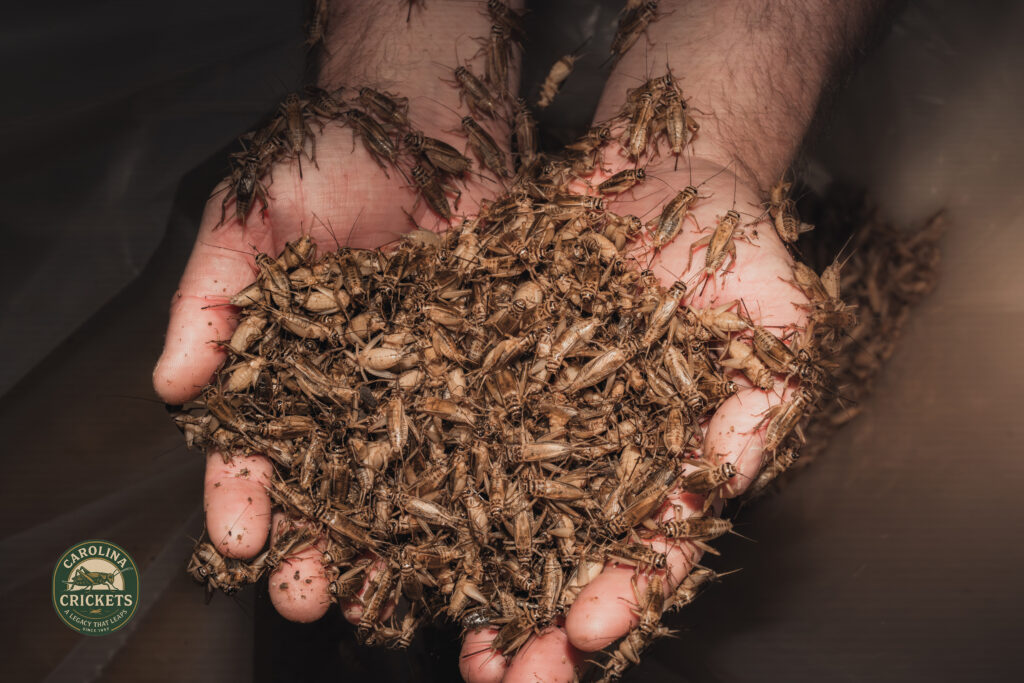
The Acheta is back
Fortunately for me and all other anglers, in 2025 the Sharpe family purchased the original Warren Cricket Farm in Dunn, NC. They have worked hard on restoring the stock of Acheta crickets, and as of this month, are in full production, shipping crickets nationwide to bait stores as well as everday fishermen.
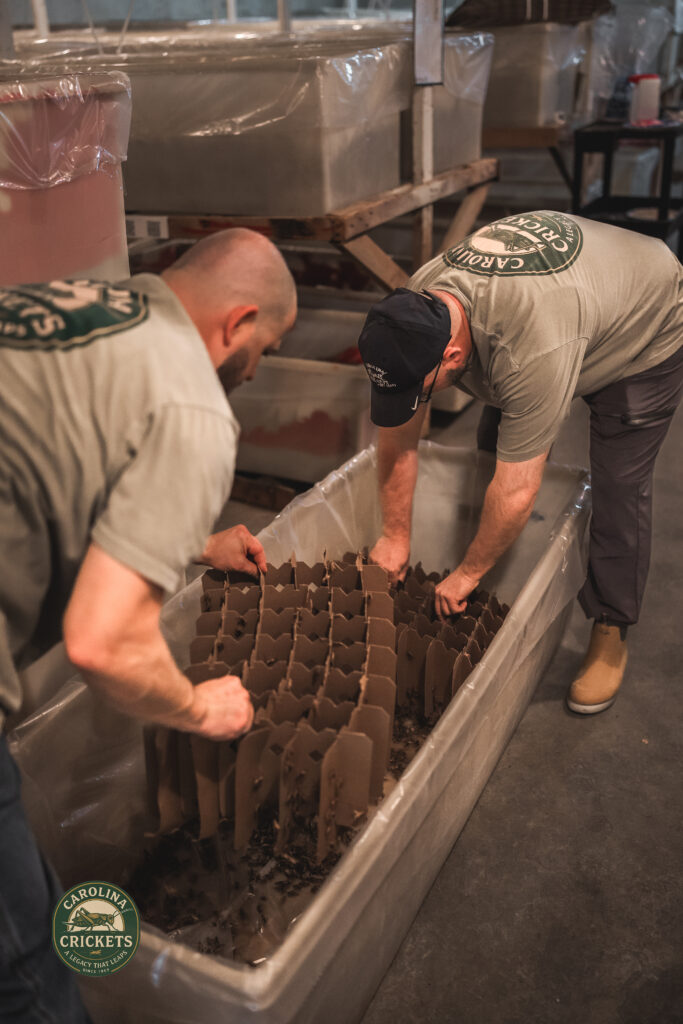
Understanding the importance of Acheda crickets to anglers, the Sharpe family goes to great lengths to protect and care for these crickets, which are more than an inch long when full grown, at their virus-free facility.
They feed these crickets a high-quality, calcium-rich organic diet, and take extra care in packing them for shipping.
Small or bulk orders
Tell your favorite bait store about Carolina Crickets, and let them know you’d like them to stock Acheta crickets. And if you’re more of a DIY person, order them yourself.
You can order as few as 50, perfect for a morning or afternoon fishing trip. And if you want more, that’s not a problem either, order them in bulk right from their website (www.carolinacricketfarm.com). They’ll ship them to you, with two-day shipping available in most locations, and guaranteed live delivery throughout the spring, summer and fall.
66 vs. 120
Acheta crickets are the best choice for fishermen, and for bait shops too.
The profitability angle is obvious when they see it takes 100 to 120 banded crickets to fill a tube, when it only takes 66 Acheta crickets to fill that same tube.
And they aren’t ripping off anglers either. Acheta crickets are more robust, last longer on the hook, and attract more fish because they are more active and lively.
The Acheta Advantage
The banded cricket is a profit-killer for bait shops. If a store owner stuffs 120 crickets into a tube for the same price they could sell 66 acheta crickets, they are literally watching their margins jump out the window.
“For the local bait shop, inventory is money. Many shops have unintentionally slashed their margins by carrying smaller “Bandit” or banded crickets, which require 100 to 120 insects just to fill a standard $5 tube,” said Bryan Sharpe of Carolina Crickets. “By switching to Acheta crickets from Carolina Crickets, shops can provide a full, active tube with just 66 adult crickets. That’s a 30% increase in efficiency, putting the profit back in the owner’s pocket where it belongs.”
fisherman’s preference
“Fishermen are loyal to what works, and the truth is, they go where the Acheta crickets are,” he said. “Known for being more robust, active and lively on the hook than the smaller banded varieties, the Acheta is the gold standard for Carolina anglers. When a fisherman sees a tube full of large, healthy Acheta crickets, they know they’re equipped for a trophy day, and not just small talk.”
Local Heritage
“Raised right here in Dunn, NC, our Acheta crickets aren’t just bait — they are a legacy. Centrally-located to ship live, healthy crickets with two-day shipping, we are emphasizing a return to the quality bait that built this industry,” he said. “When bait stores buy direct from our farm, they aren’t just getting better crickets, they’re also getting a partner dedicated to the success of the Carolina sportsman.”
Sharpe said the choice is simple, for both bait store owners and anglers.
“At Carolina Crickets, we aren’t just raising the Acheta fishing cricket — we are preserving a legacy that leaps,” he said. “We urge bait shop owners to give your customers the original bait they’ve trusted for generations.”
The bream are biting, so place your order, big or small, at www.carolinacricketfarm.com. ■


Be the first to comment