

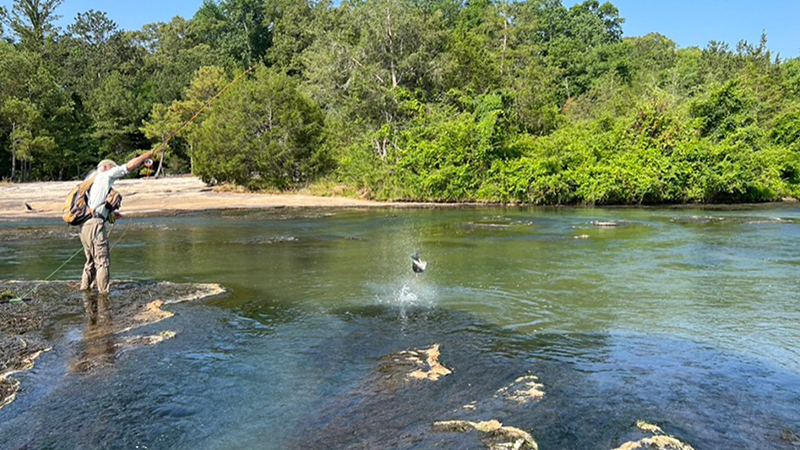
A trip to Georgia’s Flint River is worth the drive
Rumors of a great fly fishing spot can attract anglers like a magnet, eager to test their skills on new waters for that inevitable pull of the fly line and the power of the bent rod. Even if it required driving a few extra miles to get there. Mileage is no problem once I get focused on a nearby bucket-list fly-fishing spot.
After hearing stories of shoal bass eager to strike topwater flies with a southern ferocity, I couldn’t wait for the weather to warm enough to cast to them with a handful of flies. From Greenville, South Carolina, it took about three hours to make the journey on I-85; but when excited about fishing a new river, time seemed to pass quickly.
The river begins in Atlanta, Georgia, and flows free for over 200 miles south through Georgia, where it meets several other rivers and forms the Apalachicola River, and empties into the Gulf of Mexico.
For centuries Native Americans called the river “Thronateeska,” meaning “flint picking up place.” During its discovery by Desoto in the 1500’s it was referred to as the Rio Perdernales, meaning “flint” in Spanish and its name was eventually translated into the “Flint River.” I renamed it “Awesome.”
I spent the day with an old friend and fly fishing legend, Kent Edmonds, on a fishing and exploration trip. The weather was perfect for wet wading, with temperatures reaching into the low 80s in middle Georgia. The cool water felt refreshing while wet wading in the hot sun.
Plenty of room
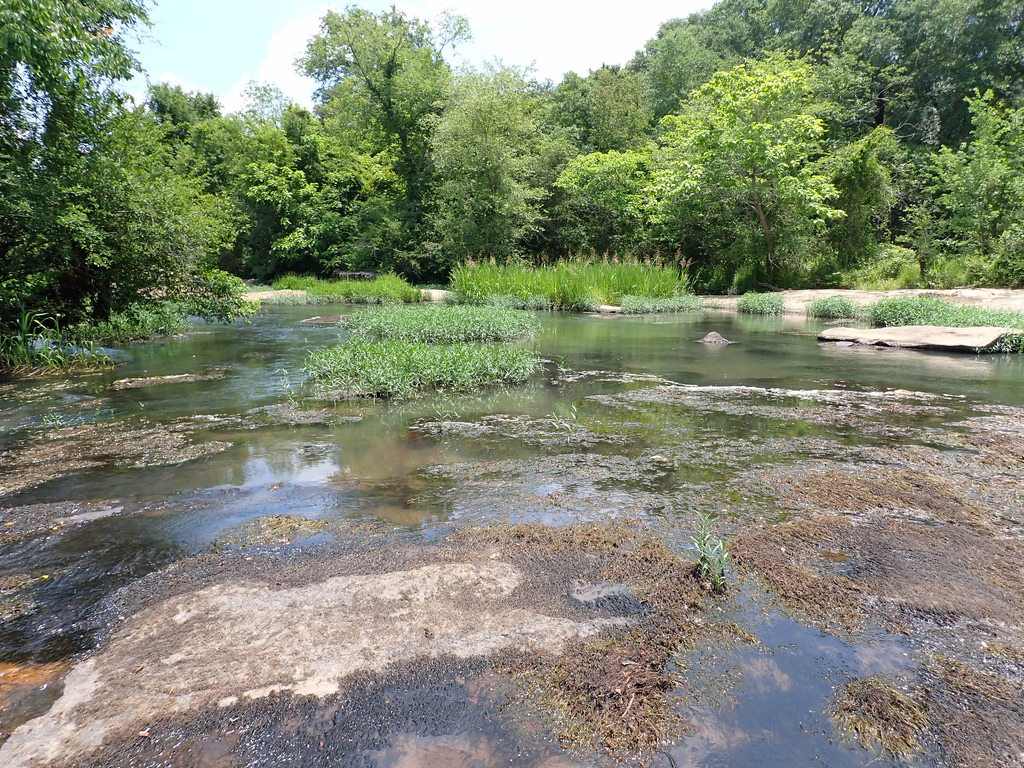
Looking at the river from the bridge overhead, knowing its historical contributions and that its path had remained essentially unchanged for centuries, created a sense of appreciation for even being there. It was wide enough that kayakers, float tubers, and fishermen could all have their piece of the river without intruding on each other’s space. This specific area we were going to fish had rivulets of water flowing through indentations carved in the rock over time, creating numerous fingers of riffles waiting to be fished.
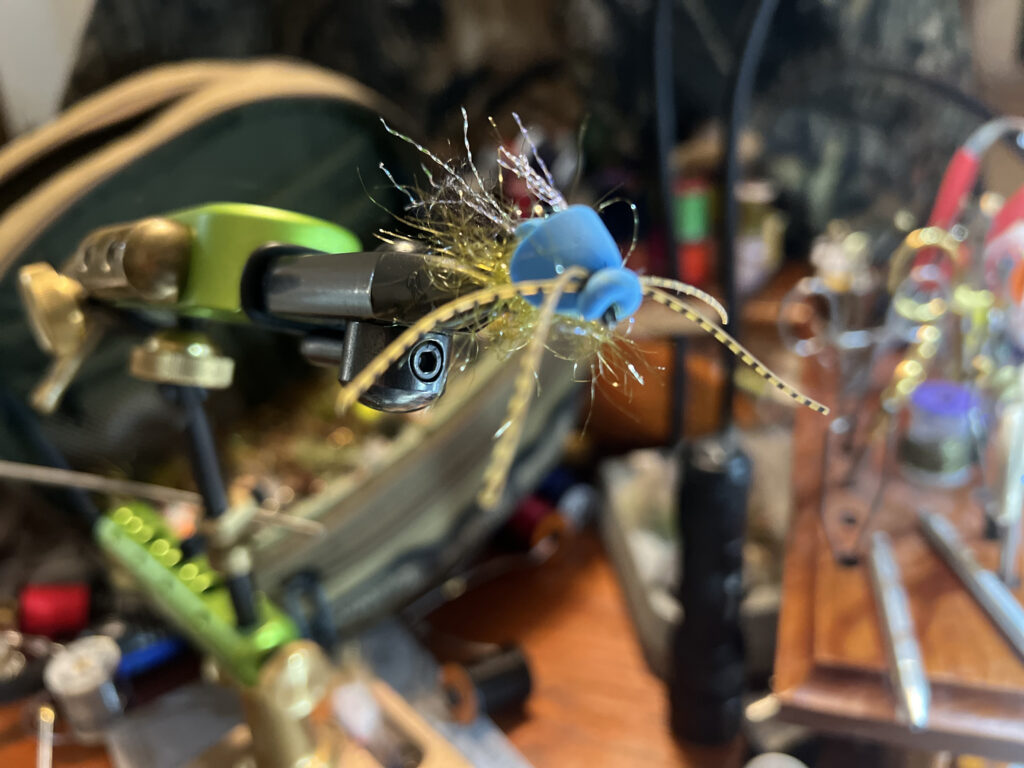
My introduction to the Flint would begin with casting and fishing one of Kent’s well-known topwater fly patterns, the Stealth Bomber. Due to its effectiveness in years past, this fly has proven its worth and deserves a spot in any fly box. Of course, I had tied an overabundance of them and carried a fly box full of assorted colors and sizes of the topwater foam-based fly. I was thankful they weren’t weighted flies. Otherwise, it would have been like wading with a pocket anchor and I would have probably sunk if I had stepped in over my head.
Stay alert
The light fog was lifting as we found a path through the woods and finally reached an open outcrop from which to start.
It’s interesting how a fishing trip can be filled with positive or negative signs reflecting the day’s outcome, even before the first cast is made. As we neared the river, so focused on its beauty—the many riffles and runs cascading across a particular mound of rock—we happened to look down and notice a large water snake lying at our feet, raising its head as if to greet us. Thankfully, it wasn’t one of a poisonous variety, which reinforced my “sign” theory that it would indeed be a great day.
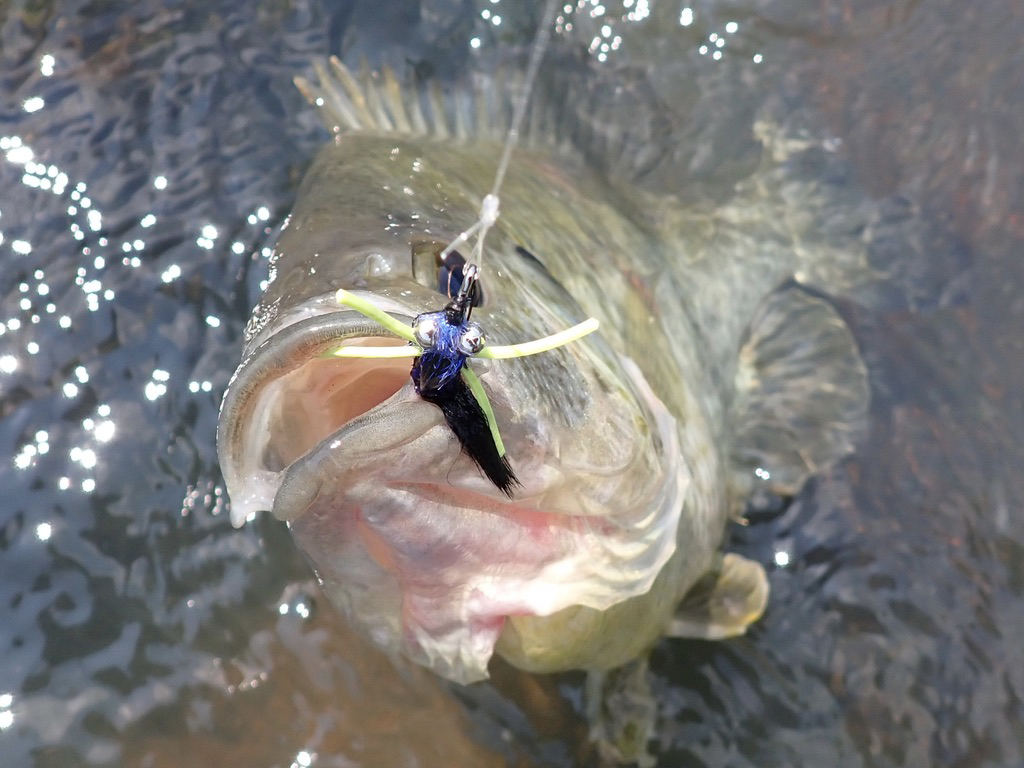
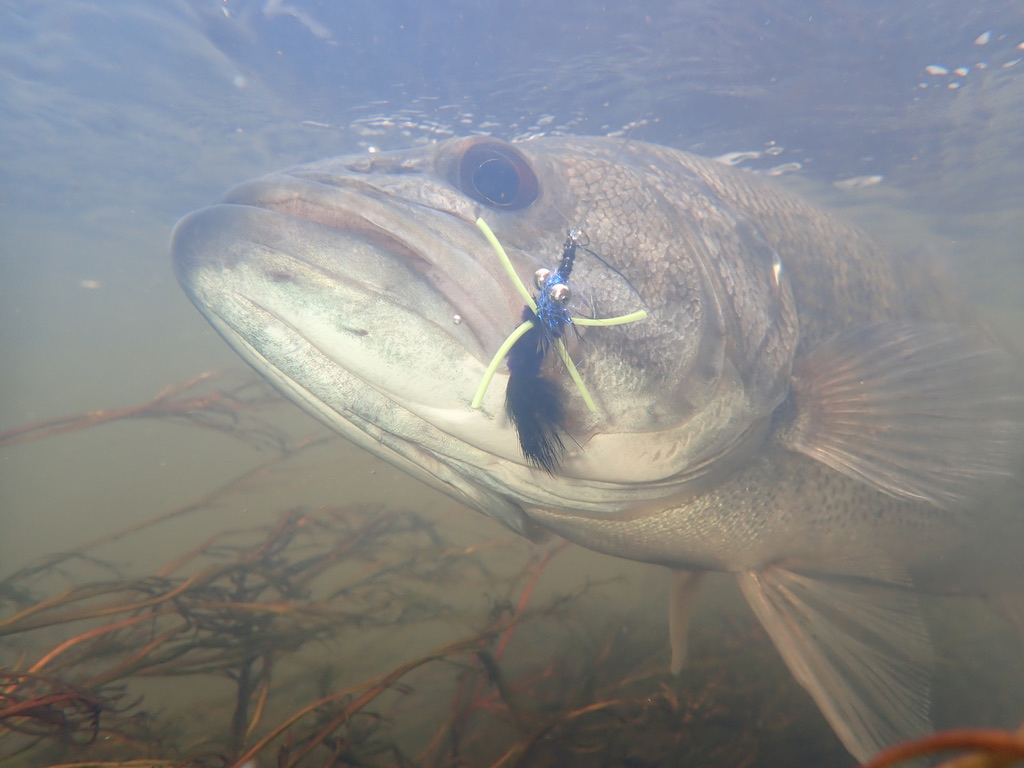
Kent mentioned that the first appearance of the river can be deceiving, as the bottom may look shallow, maybe 1-2 feet deep, but the river rocks also contain holes and crevices where the native shoal bass hide and ambush prey. These unseen holes can also make wading tricky, so it’s important to watch your step. Native only to a few rivers in Georgia, the shoal bass provide an explosive reaction to a top-water gurgling fly, putting a nice arc in the fly rod and becoming airborne when hooked.
Walking to the river’s edge, this first rocky stretch was bordered with short grass along the back eddy and looked extremely fishy. The water flowed over an outcrop, creating a foam line that turned sharply left away from the grass edge, forming a good inside pocket for my bomber fly to land. The very first cast caused a rise and a miss, so I quickly placed a second one in the same spot, and there it was: my first shoal bass. This fish lived up to all my acrobatic expectations.
 Plenty of fun
Using six-weight fly rods made the larger size 10 Bombers easier to roll cast and land near the targets. With each hook-up, these fish put on hard runs, leaps, and surges that sent chill bumps down an old man’s spine as the day went on. I never tired of catching fish, even small ones.
Continuing to explore, I waded downstream and found an inviting crevice where the river created a deep, angled three-foot rockslide as it bubbled downward with some velocity, emptying into the pool below. I was entertained by a bale of turtles taking turns swimming to the head of the pool, climbing up, and then gliding on the rock downstream along the swift current. I couldn’t tell whether they were feeding or just enjoying recess and a free ride provided by nature. Maybe even swimming lessons for the younger ones?
After ten minutes of turtle entertainment, I moved closer to the water’s edge. The turtles spooked easily as I approached. They submerged and then gathered on the far side of the pool. While they disappeared, I caught several nice shoal bass back-to-back during the turtle intermission. Once the turtles realized I was only a spectator who had come to fish, they resurfaced and resumed their synchronized behavior. I thought it was pretty cool to hook a shoal bass on topwater beside a turtle riding the currents.
Standing there, looking around and deciding where to wade next while listening to the low hum and soothing sound of many shallow riffles, I became enamored with an extremely long run on the far side of the bank. It was bordered by large rocks and tall grass and looked especially deep, possibly holding a lot of fish. I reminded myself that I was there to discover and investigate. Basically, I convinced my inner-self that the grass was greener and the fish were going to be bigger there. It was time to completely dismiss and ignore the adage of leaving feeding fish to find more fish. There’s an innate urge to always see what’s around the next bend. The mystery of which fish would be caught next tugged at my soul, and this new run looked more inviting than where I was presently standing.
Wading deliberately across the river while trying to focus on the next step, I reminded myself to keep looking back and imprint which rocks I used to cross, a habit born of lessons learned the hard way. Sometimes, intently concentrating on the fishing ahead has caused me to forget the path that brought me to them, making the route back unnecessarily difficult.
Explore
Wading and climbing over rocks to reach my destination brought one memory of a past adventure that still haunted me. Laughing to myself about this foolishness, I remembered wet wading for smallmouth bass in the French Broad River above Asheville, North Carolina, years ago when I was young and foolish. Once again, I was determined to cross to the other side and paid no attention to my path. I zigzagged, waded through deep holes, and crossed on rocks for almost thirty minutes until I was finally there— and it was worth it. As dusk fell, I looked around, and all the rocks looked the same in the fading light. The headlights from my buddy’s truck shone brightly, but a long way from where I was standing. With too many rocks, deep water all around, and darkness closing in, I put the fly rod in my mouth and swam back across the wide river. I learned a valuable lesson. This section of the river proved no different, full of eager fish and reinforced my decision to cross over.
The Flint’s topwater fly action included several species of fish, keeping it interesting and us never knowing what might bite next. Intermingled with the shoal bass, we caught and released several large bream and shellcrackers. Fishing up an appetite, we found some shade from a large river birch, sat down for a quick lunch and discussed the fish we caught and the ones we didn’t. Although it wasn’t extremely hot yet, the sun was intense, and the shade was a welcome relief.
Worth the trip
The drive from Greenville was worth the effort. My fly fishing trip to a new location was truly successful, and I was grateful for the chance to experience this wonderful fishery with my buddy, Kent. Catching fish on the fly all day with the same two flies, just changing colors and sizes, gave me a good, tired feeling. Wet wading in the river’s cool waters also made the day enjoyable.
All good things must come to an end, and by late afternoon, it was time to head home. There were plenty of memories to keep me occupied during the drive back to South Carolina. I will return and look forward to spending another day with Kent and lifting the rod tip on an exploding shoal bass.
If you are interested in fly fishing this outstanding fishery, contact Kent Edmonds at Kent@flyfishga.com. ■

Be the first to comment