

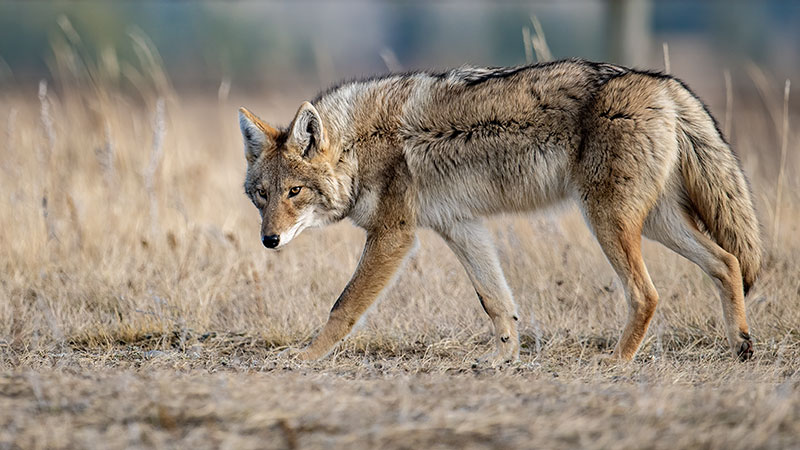
By December, many hunters have either filled their buck tags, filled their freezers with venison, or are looking for something other than deer to target.
Some hunters are even taking to the woods with the idea that they’ll shoot a trophy or some more meat for the freezer if the opportunity arises, but knowing they’ll be just as happy to shoot a predator too.
As winter in the Carolina woods settles in, the leaves have mostly fallen, and the late-season quiet creates an ideal backdrop for hunters pursuing wary predators.
Among those predators, coyotes stand out as both a challenge and an opportunity, and more hunters are turning to air guns as their tool of choice. The use of modern air rifles, far removed from the low-powered pellet guns of childhood memories, has grown rapidly in recent years.
Activity
The Carolinas provide a range of landscapes that favor coyotes, from agricultural fields and pine thickets to rolling foothills and hardwood ridges.
December is a particularly active month for these predators. As temperatures drop, natural prey becomes less abundant, and coyotes are more willing to investigate calls or scents they might ignore earlier in the year.
Hunters armed with air rifles take advantage of this by setting up near travel corridors, clear cuts, or field edges where coyotes search for easy meals. The quiet nature of air guns offers a unique advantage in these settings.
Unlike conventional rifles, which can echo sharply through the hills and alert distant animals, air rifles produce a more subdued report, allowing hunters to make follow-up shots or call in additional coyotes without spooking the entire area.
Proper shot placement becomes even more critical when using air rifles. Ethical hunters understand that these rifles, while powerful, have limitations compared to high-powered firearms.
Stay close
Choosing a rifle chambered for a larger-caliber pellet or slug, such as .30 caliber, helps deliver the necessary energy for a clean harvest. Hunters typically keep their shots within 50 to 100 yards, depending on the capabilities of the rifle and the specific ammunition.
In the crisp December air, coyotes’ thick winter coats can add another layer of challenge, making accuracy and understanding of the rifle’s trajectory essential.
Calling strategies remain much the same as those used by traditional firearm hunters. Electronic calls that mimic distressed rabbits or fawns often prove effective during this month, as coyotes are hungry and opportunistic.
Some hunters also incorporate coyote vocalizations to spark territorial responses. With air rifles, hunters may find it beneficial to position themselves slightly closer to the anticipated approach route, relying on concealment and wind discipline to avoid detection. The light recoil and stable shooting platforms available with air rifles help promote precise shots when the moment of truth arrives.
Be patient
Another advantage of air gun hunting in the Carolinas is access. Some private landowners, wary of high-powered rifles near livestock or structures, are more comfortable granting permission to hunters using air rifles. This can open up properties that might otherwise be off limits. Additionally, the quieter nature of air guns is appreciated around rural homesteads where loud rifle shots can be disruptive.
December coyote hunting with an air rifle requires patience, preparation, and a strong understanding of both equipment and animal behavior.
For those who embrace the challenge, it provides an engaging and rewarding winter pursuit. The combination of modern air-gun technology and traditional predator-hunting skills makes every successful hunt a testament to precision, strategy, and respect for the Carolina woods in their coldest season.
Pyramydair.com has all the products and resources you need to get outfitted for whatever species you’re hunting for, including articles and videos about a wide range of air gun topics.


Be the first to comment