Bigeye facts
Dr. Craig Brown, chief of the highly migratory species branch of NOAA Fisheries in Miami is an expert on bigeye tuna biology. Here are some of his observations: […]
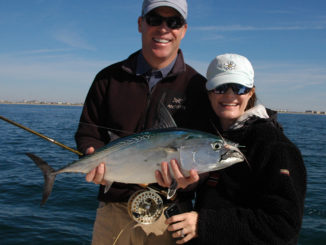
Although most anglers use spinning or baitcasting tackle for bonito, fly-rod fishing has become popular in recent years — probably because false albacore will hit the same flies as bonito. […]
Cannonball jellyfish are a staple for many nearshore and inshore fish. […]
Atlantic bonito are probably the only member of the Scombridae family caught from Atlantic Ocean waters that anglers will prepare as food. […]
One of the best things about catching cobia or spadefish — in addition to their fantastic fighting ability — is their value as table fare. […]
The Point is 34 to 42 miles southeast of the Oregon Inlet sea buoy, at 35.32.57 to 35.33.00 (north) by 74.50.67 to 74.84.00 (west). […]
Bigeye tuna school with their own or with other tuna, including skipjacks, true albacore and yellowfins. […]
Bluefin and bigeyes are the only tuna with a warm-blooded circulatory system that allows them to recycle oxygenated blood one more time before sending it to the gills for re-aeration. […]
The latest stock assessment on cobia in the South Atlantic was released this past January. It took years to compile, and approximately half of the 400 pages of information came from the S.C. Department of Natural Resources. Some of the findings were extremely interesting. […]
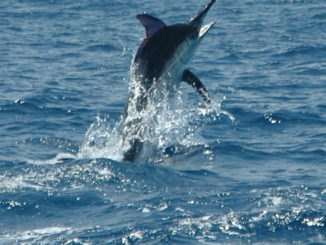
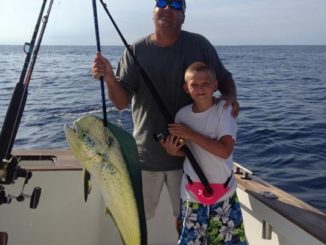
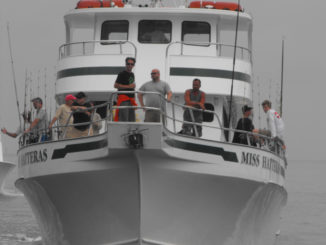
The offshore fishing out of Hatteras has been consistently good all spring, and it’s ramping up another notch heading into this week’s Hatteras Village Offshore Open tournament, with a variety of tuna, a growing number of dolphin, good wahoo and some hungry billfish in the baits lately. […]
Copyright 1999 - 2026 Carolina Sportsman, Inc. All rights reserved.