


Add an air rifle to your small game hunting arsenal
Most sportsmen in the Carolinas cut their teeth on southern bushy tails. Though most move on to bigger game animals later in life, chasing squirrels captivated them in their early years, helping them learn about the woods and develop their love for the outdoors and hunting. And even to hunters who regularly kill big bucks, squirrel hunting still captivates them.
Whether armed with a .22 rifle or small shotgun, young sportsmen spent countless days plodding through the forests and fields in pursuit of gray squirrels. Sitting quietly waiting for them to appear, or sneaking softly through the woods, watching and looking for little movements, these same hunters, though older now, still love to do it. And once deer season is over, many still make the time to do it each year.

And many do it with air guns. It may sound like a kid’s game to those who haven’t done it before, but hunting squirrels with air guns is the real deal. Jackie Bushman of Buckmasters fame teamed up with Gamo Air Rifles to create the Squirrel Master’s Classic. They formed the event to introduce adult air rifles to the masses and show how proficient they are. Those who attend, often with skepticism at first, say it’s one of the finest outdoor events they’ve ever attended.
Some have even said the event, which brings together some of the biggest names in outdoor television celebrities and outdoor writers, along with 4-H kids, was life changing for them. A tall claim indeed, but one not uttered lightly.
Types of airguns
It’s important to note that these are not kid’s BB guns we’re talking about. These are adult air rifles and not toys. They are lethal rifles that use compressed air, rather than gunpowder, to propel the projectile. Two types of propulsions are used in adult air rifles. The first is piston, or break action. The second is pre-charged pneumatic (PCP).
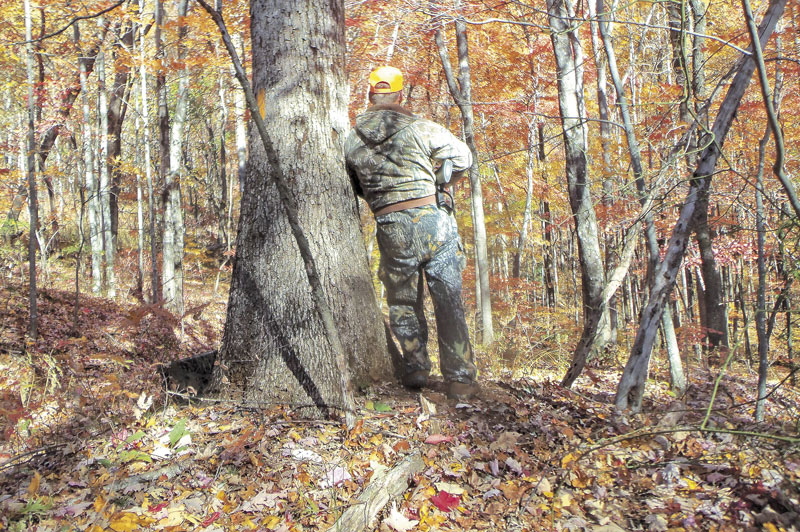
Most consumer air rifles are piston driven, meaning the rifle must be cocked to activate the piston that compresses the air. PCP powered air guns use an external tank to fill up with 3000 to 5000 psi of air, then select a predetermined amount of air to propel the pellet through the barrel. PCP air rifles are usually considerably more expensive. And they come in many different calibers compared to their piston-driven counterparts.
The Gamo Swarm is a break action air rifle in .22 caliber that carries a 10-shot clip. The clip allows for fast follow up shots. This gun shoots at a whopping 1300 feet per second, rivaling rimfire ammunition in speed and energy. Topped with a scope, the Gamo Swarm shoots sufficient groups out to 40 yards.
The Swarm is relatively inexpensive, especially when compared to PCP models. But do piston-driven air rifles in the Swarm’s class have the efficiency and ability to ethically kill a squirrel with one shot? Eastern gray squirrels are known for their thick hides, so pellets need enough energy behind them to humanely dispatch one of this critters.
On paper, it appears these guns have what it takes. And in practice, it becomes apparent that they do, in fact, have all they need and more. These air guns are highly capable, and every bit as efficient as a rimfire, and with a huge bonus — less noise. This often gives hunters a shot at a second or even third squirrel without them being frightened away by the sound.

Some drawbacks
After attending the Squirrel Master’s Classic, some hunters realize that the proper air gun becomes their favorite for pursuing small game. But that doesn’t mean they don’t understand the drawbacks to using them over rimfire rifles. A couple of those drawbacks stand out.
One drawback that is more important to some hunters than others is the amount of strength required to cock these guns. The Gamo Swarm’s documentation states it takes 41 pounds of cocking force. That may not sound like a lot, but some smaller-framed shooters have difficulty completing this task, especially in time for a follow-up shot. Some other piston-driven rifles need more force, while others need less. But this is a consideration that must come into play when deciding whether to use an air rifle or not.
The second drawback applies to everyone who shoots an air gun — it’s difficult to zero these guns to the level most hunters desire. The problem is in the pellets more so than the gun. Unlike standard rifle ammunition, pellets are mass produced with little effort toward precision. It is common for some pellets to fit loose in your barrel while others fit tight. That’s because some edge molding remains on the pellets, making them less than perfectly shaped. So getting consistency from an air rifle can be frustrating.

With those drawbacks in mind, are air rifles worth the money, and will they perform satisfactorily for small game? Absolutely. Some hunters enjoy the added challenge of hunting with air rifles, especially considering their low cost, as well as how much quieter they are compared to rimfire rifles. For most hunters, the drawbacks mentioned above are far outweighed by the positives these guns offer.
If you’re chasing bushy tails this season, consider doing it with an adult air rifle. You will be amazed at how well it performs, and at how much fun you’ll have.
Find the right pellet
Selecting the right pellets can be critical for ethical and accurate shooting. As noted above, pellets are mass produced, so finding consistency can be difficult. Some of the more accurate pellets will cost a good bit more money, but the accuracy more than makes up for the expense. With quality pellets, lethal shots out to 60 yards are common.
Consider these factors when choosing pellets.
Accuracy comes at a cost, but it’s worth the money to gain the accuracy needed for effective and ethical hunting. Pellets come in two basic forms – ballistic tip and non-ballistic tip.
Consider the weight and shape of the pellets you purchase. Most ballistic pellets are in the 14.5-grain size, with a few at 14.4 to 14.9. To get consistency, use the same size every time. Copper-covered pellets are more uniform in shape and more consistent in weight. They are worth testing.
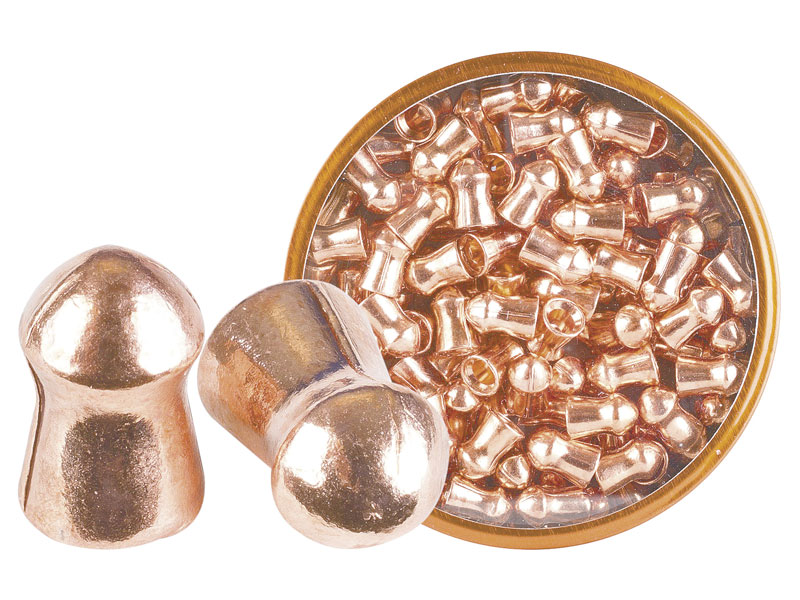
If you’re looking for a heavier pellet for varmints or larger game, the H&N ballistic tips are 16 grain. Gamo, Crossman and Benjamin also offer larger, heavier pellets.
Sighting in an air rifle is similar to sighting in a centerfire rifle. Try different ammo before you settle on the one your rifle prefers for the most accuracy. It can be frustrating to buy a tin of pellets and shoot just a few to discover they are all over the place, only to try another brand/weight and see that it shoots perfectly. But at a cost of only a few dollars for 200+ pellets, it is a little more tolerable.
To get the most out of your air rifle, nothing beats shooting pellets of different weights, shapes and sizes to find what is best for you and your rifle.

Be the first to comment