

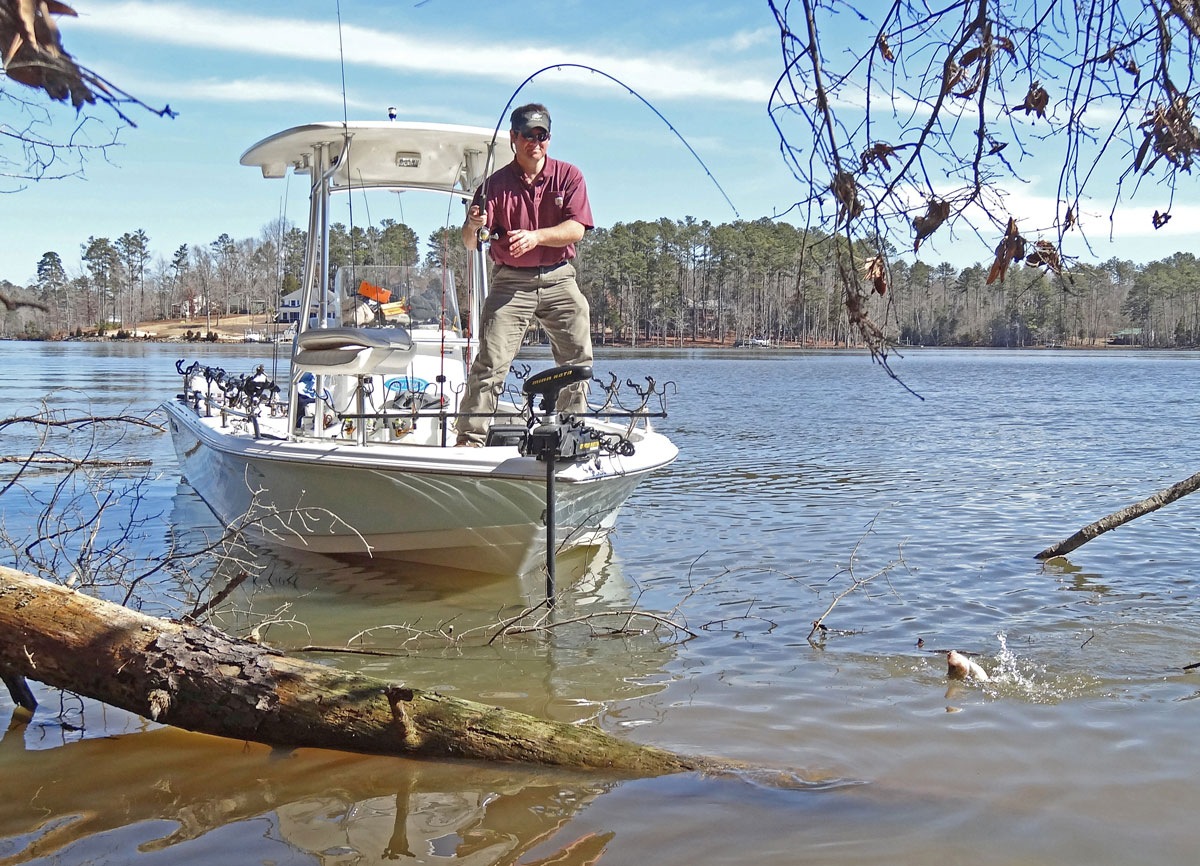
According to guide Brad Taylor, shallow-water crappie action doesn’t last for an extended period at Lake Murray, but it’s sensational when it occurs.
“When the big females get into the shallows, often by the end of March and sometimes earlier up the rivers, that’s prime time to catch slab crappie,” Taylor said. “At Lake Murray, slab crappie typically means fish in the 1 ½- to 1 ¾-pound class, but you can catch a lot of them. Of course, some fish in the 2-pound class and larger will be caught this time of year.
“My years of experience with crappie is that fish will move to the shoreline first, but still in slightly deeper water, and then migrate into the shallows by around the end of March and early April.
Taylor fishes jigs and/or minnows when fish are shallow.
“I vary color patterns on jigs when trolling, but when fishing shallow water with jigs I’ll use a 12-foot rod with a float 2 feet or less depending on the cover being fished,” he said.
“I specifically prefer a black/chartreuse jig for shallow-water fishing” he said, “but for those using a minnow, the key is to hook it in the tail because they wiggle more and seem to be more attractive to crappie. That’s true whether I am fishing minnows shallow or tight-lining deeper water.
“I get in the shallow water and start probing around brush, logs, stumps, docks or any visible cover,” he said. “Sometimes even a small twig sticking from the water in the shallows will be part of a much larger object under the water and can hold a lot of crappie. Don’t pass any potential target when working the shallows.
“When you get on some fish, keep working that area until the action slows, then start moving and hunting again. Typically, if you can get on a few places where shallow fish are located, you’ll be culling fish.
Be the first to comment