

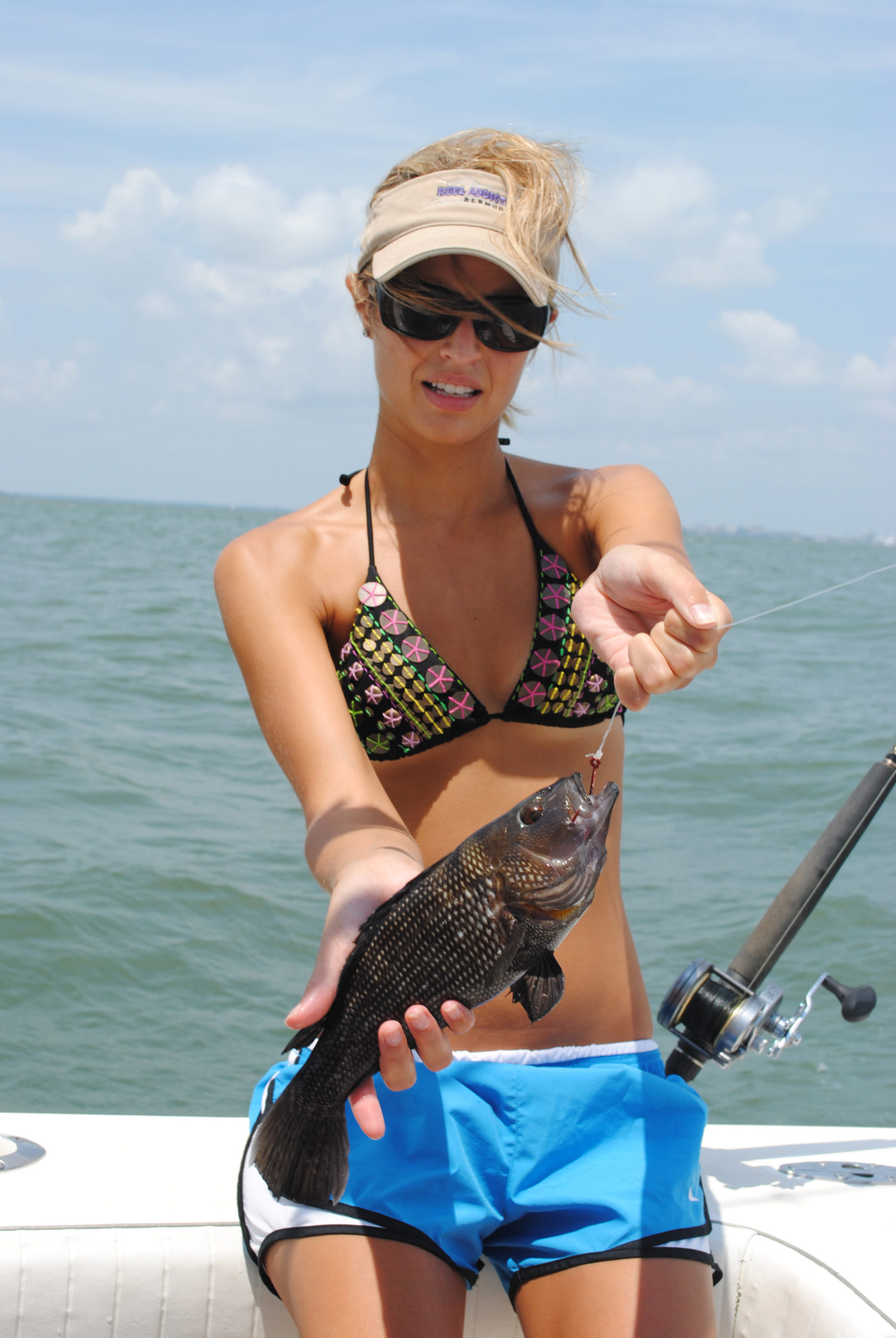
Not too long ago, plenty of options were available for fishermen who were set up to head offshore, but thanks to the folks at the South Atlantic Fisheries Management Council, those options available are dwindling.
Currently, there is a moratorium on red snapper, and seasons have been closed for grouper and black sea bass. Because of the closures, other bottomfish — including tilefish and sheepshead — have become increasingly attractive targets for charter captains who want to fill their clients’ coolers.
What effects will the increased pressure have on sheepshead and other species unaffected by closures? Indications are, sheepshead stocks are healthy and the current 20-fish daily creel limit is adequate.
Charter captains are having a hard time understanding the need for extensive closures.
“In the past few years, I have caught more and bigger red snapper than ever before, and there are actually so many that they’re in the way when grouper fishing,” Holmquist said. “I am ready for them to open the snapper season back up; not only are they fun to catch, but they are also great eating.”
The black sea bass season closure is even harder for Holmquist and other charter captains to understand.
“There are so many black sea bass out there it is annoying, and I would like to see real data that can prove we are overfishing them,” he said.
According to the SAFMC, black sea bass were overfished, their population was too small and their rate of removal was too high. That led, in 2006, to an annual recreational quota for black sea bass that allows no more than 409,000 pounds harvested annually through 2016. Because the quota was exceeded by an estimated 67,263 pounds in 2010, the quota was reduced to 341,747 pounds in 2011, a number that was met only a few months after the season opened in June 2011.
According to the Coastal Conservation Association, the restrictions begun in 2006 have worked much better than expected, the population has recovered, and the catch quota is being met more quickly — but the restrictions remain in place from the original agreement.
The effects of fishing closures are felt far away from the boat.
“It hurts a lot of people when fishing seasons are closed,” Holmquist said, “not just charter captains, but marinas, tackle shops, mechanics and everyone else who is involved with boats leaving the dock.”
Regulations for offshore species often change without much notice, and possession of a protected fish can lead to big fines. Anglers should always check what the current regulations are before heading out for a day of fishing.
More information on catch limits and closures is available at http://www.safmc.net/ or by calling 843-571-4366. Up-to-date information on catch limits and regulations is available online at http://www.dnr.sc.gov/, at the local SCDNR office or by calling 843-953-9312.

Be the first to comment