
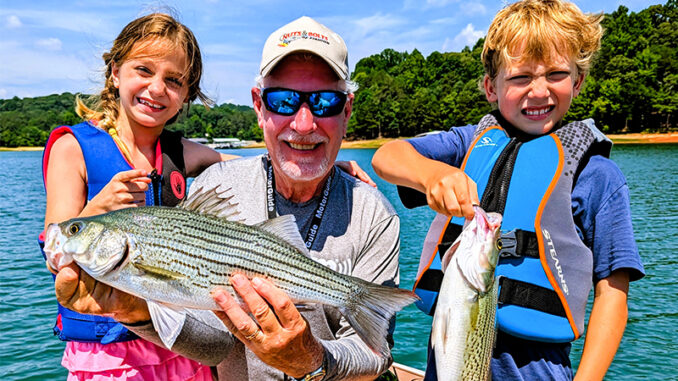
The right lake, species and guide combine to beat high temperatures
The summer beatdown of heat and humidity in South Carolina takes a toll on fish, and it’s easy to understand why. The hot water in lakes, coupled with the corresponding high metabolic rates of fish and low dissolved oxygen in the shadowy depths, are stressors. Many species become difficult to locate and tougher to catch during summer.
But I know a place, a species, and a guy; and they’re summer friendly, not like many others.
Lake Hartwell is the place, offering the opportunity to catch the species referred to as “hybrids.” This striper/white bass cross melds the best qualities of both species, and these fish grow fast and much larger than white bass. While not as large as stripers, hybrids can tolerate the higher water temperatures without losing their appetite.
They’re born with attitude, wielding a fierce, aggressive, eat-all-forage instinct. Oh, and they forage in ravenous packs.
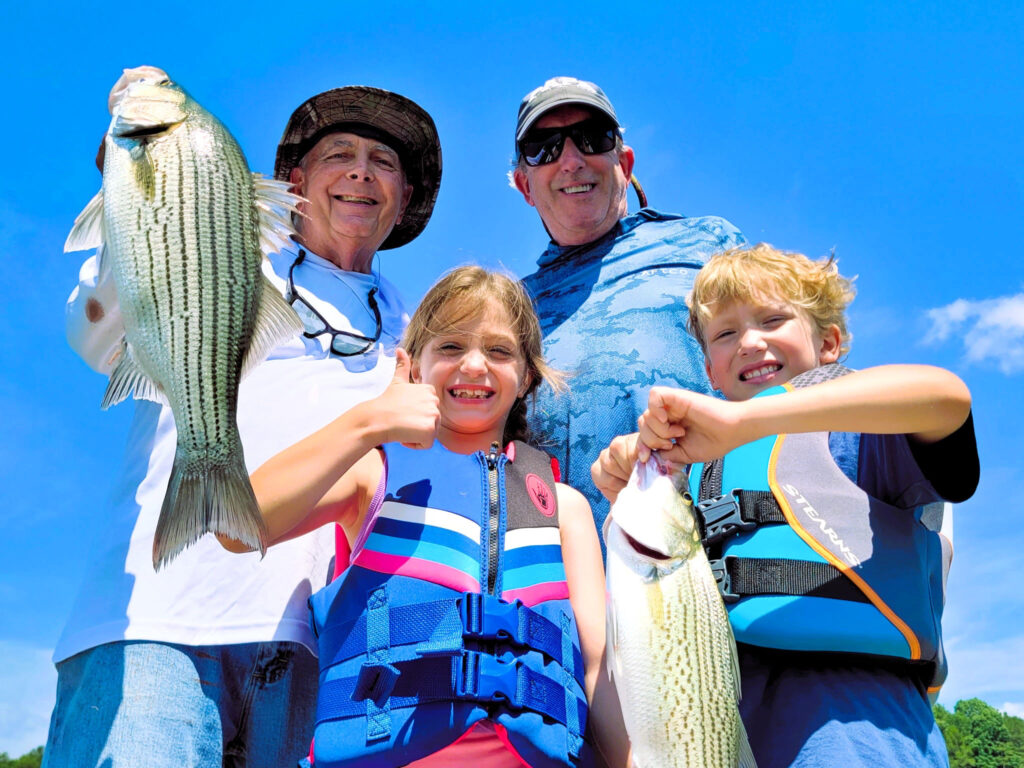
Start early
Keeping company with hybrids at Lake Hartwell are stripers that forage alongside them, but they’re often finicky predators, while providing the big-fish teaser.
Anglers must have a game plan to connect with hybrids, and the guy, Capt. Cefus McRae, demonstrated how he successfully targets them, while beating the heat and having a blast with clients.
McRae said heat-beating priority number one is to be fishing at first light.
“Summer came early this year, with summer patterns developing by June,” McRae said. “Anglers have a window of opportunity during the low light of morning when these fish actively forage in fishable places,” he said.
McRae (404-402-8329; https://nutsandboltsfishing.com/captains-blog/) said that during the summer, a thermocline forms at Lake Hartwell, and he uses this to his advantage. Hybrids orient toward the thermocline because ample oxygen is available above it, but below it, the oxygen level dips too low for fish to remain indefinitely.
Lake Hartwell is huge, but McRae said the thermocline shrinks the target zone to manageable playing field dimensions.
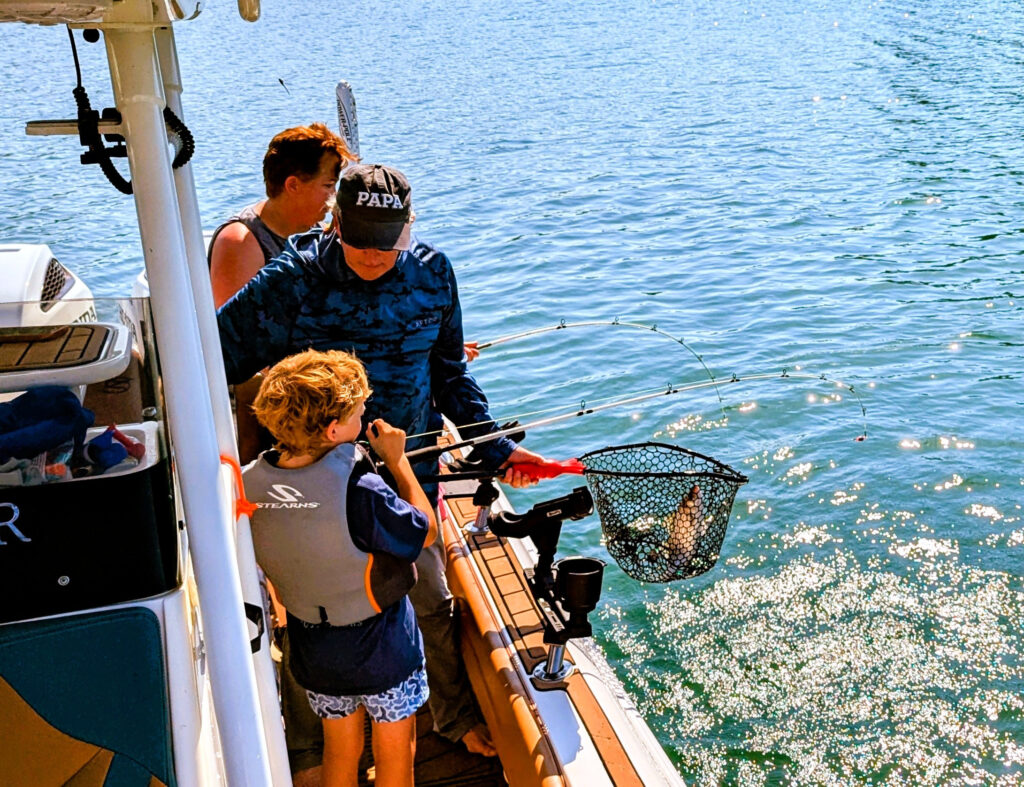
Find forage
“The best areas to locate hybrids are along the main channels of the feeder rivers, and especially the main Savannah River,” he said. “The junctions of large creeks with the main lake provide potential hotspots.”
McRae said it’s imperative to use electronics while searching for forage, with fish suspended beneath them.
“The specific depth to fish changes quickly, often during the same day,” he said. “I’ll present live blueback herring on downlines at the depths fish are marked, and slightly above. Hybrids’ forage-hunting nature ensures they look up, and they won’t hesitate to move up to eat, but seldom go deeper.”
One favored area he seeks is open areas along the river channel between clusters of submerged trees. Hybrids work these open areas to forage in frenzies, and the lack of trees means anglers can put hooked fish in the boat.
Hybrids can be hooked fishing directly over the tree clusters, but they’ll bulldog straight to the woody snags, wrapping and breaking lines before anglers can gain control.
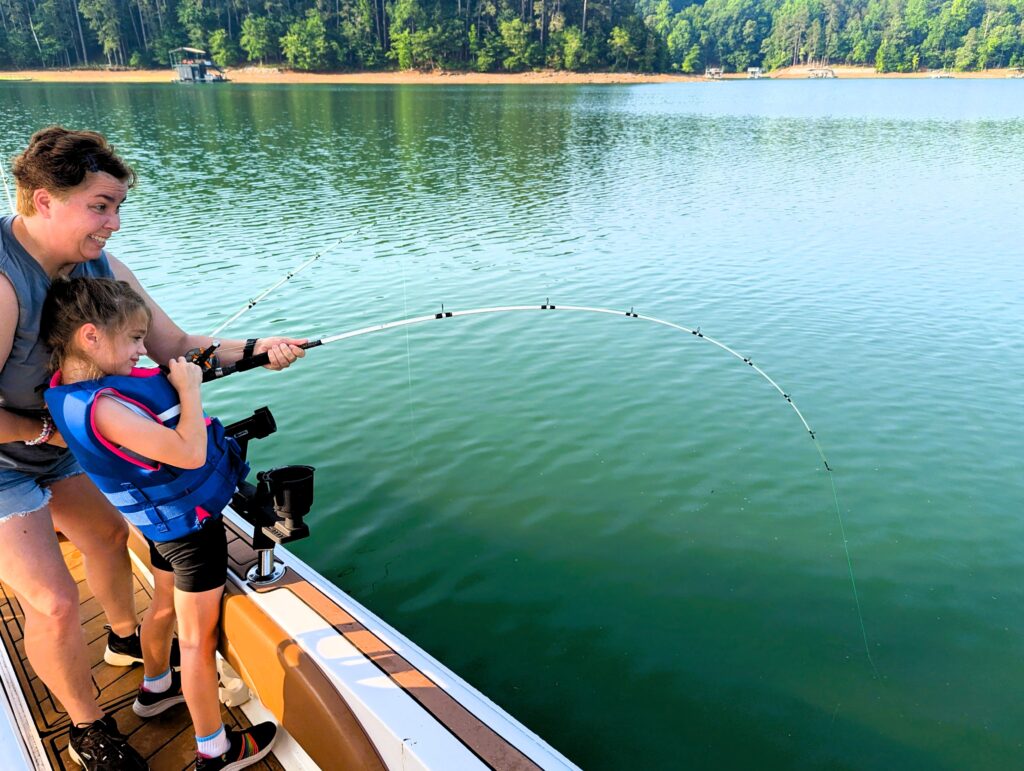
ideal for youngsters
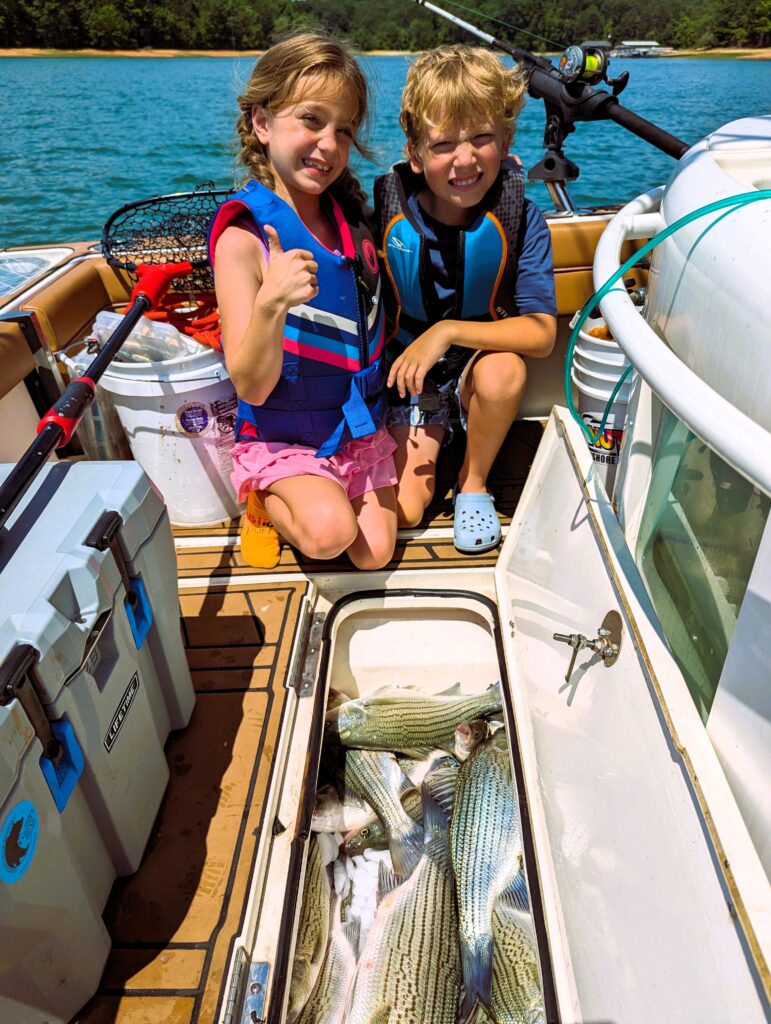
The true beauty of McRae’s game plan is its family-friendly nature. In our boat, my daughter, Jaime, granddaughter, Anneslee, and good friend Mike Watts and his grandson Rivers were aboard. The youngsters had previously fished together, enjoying a good rapport, while sharing the innate competitiveness of kids yearning to catch fish.
This day was for the kids, and McRae did not disappoint.
The action was consistent and occasionally wild, ideal for two eager youngsters. They would each battle two or three hybrids, then take a break for a snack. Then, as if on cue, McRae would spot-lock on another active school of fish, and the fish-catching process repeated.
The adults watched the rods and provided physical support to keep the kids’ feet in the boat while they fought drag-squealing hybrids on their tiptoes. We netted fish while McRae was busy rebaiting hooks, handling fish, and directing fish-fighting traffic when both kids were hooked up.
 Pure fun
If too much fun is possible, the adults discovered it on this trip.
The action was so frantic at times that by day’s end, the kids’ competitiveness mellowed, and they shared fish, confident that “Mr. Cefus” would soon be on another school of fish.
The best action of the day was the last spot-lock stop, when McRae found a wildly aggressive school of big hybrids, loading up as quickly as he baited rigs. With adults helping steady the kids as they grunted and strained fighting these powerful fish, the day ended with both kids catching monster hybrids.
The fishing was over, but not the fun.
McRae’s boat is a true offshore boat (he also guides saltwater trips), and the Captain’s roost on top for the 20-minute ride back to the landing was occupied by two of the happiest kids I’ve seen in a minute.
Riding high above the water, with a refreshing wind in their face, they were in their happy place. Hearing the laughter, giggles, and squeals of joy from bouncing on other boats’ wakes made for a perfect ending on a hot, sweltering day.
The adults sported wide-mouth grins.
McRae had the foresight to bring swim noodles in case the kids wanted to jump in the water to cool off, but the fish action never slacked off enough for that option. McRae is an A+ choice for fishing and managing kids.
By the end of the day, with hybrid limits in the boat, the only complaints from the kids were sore arms from battling hybrids, the trip ending, and growling tummies needing attention. The adults had a plan for the pangs of hunger involving local BBQ.
For details on accommodations, restaurants, and general information about the area, the Lake Hartwell Country Tourism office provides abundant information on its website at lakehartwellcountry.com or by calling 864-646-3782.
If you and your family want to catch aggressive, drag-squealing fish in the heat of summer, this is the place, species, and guy that can get you hooked up. ■

Be the first to comment