
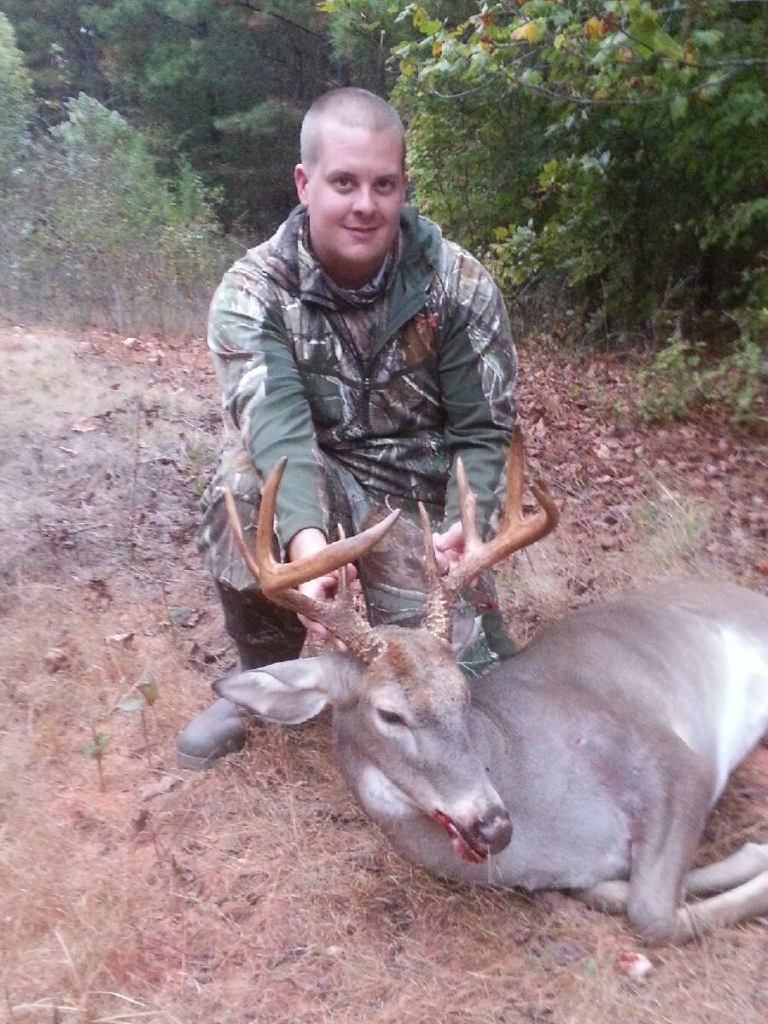
Even though fall arrives in September, the thermometer tells a different story. Average daily temperatures remain on the hot side for most of the month, and wildlife are still hovering near one of their most vital assets, water.
Hunters can target stable water sources early in deer season. They’ll find them being routinely used by all types of wildlife, including groups of bachelor bucks.
For hunters out west, water holes are often prime hunting locations, but water is much more abundant in the Southeast and can be overlooked as a hunting hot spot.
Water holes can be everything from a winding creek, river, lake or swamp to something man-made like a ditch, a relic mining operation or a secluded farm pond. When it’s hot, deer and other wildlife make a daily visit to water sources, without exception. When water availability is limited, it will bring in wildlife better than a prime food source.
T.J. Hallman, plantation manager of the Territories at the Saluda River Preserve in Chappells, believes water sources are critical for deer late in the summer when the weather is sweltering hot.
“Heat coincides with the early season in South Carolina, and water is a huge factor when it comes to a deer’s health. Food, water and cover are the three essentials — water being the most important during those hot summer months,” said Hallman, who likes to hunt near or over water sources when it’s hot. “It’s a tactic that helps ease those buck-fever feelings because you typically see a lot of wildlife, but it can pay off big dividends with an unsuspecting trophy shows up traveling with his other bachelor pals.”
The best water sources are places adjacent to bedding sites and feeding areas. Fortunately, deer cannot visit a water source without leaving a trace of some kind in terms of tracks and trails.
Hallman not only monitors water sources, he investigates the trails leading to and from them to identify places to set up on bachelor bucks.
“Since the Territories is located along the Saluda River, we have lots of drainages that creates natural travel avenues to the water’s edge. We travel the river time and time again, marking trails that come down to the water, follow the trail back to find where it originates, and set up to and from that frequent water source visitation,” he said.
Be the first to comment