

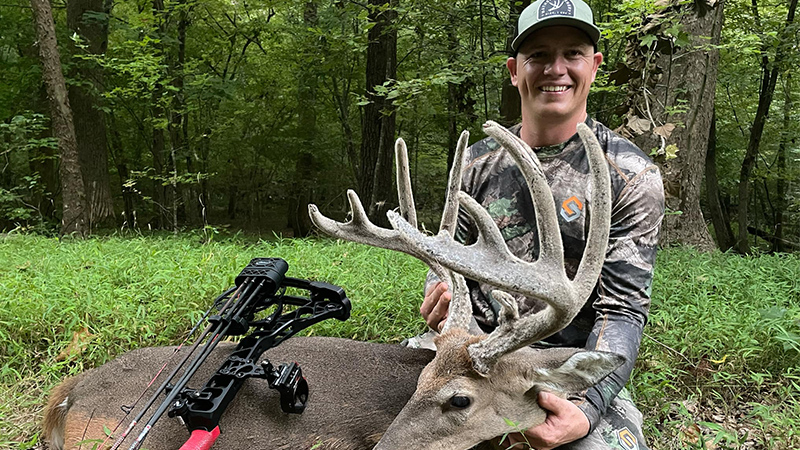
Maybe even a velvet buck
South Carolina’s deer season opens Aug. 15 in half of the state’s counties, making it the earliest whitetail season in the country. And this year, North Carolina hunters in seven counties will get a two-day season this month.
According to veteran Lowcountry, SC hunter Tommy DuBose, success during those sweltering opening weeks comes down to preparation, patience, and understanding that mature bucks behave differently than they will later in the fall.
“August is probably the most predictable time you’ll have all year,” DuBose said. “The trick is not finding a big buck. The trick is finding exactly where he’s going in daylight.”
DuBose has spent decades hunting South Carolina’s coastal counties, where agricultural crops, timberland, and thick creek bottoms create ideal habitat for growing mature whitetails. He believes many hunters make the mistake of hunting where they have seen big bucks instead of where those bucks consistently travel during legal shooting hours.
“If you’ve got trail camera pictures at midnight, that doesn’t mean much,” he said. “You need pictures that tell you where that deer is just before daylight or just before dark. That’s what matters.”
Modern trail cameras have transformed the way DuBose approaches the early season. Rather than checking cameras frequently and spreading human scent throughout a property, he uses exclusively cellular trail cams, which send photos directly to his phone and email.
“I want the deer acting naturally,” he said. “Every time you go walking through bedding areas or across field edges, you’re educating those bucks. Mature deer don’t get old by making mistakes.”
Find food
Food sources dominate a mature buck’s routine during August. Agricultural fields remain one of the best places to locate deer, but DuBose said simply sitting over the middle of a field rarely produces the biggest bucks.
“They’ll step out there eventually,” he said. “What you want is to catch him before he reaches the field. Hunt the corner, the funnel, or the trail leading out of thick cover.”
He emphasizes paying attention to prevailing winds, even during the unpredictable weather patterns common along South Carolina’s coast.
“A mature buck trusts his nose more than anything else,” DuBose said. “If your scent gets into that bedding area one time, you might not see that deer again in daylight for weeks.”
The summer heat presents another challenge. Afternoon temperatures often climb well into the 90s and higher, and humidity can make even short walks uncomfortable. Those conditions also influence deer movement.
Plan your routes
“When it’s really hot, deer aren’t going to move any farther than they have to,” he said. “They’re going to feed, get a drink, and get back into the shade.”
Water sources become especially important during the opening weeks. Small ponds, swamp edges, creek crossings, and even isolated mud holes can attract mature bucks, particularly during dry periods.
“If you’ve got food, thick cover, and water all close together, that’s a place you better pay attention to,” he said. “Big bucks like convenience just like everybody else.”
DuBose said hunters often overlook the importance of entering and leaving stands without alerting deer. He spends as much time planning access routes as he does selecting stand locations.
“You can have the perfect stand,” he said. “But if you’re bumping deer getting in there, you’ve already lost before daylight ever comes.”
Don’t overhunt
Many successful August hunters rely on climbing stands or lightweight hang-on stands that allow them to adjust quickly as deer patterns change. DuBose agrees flexibility can be valuable, but only if hunters resist the temptation to overhunt a productive location.
“Don’t burn your best stand up,” he said. “If the wind isn’t right, stay home or hunt somewhere else. You’ll kill more mature bucks by waiting than by forcing the issue.”
Shot opportunities during August are often brief because thick vegetation limits visibility. Green leaves still cover hardwoods, undergrowth is dense, and shooting lanes can disappear almost overnight.
“You’ve got to trim your lanes early,” DuBose said. “Once the season gets close, I don’t want to be in there cutting limbs and making noise.”
He also encourages hunters to practice extensively before opening day. Shooting from an elevated position, wearing hunting clothes, and preparing for quick opportunities can make the difference when a mature buck finally appears.
Stay ready
“A big buck isn’t going to stand there for five minutes posing,” he said. “Usually you’ve got a few seconds to make everything happen.”
Unlike the rut, when bucks may abandon caution while searching for does, August hunting depends almost entirely on predictable feeding patterns. That predictability can disappear instantly if hunting pressure increases.
“The first couple of weekends tell the story,” he said. “If everybody piles into the woods and starts driving four-wheelers everywhere, those older bucks change overnight.”
Instead of hunting every available afternoon, he recommends waiting for favorable weather conditions. A slight drop in temperature, cloud cover, or an approaching storm system often increases daytime activity.

Be disciplined
“I’d rather hunt three really good afternoons than ten average ones,” he said. “You can’t kill one sitting at home, but you don’t want to educate him either.”
Despite all the scouting, technology, and preparation, DuBose said patience remains the most important quality an early-season deer hunter can possess.
“If you’re after a mature deer, you’ve got to stay disciplined. Those opportunities don’t come often, but when they do, you need to be ready.”
He also reminds hunters that August success begins long before opening morning. Careful scouting, understanding food sources, maintaining strict scent control, and minimizing pressure all work together to create opportunities that may last only a few moments.
“The work you do in July is what kills a buck in August,” DuBose said. “Opening day shouldn’t be when you’re figuring things out. By then, you ought to know where that deer wants to be.”
For hunters willing to endure oppressive heat, mosquitoes, and early morning humidity, August offers a unique opportunity unavailable almost anywhere else in America. Mature bucks remain locked into late-summer routines, and careful hunters who pay attention to details can capitalize before hunting pressure and changing seasonal behavior make those deer far more difficult to pattern.
“As soon as the pressure starts, everything changes,” DuBose said. “That’s why August is special. If you’ve done your homework, you’ve got a chance at the biggest buck of your life before most hunters in the country have even started their season.” ■




Be the first to comment