

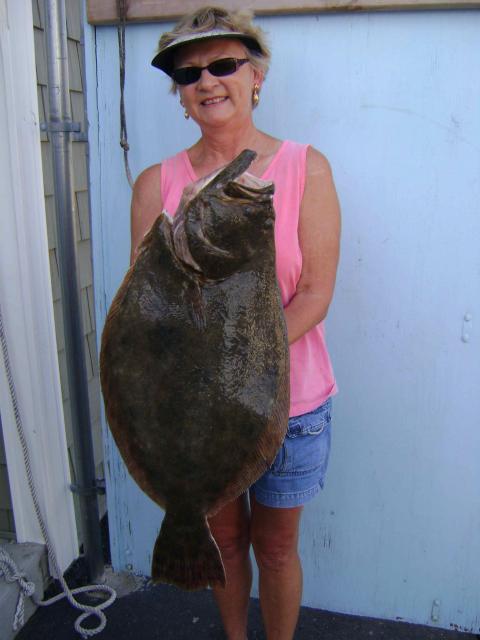
Charter Capt. says presentation is key to catching flounder
The nearshore reefs and shipwrecks out of Carolina Beach are hotspots for flounder this time of year. Capt. Dennis Barbour of Island Tackle and Hardware typically has a lot of success in those areas and Flounder aren’t the only fish biting, but he said it’s usually among the most consistent bites.
Capt. Barbour names two essential keys to a successful flounder trip. And the first key is anchoring.
“If you don’t anchor properly, you can’t cast as well without getting hung up and losing a lot of tackle. You want to anchor so that you’ll have good bottom to cast to. You need the ability to work your bait along the bottom without your hook getting hung in the wreck,” he said.
The second key element, said Barbour, is proper bait presentation.
“You have to find the fish, because sometimes they can’t find you,” he said.
Barbour advises anglers to do more than just letting their bait sit on the bottom.
“If you’ve got a good baitfish on your hook that is plenty active, sometimes that’s enough. But you’ll always increase your chances by moving that bait, even if you move it just a little bit at a time,” he said.
Technique is key to catching flounder
“We’ve got an artificial reef and ten or eleven shipwrecks that are very productive for flounder. If you’re not catching flounder, you’re either anchored in the wrong spot or you just aren’t making your bait attractive enough to the flounder,” said Barbour (910-458-3049).
He said the best technique that works for him is to cast out your baitfish with enough weight above the leader to get it to the bottom. Once you feel your weight hit bottom, let everything settle. Then drag your baitfish about 3-feet, then pause.
“Let it settle again. Wait a few minutes, then drag it three feet again, then pause,” he said.
Continue that same method until your rig is off the bottom. Then reel in, cast back out, and do it again.
This type of fishing requires a good understanding of your boat’s electronics and an accurate anchoring procedure. Knowing what you’re looking at on your depth finder will help you position your boat above the reef or wreck so that you have ample casting opportunities. Anchoring is just as important. And many anglers spend more time making sure they are anchored properly than they do actually fishing.
Be the first to comment