


Several top guides offer tips for a late-summer season, however short it may be.
Flounder fishing hit a peak last May and June, before last summer’s Aug. 16-Sept. 30 recreational fishing season opened.
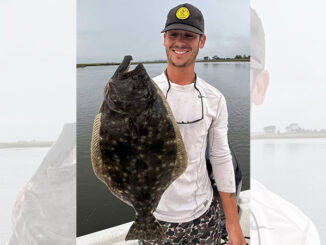
“Before the season, we caught lots of large flounder in the marshes,” said guide Noah Lynk of Harkers Island. “It helped that giggers couldn’t get out there and hit ’em. And I got tons of calls from people wanting to know how and where to catch flounder, so they’d be ready when the season opened.”
Lynk expects the same scenario may occur before the 2021 recreational flounder season opens on Sept 1. Lynk isn’t sure anglers will have a lot of success during the 2-week season because of hot water temperatures.
“Nobody knows what will happen,” Lynk said. “People are guessing, picking up scraps of information.”
A 4-fish daily creel limit from last season will remain in place in 2021. The 15-inch size minimum will also remain in effect this season.
Some of North Carolina’s best saltwater guides offered these suggestions for getting the most out of the Sept. 1-14 flounder season.
 Cape Lookout Area

For years, Lynk (252-342-6911) has tried to avoid fishing in deep water for flounder. The owner of Noah’s Ark Fishing Charters, he fishes flats, inlets, rivers, marshes and creeks near Harkers Island and behind Shackleford Banks, Beaufort and Morehead City.
He prefers targeting flounder on outgoing tides so clients can use Carolina rigs and barbless jigheads with finger mullet or mud minnows.
Before last year’s short season, Lynk said, “We caught a ton of big, inshore flounder in 6 inches to 3 feet of water. After that, not so much.”
Sizzling late-summer water temperatures push flounder toward deeper, cooler waters.
“Flounder don’t like shallow, hot water,” he said.
Capt. Joe Shute of Atlantic Beach’s Cape Lookout Fly Shop (252-240-2744) targets flatfish in inside and offshore waters.
“The Haystacks (Newport River marshes) haven’t closed totally because of sand migration,” he said. “Flounder fishing is best (in spring) in 3 feet of water or less. Islands (edges) and mud flats in the Newport River are also good places.”
But Shute said artificial reefs in up to 50 feet of water have always been favorite flounder haunts during late summer.
“Out there, most flounder fishing is vertical jigging 50 feet deep or more with bucktails and a Gulp grub,” Shute said. “You can use live bait, but you’ll lose a lot (of rigs) on hangups.”
Swansboro

Guide Dale Collins of Fish Or Die Charters, who works at Swansboro’s Pogies Tackle & Kayak Shop, likes inside waters near Bogue Inlet during August and September.
“I’ll also try deeper docks and deeper ledges,” he said.
Collins (252-422-4326) prefers artificial lures, especially a ¾-ounce Spro Glow bucktail with a 4-inch Gulp shrimp trailer that he hops along the bottom.
“I also use a Falling Tide spinnerbait,” he said. “We fish for (red) drum with them, but by-catches usually are flounder.”
Collins’ stand-by live baits include 3- to 5-inch finger mullet on Carolina rigs with ½- or ¼-ounce egg sinkers and an 18-inch leader of 30-pound Yo-Zuri pink fluorocarbon and moss-green 15- to 20-pound Power Pro braid on the reel.

East of Cape Fear
Guide Jot Owens of Wilmington targets flounders in both inshore and nearshore waters.
“I’ll do both, depending on the weather,” said Owens, who owns Jot It Down Fishing Charters.
In inside waters, he uses 5- to 6-inch Gulp shad threaded on 3/8-inch Berkley Fusion jigheads.
“I’ll try deeper holes in creeks and creek mouths — but always moving water,” he said. “Residential docks near deep water up and down the Intracoastal Waterway also are good places.”
Owens (910-233-4139) targets flounder 2 to 8 miles off the beach in 35 to 60 feet of water over hardbottoms or livebottoms, small ledges and artificial reefs.
“The key is lower relief, smaller structures so (lures) don’t get hung,” Owens said.
West of Cape Fear
From Southport to Sunset Beach, late-summer flounder anglers head to the ocean, according to guide Kevin Sneed of Holden Beach.
“When it gets really hot down here, flounder and people go to reefs,” said Sneed, who owns Rigged & Ready Fishing Charters and Tackle Shop.
Islands, creeks and marshes near the mouth of the Cape Fear River and spoil islands upstream also lose the attraction. As water temperatures rise, bacteria blooms overtax the river’s oxygen, forcing flounder into the ocean.
“Artificial reefs and ledges off inlets all hold flounder,” said Sneed (910-448-3474). “People use Carolina rigs with live finger mullets and peanut pogies or 1- to 2-ounce bucktails tipped with 4- to 5-inch Gulp shrimp, jerk shads or Z-Man grubs.”

What season? NCDMF gives 2021 anglers two weeks
If North Carolina fishermen thought six weeks was a short flounder season in 2020, the N.C. Division of Marine Fisheries’ decision to cut that two two weeks for 2021 will not make them happy.
In late June, NCDMF announced that the 2021 recreational flounder season would open Sept. 1 and close Sept. 14 in internal and ocean waters. It kept the creel limit at four fish per day and the minimum size at 15 inches.
It also cut the commercial season from 75 days to between two and three weeks by area:
- Northern Area (waters north of Pamlico Sound), Sept. 15 through Oct. 1.
- Central Area (Pamlico Sound and its tributaries), Oct. 1 through Oct. 19.
- Southern Area (waters from Core Sound to the South Carolina line), Oct. 1-21.
A press release from NCDMF said the shorter seasons were needed “to ensure a sustainable fishery.”
Guide Noah Lynk of Harkers Island was astounded by the decision to allow just two weeks of recreational flounder fishing.
“You’ve gotta be kidding?” he said. “They’ve gotta do something, but what are they trying to do, take away all the tourism money down here?
“All they’re going to do is make criminals out of everybody.”
Lynk said that keeping the six-week season dates from 2020 and lowering the daily creel limit to two fish would have been a better alternative to a 2-week season and 4-fish creel limit.
In 2019, NCDMF recommended and the N.C. Marine Fisheries Commission approved substantial harvest reductions in the flounder fishery to rebuild the southern flounder stock.
North Carolina’s flounder fishery is managed under Amendment 2 to the Southern Flounder Fishery Management Plan. Amendment 2 included harvest reductions of 62% in 2019 and 72% beginning in 2020 for both the recreational and commercial fisheries. The total removals allowed in both years under these reductions were exceeded in both the commercial and recreational sectors, resulting in the seasonal adjustments.
From 2013 to 2018, commercial harvests declined from 2.2 million pounds to 900,000 pounds while recreational harvests dropped from 869,223 pounds to 495,289 pounds. A 2019 assessment required a 72% reduction to rebuild the fishery within the statutory time line.

Be the first to comment