

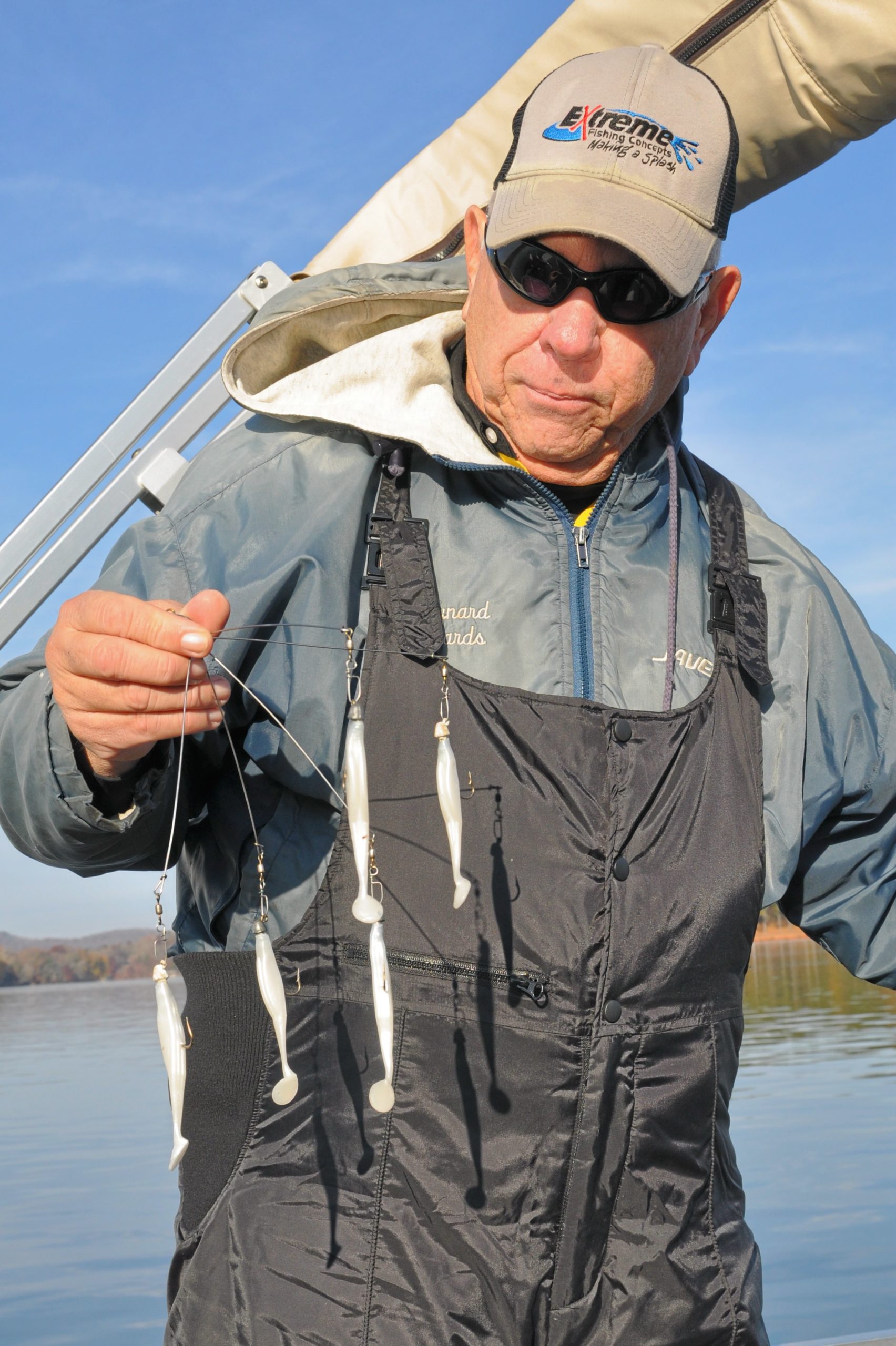
If somewhere in the offices of Yadkin Inc. — the division of aluminum giant Alcoa that operates hydroelectric plants on reservoirs along the Yadkin system — there exists a dartboard with Maynard Edwards’ picture on it, the veteran fishing guide won’t be surprised.
Edwards said he’d like to see the company become more conscious — and have a conscience — about the Yadkin reservoirs’ fish and anglers.
“In summertime, when the water is moving, that’s when the fish bite,” he said. “That’s a given on the Yadkin chain.”
Edwards said that during drought periods the last few years, Yadkin Inc. would go three or four weeks and not pull water through the dams it controls.
“But in 2002, when the state was in this terrible drought, they never turned off the (turbine) wheels,” he said. “High Rock dropped six, 10, then 15 feet, and they still didn’t cut off the water.”
Edwards said he went to a meeting where are representative of Yadkin Inc. said the company “had to” maintain a normal flow.
“I popped up and said, ‘Well, you haven’t done that the last five years, so why now?’ ” he said.
Next in Edwards’ crosshairs was Stan Bingham, a Republican state senator whose territory includes Davidson County, that county that makes up most of High Rock’s eastern shoreline.
“The senator said we have to help our South Carolina neighbors,” Edwards said. “That’s when I said, ‘Wait a darned minute.’ ”
Edwards, who fishes the entire Yadkin chain of lakes, couldn’t understand why Lake Tillery, the reservoir where the Yadkin and Uwharrie rivers meet to become the Pee Dee (which flows into South Carolina), remained within two feet of normal pool during 2002’s drought while High Rock, Tuckertown and Badin levels fell daily.
“Later I discovered,” he said. “A friend on the inside informed me Alcoa was selling water to Duke Energy (which operates the hyrdoelectric plant that impounds Lake Tillery) to keep that lake full.”
Edwards believes Bingham probably knew about the deal and didn’t apply pressure on Yadkin Inc. to stop draining the Yadkin’s upper lakes because Duke Energy wouldn’t have had water to buy for Tillery.



Be the first to comment