

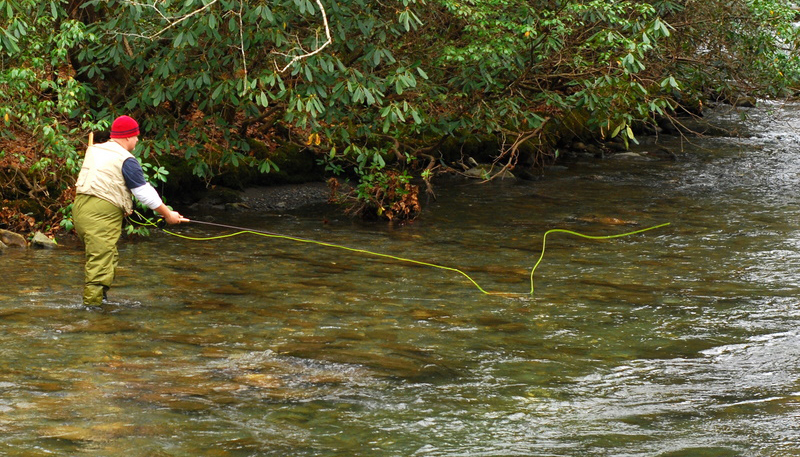
Stream is tough to get to but well worth the effort
At some time or other, anyone who claims to be a mountain trout fisher makes his or her way to Hazel Creek in the Great Smoky Mountains National Park to pay homage to one of the South’s most celebrated trout streams.
Call it a pilgrimage, if you will, for Hazel Creek is a sacred place — remote, beautiful, accessible only by boat or foot, a stream that truly lives up to its legend. Horace Kephart once lived on a fork of this stream, until the loggers and miners ran him out. Hazel was a favorite of Granville Calhoun and Mark Cathey, two of the most-celebrated trout fishers in the Great Smokies.
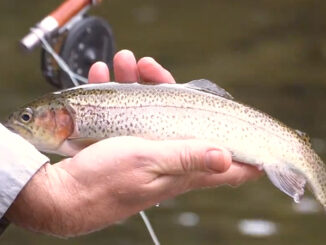
Hazel Creek survived miners, loggers and greedy fishers who bragged of catching trout by the sackful. You don’t catch trout by the sackful anymore, but Hazel and its tributaries still have plenty of trout — healthy populations of wild rainbow and brown trout and a smaller population of brook trout in the higher waters around 4,000 feet. You can consistently catch rainbow trout in the 8- to 12-inch range. In the big pools, places such as the Brown Hole, trout fishers have caught brown trout in the 10-pound range.
Named for the hazelnut shrubs that once grew along its banks, Hazel is a large creek, bigger than some rivers in the area. From its confluence with Fontana Lake to its headwaters on the southwestern slope of Silers Bald deep in the Great Smoky Mountains National Park, the stream is about 15 miles long, with a gravel road following the shoreline on much of the lower section and a well-maintained and heavily-traveled trail running along the creek the remainder of the way. From Silers Bald to Fontana, Hazel Creek is fed by numerous tributaries, including Bone Valley Creek, Sugar Fork, Proctor Creek and Walkers Creek.
In the lower section, where the creek is wide as a 2-lane highway and pools are big enough to swim in, are the browns — big browns, some eight to 10 pounds, but more common in the 2- to 4-pound range. The big browns aren’t easy to catch, but people who often fish the stream say browns respond best to terrestrial imitations, particularly grasshopper patterns. Rainbows, the most-numerous species, are found throughout the stream and can be caught with seasonal dry flies and nymphs. Brook trout are in the upper reaches of the stream, near the headwaters.
A few hardy souls make the long hike to Hazel Creek from Fontana Village, Clingmans Dome or Noland Creek, but most take the easier route — across Fontana Lake by boat.
Backcountry Campsite No. 86 at Proctor, a former mining-logging camp, is about a half-mile above the boat drop-off. Another backcountry site is at Bone Valley, about five miles upstream. That’s where the real fishing begins.
On a recent trip, a friend and I spent three days fishing Hazel and its tributaries. We fished the lower section the first day and hiked to Bone Valley the second day. We split up at Sugar Fork, the first tributary above Proctor, agreeing to meet around lunch time at the backcountry campsite at Bone Valley. My friend went upstream on Hazel, and I went upstream on Sugar Fork.
I had heard that Haw Creek, a small tributary of Sugar Fork, held some nice brook trout, and I had planned to work my way to the creek. I didn’t make it, though; fishing got in the way. Sugar Fork was loaded with rainbows. After catching 20 or so trout, I stopped counting and just enjoyed the ride. The trout were a bit smaller than the ones in Hazel Creek, averaging six to eight inches, but they made up for their size in feistiness. Every pool, cascade, and run held a trout or two. After a couple of hours, my Royal Wulff was so ragged, I finally was forced to tie on a new fly.
After lunch, I fished Bone Valley Creek, a second and larger tributary of Hazel Creek. The fishing was even better than Sugar Fork, offering a nice mix of medium-sized browns and rainbows. The biggest fish I caught in Bone Valley Creek was about 10 inches. Many of them were eight to nine inches, and a slew of them were in the 4- to 6-inch range. It’s the only time in 40-plus years of trout fishing that I actually got tired of catching trout.
The next morning, we hiked back to Proctor, both of us bone-tired by the time we arrived. We had agreed that we would have trout for dinner at least one night, so after we reached camp and rested a bit, we caught our dinner. It was the only time we killed trout on the trip.
In 1942, the Tennessee Valley Authority began building Fontana Dam, which would be the highest dam in eastern America. With impoundment of Fontana Lake, the remaining residents of Hazel Creek were forced to leave. A few years later, Hazel Creek became part of the Great Smoky Mountains National Park, which ensures its protection for perpetuity.
That’s the way it should be. Hazel Creek is a treasure, isolated, remote, open to anyone willing to make an effort to get there. As for the fishing, nothing I’ve found equals it.

Be the first to comment