

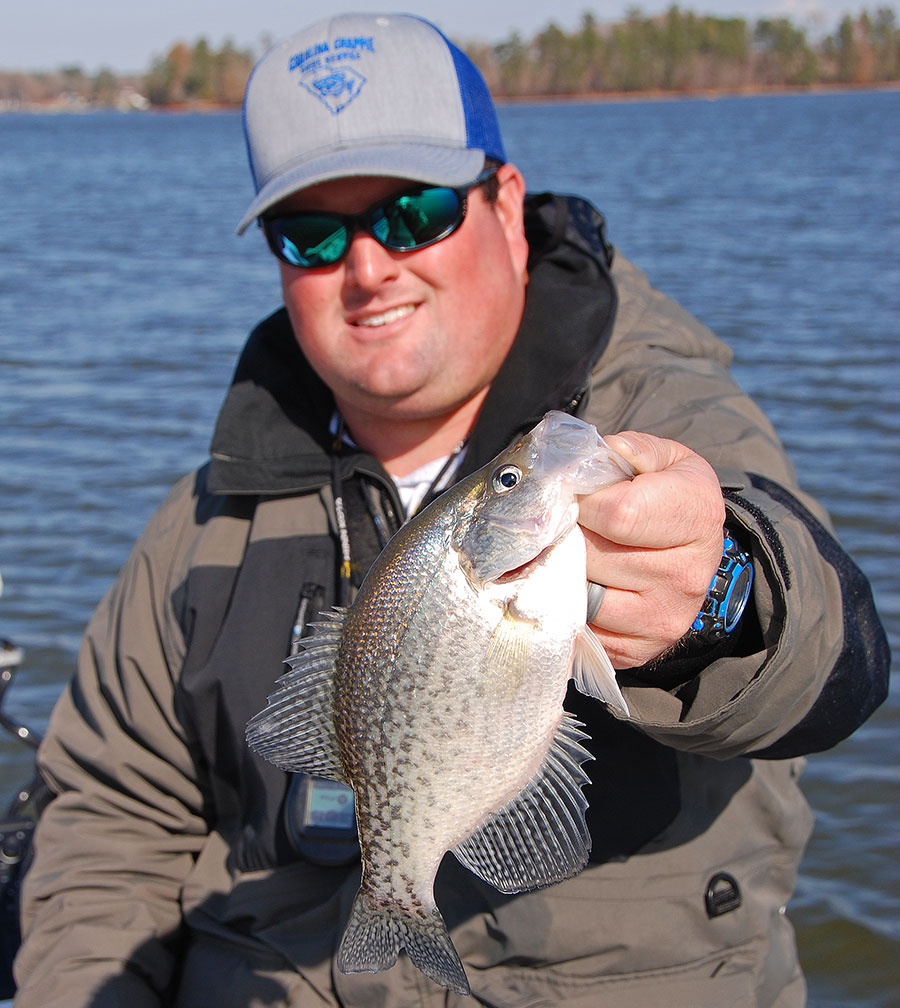
Catch more crappie with forward-facing sonar
Crappie fishing guide Roland Addyfrom Saluda, South Carolina didn’t start his occupation as a fishing guide. Addy began his career as a coach and teacher. During his educator days, he fished as many crappie tournaments as he could fit into his schedule. While competing against some of the best crappie anglers in the country, he watched the shift in the overall style of crappie fishing change from multiple rod trolling tactics back to single rod fishing. The competitors were singling out only the larger fish. They were doing this using real-time forward-facing sonar.
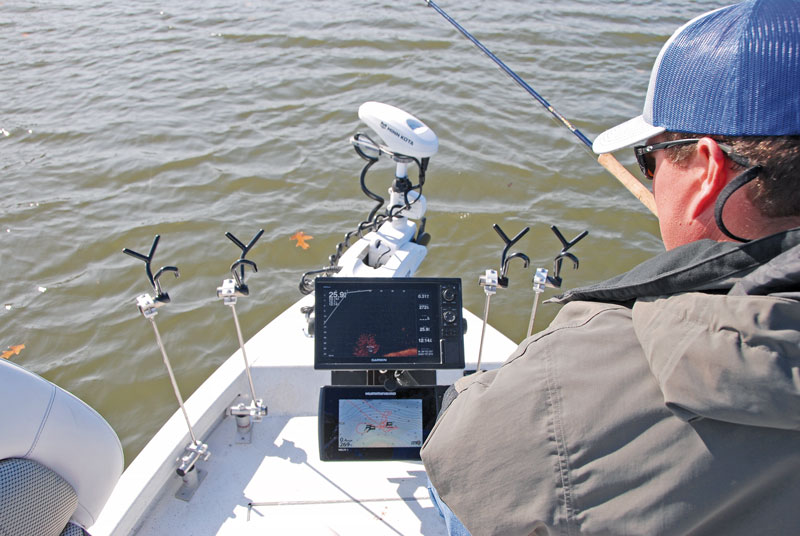
The new tactic is often referred to as Livescoping, a name derived from the line of Garmin sonar products that were the first to hit the market. “Live Scope” refers to the sonar setting mode that uses a multifaceted transducer to return real time imagery to the sonar screen. The transducer is pointed out in front of the boat and allows anglers to watch fish, cover, bottom contour, and even the angler’s lure as it is cast into the range of the horizontal cone.
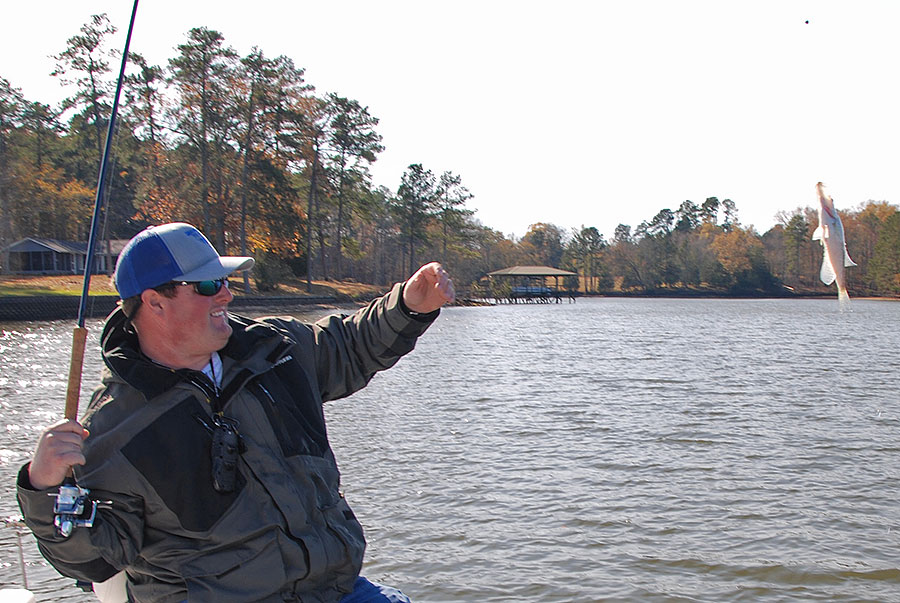
Game changer
Like a lot of dedicated anglers, Addy realized he had to embrace this technology, despite the considerable cost of the equipment, and despite the dramatic change it meant to the way he fished for crappie, and that he needed to become proficient at it before the rest of the crappie fishing world passed him by.
“It’s a game changer, no doubt,” said Addy, who guides under Carolina Crappie Guide Service (864-980-3672). “It’s frustrating to learn at first, but once you get the hang of it, it’s actually a lot of fun, not to mention it can catch you a lot of big crappie.”
While Garmin was the first to hit the market, several other sonar manufacturers, most notably Lowrance with it’s Active Target and now LiveSight platforms, and Humminbird with its MEGA Live Imaging platform, have followed suit and offer real-time forward-facing sonar units that are capable of the same basic premise – see the fish on the screen, identify what size and species it is, and even which direction it’s facing, present your bait to the fish on the screen, and watch the action unfold.
The real time sonar market has quickly expanded from just tournament anglers to much of the everyday angler market. With any new technology, the acceptance and learning curve was apparent, so Addy decided to lean on his teaching skills to offer fishing trips to educate and coach anglers on the use of real time sonar.
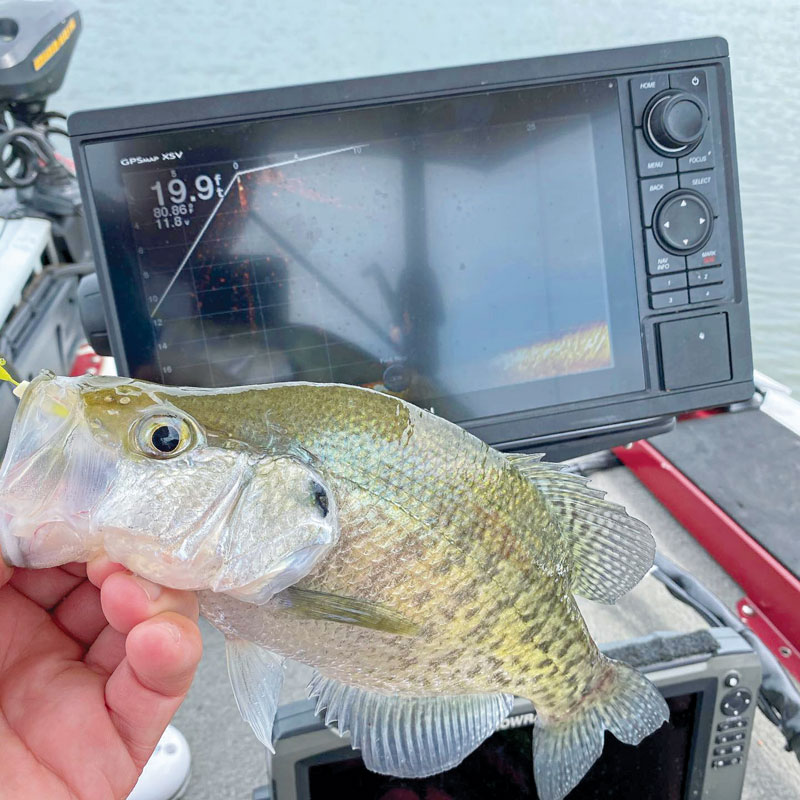
“I stay away from using AUTO settings for anything,” said Addy. “I manually adjust each of the settings. My primary focus is seeing the fish and my bait, then I fine tune from there.”
Another aspect of real time sonar fishing is understanding how the transducer works. Addy said imagine you are looking ahead of you with an actual scope. The focus of the horizontal transducer cone is much narrower than it seems.
“You are only looking at what the transducer is pointed at,” he said. “The beam cone is only 11/2 to 2 feet wide. You are not looking side to side; you’re looking directly in front of the transducer.”
The guide further stressed that the alignment of the transducer must be exact. Just having it close, which you can get by with on a traditional downward facing transducer, is not going to work.
“You also have to be consistently able to put your bait in a 5-gallon bucket-sized spot if you want to see it show up on the screen,” he said.
A question frequently arises as to mounting the transducer on the trolling motor shaft or a separate directional pole. Addy said it’s a matter of personal fishing style. But he prefers the trolling motor mount so he can operate the transducer with his foot, leaving his hands free to fish.
Stay in control
Knowing what you’re looking at is also a big factor in targeting crappie. Addy said crappie tend to sit still more than any other species. They also return more of a “shine” than any others.
“Early on in your learning, just focus on the fish that are sitting still,” he said. “that’s the best way to tell if it’s a crappie.”
Boat control is nearly as important as getting the settings adjusted correctly with real time sonar. It’s difficult to focus on a fish sitting still if the boat is moving, and near impossible to focus on a moving fish if the boat is not under control.
“Always keep the nose of the boat facing into the wind and learn to stop the boat away from your target by turning the trolling motor backwards if needed,” he said.
When starting out, many anglers complain that they can either see the fish or their bait, but not both at the same time. Some say they can’t see the bait at all. Addy suggested that if your bait and the fish are not showing up on the screen with the same brightness, you may need to go back and adjust your gain setting.
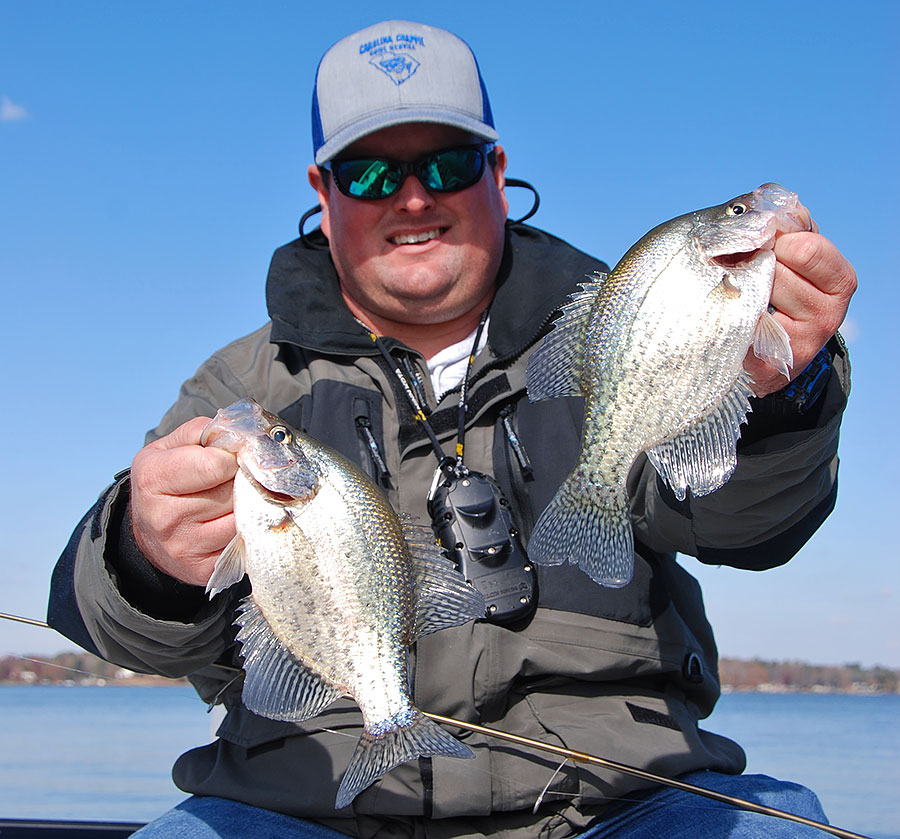
Keep your distance
“First, you must be accurate and always throw your bait in front of the transducer,” he said. “Take your time and position the boat so that you are closer to the fish. Look for the splash and look for your bait as it’s falling through the water column. Then start your retrieve.”
Addy said 15 to 20 feet from the fish is a good starting distance to work on casting without fear of spooking the fish with the boat. As you get more accurate and get a feel for using real time sonar, you can begin extending that distance farther out.
“Go slow at first,” he said. “Set the boat up and get in tight, then make accurate throws. Target the fish that are sitting still. You’ll be surprised at how much interest fish show in your bait that you never knew before. Crappie will follow the bait on nearly every cast. Don’t get into the habit of trying to jiggle or yo-yo the bait. Just keep reeling and don’t slow down.”
Addy said many anglers, including himself, get frustrated at the amount of interest crappie will show, actually following the bait almost to the boat, and never commit and take the bait.
“It’s a game of percentages,” he said. “Make 100 percent accurate casts, get the fish involved, and then it’s up to them to bite. Changing baits and colors is an important part of fishing. Watching the fish will give you an idea of their level of interest in your bait.”
And the final tip?
“No matter what you see on the screen, you can’t set the hook until you feel the fish bite or at least feel some weight or resistance on the end of the line.”
Set it up
The first and most challenging aspect of using real time sonar is getting the settings honed in to where the angler can see the fish, the structure, bait and most importantly, the lure as it’s being presented to the fish. After much trial and error, Addy has his preference of LiveScope settings.
Basic Set-up of Head Unit
- Settings
- Noise Reject (filter clutter): High
- TVG Time Variable Gain (filter clutter top to bottom): OFF
- Fishing Deeper LOW
- Gain (clutter): 60 to 65
- Color Gain: 80 to 84
- Color Limit: 32 to 36
- Color Scheme: Black Emerald, Amber, Blue
- Orientation: Forward
- Based on conditions, adjust the Gain and TVG for water clarity
- Fishing Screen
- Depth Range: Depends on depth fishing, normal is 25 to 30 ft
- Range: Depends on technique, 15 to 20 for beginners, 40 to 60 ft for advanced anglers. Farther out if looking for fish or structure.
- Left to Right
- Closer to the boat, farther away from the boat
Be the first to comment