

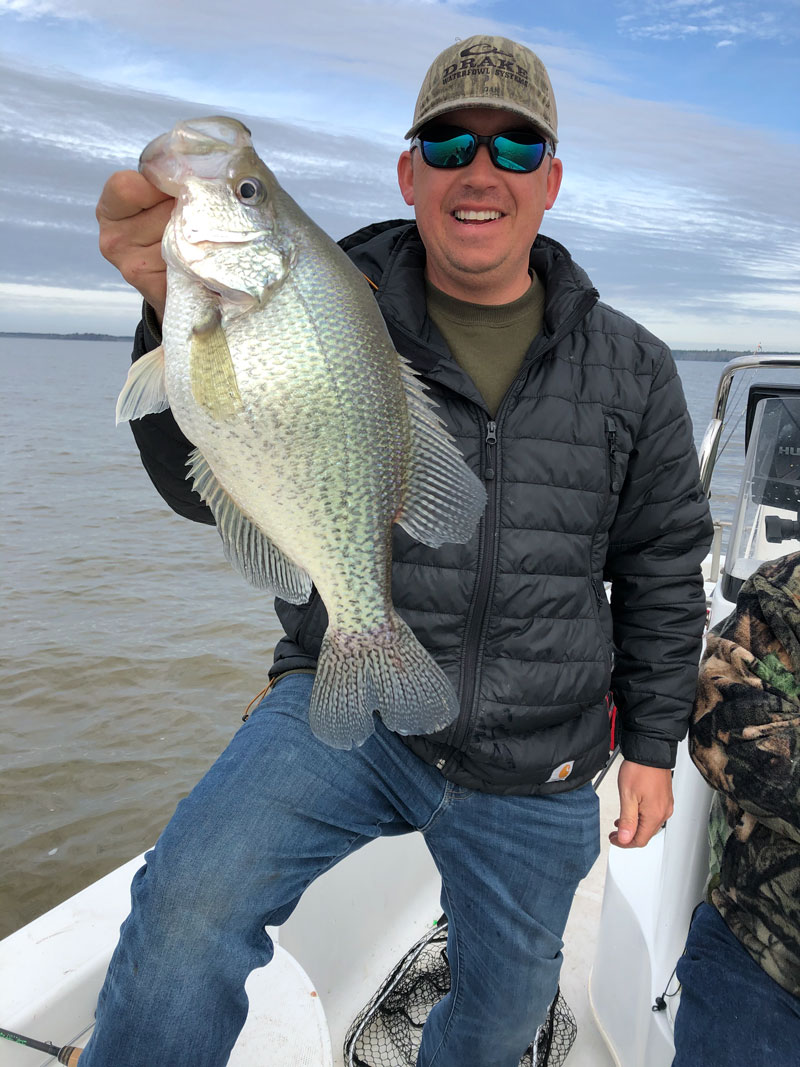
High-tech fishing isn’t automatic
When asked what he thought about the latest advancements in modern sonar and what they might do for his crappie fishing, TC Lloyd, owner of Southern Angling Guide Service, had some pretty good advice.
“A lot of crappie anglers have jumped into using the advanced sonar that’s come out in the last couple of years, and they end up hating it because it doesn’t change their success rates,” he said, referring to units like LiveScope, DownScan and MegaImaging. “Their expectation is they’re gonna just automatically catch more fish because they installed this fancy system on their boat.”
Lloyd, who lives in Hartsville, S.C., and fishes crappie tournaments in both Carolinas and beyond, said he was one of the first anglers on the several Carolina-based crappie circuits to install the new Garmin LiveScope on his boat, and even he wasn’t convinced at first.
“I probably had LiveScope on my boat for three or four months before I got the feel of it,” he said. “Of course, I wasn’t using it then as much as now. But I remember one day I saw a school of fish. I didn’t really know what they were, and I started following them with the LiveScope, and I cast out and caught one. It was a crappie, then I caught another and another, and that’s when I started to figure it out.”
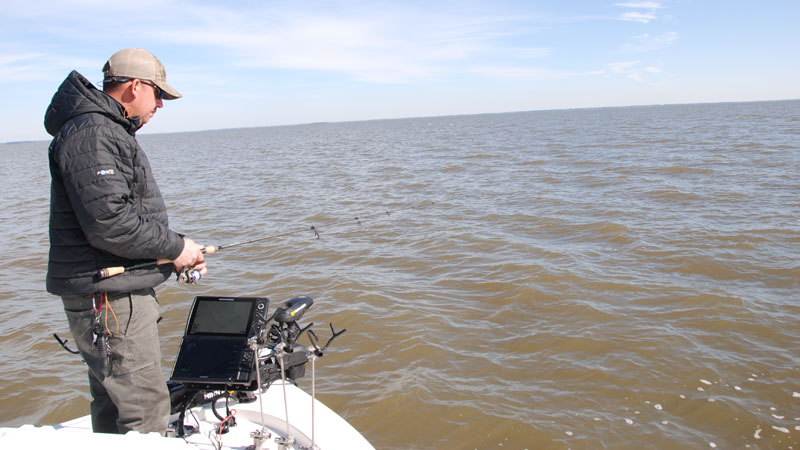
Most anglers experience a learning curve with new technology
Lloyd credits two things for helping him become a better crappie fisherman while integrating modern sonar into his game plan. First, you cannot forget about seasonal crappie patterns. Even though crappie will maintain a similar pattern based on time of year, those patterns are highly subjective, based on the lake you are fishing. Even the best sonar will show no fish if there are no fish in the area.
Being born in the right generation is another plus for Lloyd.
“I guess I’m in that generation that we have used technology most of our lives, and we’re not afraid of new technology,” he said. “At the same time, I’m old enough to know that I still have to work, with or without technology, to find fish — and even harder to find tournament-quality fish.
“Work means you have to get out on the water, drop the trolling motor and start looking for fish, scanning back and forth, as long as it takes, until you can educate yourself on what you’re looking at,” he said. “The LiveScope unit has three main settings: Noise Rejection, Gain and TVD. My suggestion is to adjust these three settings until you can clearly make out your bait descending through the water 15 to 20 feet out in front of the boat. If you can see your bait, you can surely see a crappie if it comes into view.”
Two strategies for LiveScope fishing
Lloyd said all things considered, he uses two main strategies for finding and catching crappie using LiveScope. The first is to locate seasonal holding structure — brushpiles, stumps, laydowns, bridge columns — and scan those areas to see if they’re holding crappie.
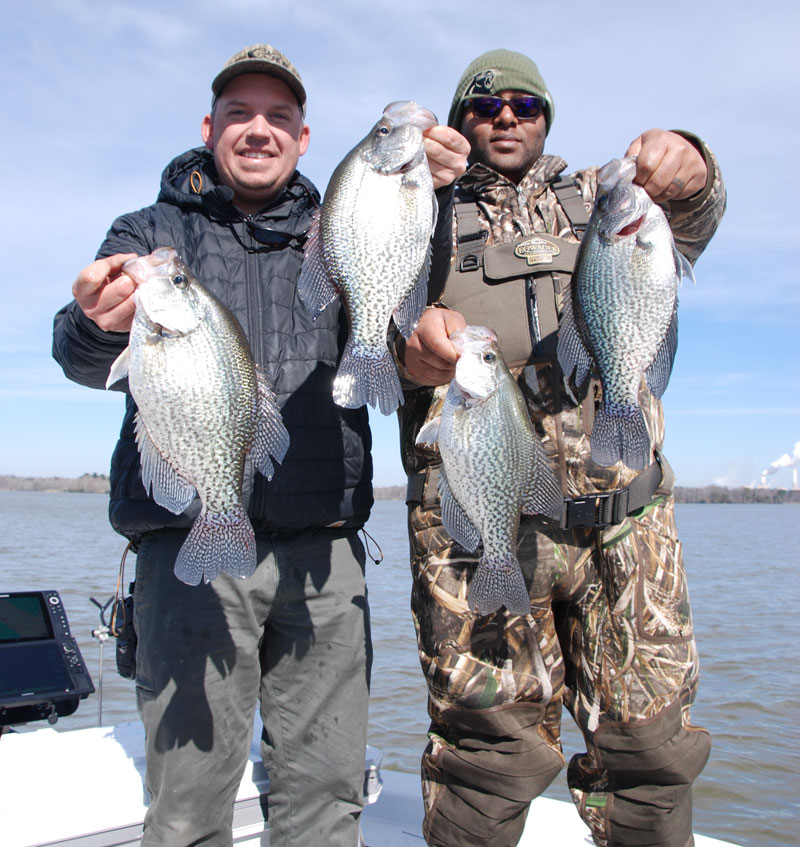
The second strategy is to look for open-water fish. As a general rule, he said he finds more crappie on structure from late May through late November and more fish in open water from December through the first of May. It’s not a hard-and-fast rule, and if he’s not seeing open-water fish when he should, he’ll immediately go to structure to look.
“If I’m fishing brush piles with the LiveScope in summer, particularly if I’m guiding, I’ll still use multiple rods and live bait,” he said. “You can see how the fish are oriented to the structure and how deep they are and then ease up to them.”
For open-water fishing, his preference is a single, 7½-foot, light-action spinning rod, 6-pound fluorocarbon and a 1/16-ounce crappie jig and soft-plastic bait. Since he’s doing more pitching at a distance of 15 to 20 feet, he favors more straight-tail baits than curlytails. His bait size is more commensurate with whether he’s chasing black crappie or white crappie than being able to see the bait on the screen.
Four recommendations for anglers
“A bigger bait won’t show up better on LiveScope, because it reads the density more than the size,” he said. “Some guys will add a split shot to the line, but for me, that’s too much potential for hanging up, damaging the line or losing fish.”
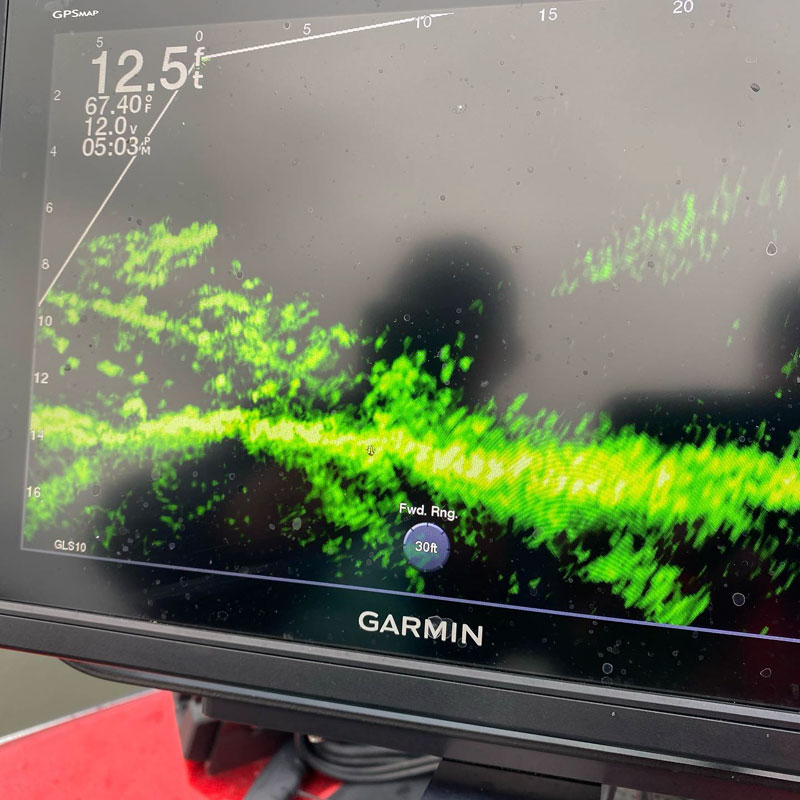
Regardless of whether he’s fishing on or near structure or over open water, Lloyd said he can boil LiveScoping down to four recommendations:
- You have to be able to tell if you’re looking at a crappie or some other fish. After a while, you start to recognize the shape of a crappie by how it swims and reacts, and then you can start looking for the bigger fish.
- You have to have good boat control. Sometimes crappie will only tolerate the boat getting so close to brush before they spook, and if they start spooking, you need to be able to back off and hold position.
- Casting accuracy is important. The LiveScope will tell you the distance, direction and depth, but you have to be able to put a bait on the mark.
- Bait presentation is important. Sometimes fish hit on the way down. Others want to see the bait dip and then move away, and still others, you have to hold it right in front of their face.
“I wish I could give you a magic formula, but it doesn’t work like that,” said Lloyd. “It takes time on the water, but once you start to figure it out, it’s about as addictive as fishing gets.”
LiveScope’s advantages
According to the Garmin website (buy.garmin.com), the all-seeing Panoptix LiveScope sonar is unlike anything ever seen on the water. It gives anglers the ability to see all around the boat in real time and in three dimensions.
Whether idling around, graphing or fishing, transducers are available in Forward and Down configurations, with mounting styles to suit your fishing needs.
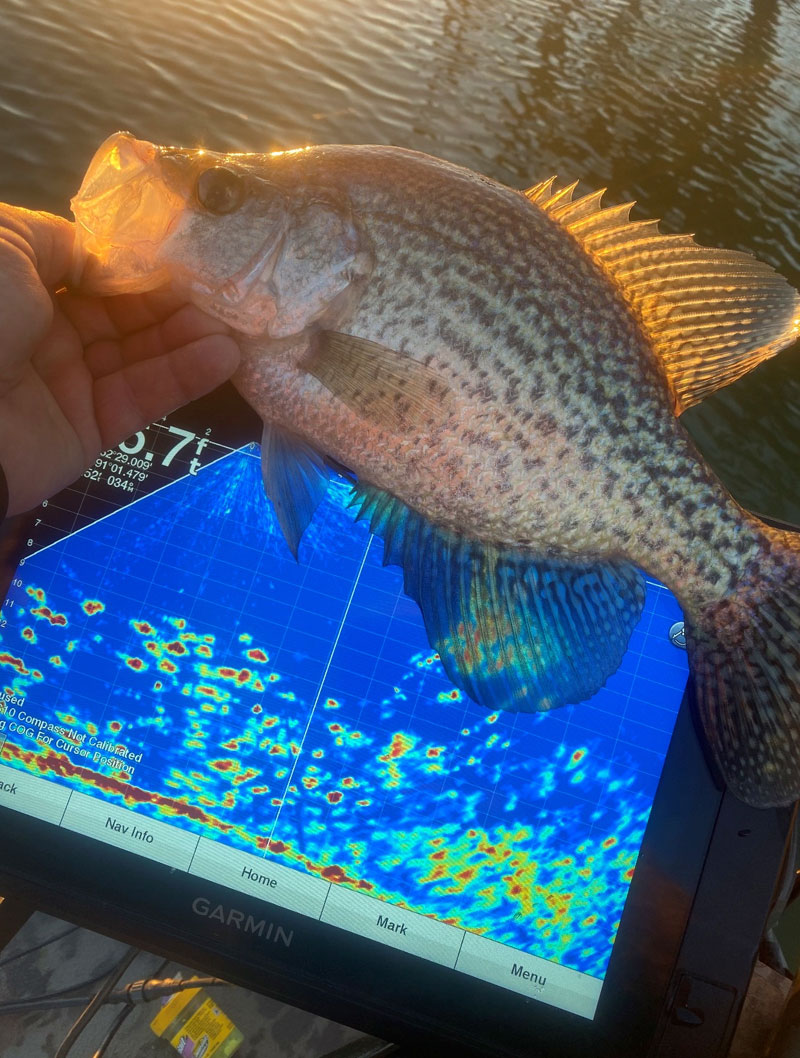
“I’ve been a big fan of side-scan sonar for years, and it’s still hard to beat for scouting new areas and finding structure that holds crappie, but once you have located something you want to check out, a brush pile or a stump field or just open water, there’s nothing like this,” said Kent Driscoll, a pro crappie fisherman.
The website specifications say it’s easy to adjust the transducer mode to fit the angler’s desired fishing techniques. LiveScope Forward allows you to see remarkably clear images of structure and swimming fish around your boat, and the LiveScope Down allows you to see directly below your boat. The view automatically updates on the compatible Garmin chart plotter. The sonar view remains steady even in rough conditions.
Constantly learning
Much of this new information has changed a lot of Driscoll’s thinking about the way he approaches and actually fishes for crappie these days.
“I’ve learned so much about a fish that, up until now, I thought I knew a lot about,” he said. “It has even taught me a lot about the mood of the fish I’m looking for.”
Driscoll said his experience has saved him a lot of time in eliminating fishing spots that would show fish on other sonar units, but not crappie, nor the size crappie he needed to catch if he was going to be competitive in a tournament.
“It makes you slow down tremendously,” he said. “I can pull up on a spot and immediately tell if it has crappie of the right size and if they are actively feeding by how they are orienting to structure. That helps me know if I need to change colors, styles or change baits altogether.”

Be the first to comment