


Use big baits, be patient at Lake Moultrie
This month, Capt. Jason Wolfe of Wolfe’s Guide Service said the striper bite is tough to beat on Lake Wateree, but he pulls himself away from that lake to head to Santee Cooper’s Lower Lake for at least a week to chase big catfish.
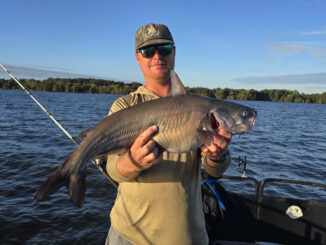
It’s not a big numbers game, but Wolfe said using big baits and having plenty of patience will usually result in some king-sized blue catfish.
“This month, anglers have a great shot at catching catfish that range from 30 pounds on up to 50, and even bigger,” said Wolfe (803-487-3690).
Drifting, or trolling when the wind isn’t blowing enough, is the key, along with using oversized baits.
“I’ll use big baits like whole bluegill, on a 13/0 hook,” he said. “And I’ll fish that on a Carolina rig with a Drifting Stix flexible weight to decrease the chance of getting hung up on debris,” he said.
Stay on the move
Drifting helps cover a lot of water quickly.
“This time of year, especially early in the month when it’s still really hot, catfish will often just lay up in those deep holes,” he said. “So if you anchor and cast, you’ve got less chance of these fishing coming to you. Drifting or trolling allows you to show your baits to a lot of different fish that would otherwise never see them.”
Many anglers opt for baits that are available at the numerous fish camps around Lake Moultrie. Wolfe said that mainly consists of smaller baitfish like threadfin shad or menhaden.
“Those are excellent baits for catching numbers of catfish this time of year, but you’ll catch a lot of smaller cats with them,” he said. “If you want to target big fish, you need to use bigger baits. You may still catch some 5- to 15-pounders, but using big baits cuts down a lot on catching them under 20 or 25 pounds.”
When the wind is blowing especially hard, Wolfe will deploy a drift sock, or two, or even three, depending on what it takes on that particular day. And when the wind is not blowing enough to move his boat at an acceptable clip, he sets his trolling motor to his desired speed.
“You just have to kind of experiment with the speed. Some days, they’ll bite best when you’re moving at about 0.5 mph. Other days, they want you moving faster, on up to 1.6 mph or so,” he said. “You just have to pay attention to what’s happening.”
Wolfe said you also need to be patient.
“You might go 30 minutes, 45 minutes without getting a bite when fishing this way this time of year,” he said. “But the bites you get will be well worth it.”
Anglers should use six to eight rods to maximize their chances. Wolfe fishes two off each rear corner of his pontoon boat, then another two in the rear center, one on each side of the outboard.
Be the first to comment