

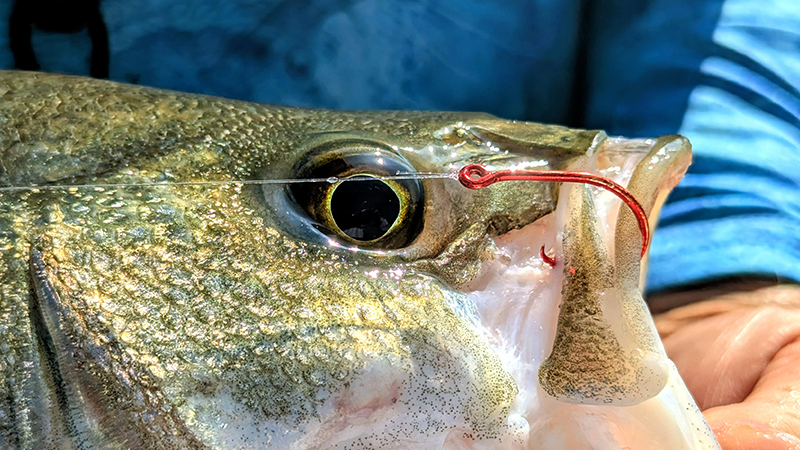
All hooks are not created equal
Being on the right lake and knowing the right pattern are two keys to consistently hooking and catching stripers and hybrids. But a recent trip to Lake Hartwell with fishing guide Capt. Cefus McRae demonstrated that a third component is perhaps equally important to making a catch.
“Stripers and hybrids are often aggressive-feeding species, but they’re also particular about what they eat,” McRae said. “To consistently hook these fish, anglers must present baits or lures that appear natural. I use live blueback herring much of the time at Lake Hartwell, and it’s a terrific bait, something they already want to eat. Fishing that bait in a manner that’s as close to natural as possible increases my productivity.”
McRae said one important key to a natural bait presentation is a small item many anglers overlook: using the right-sized fishing hook for the task at hand.
“A lot of hooks catch fish, but I want a hook that’s dependable, and for stripers and hybrids that’s the circle hook,” McRae said. “Regular hooks and J-hooks are effective, but their nature often creates damage to a fish being fought. Circle hooks make it easier to hook stripers and hybrids, and if we want to upgrade our catch, we can ethically release the fish to fight another day while we hunt bigger fish.”
Match the hook to the bait
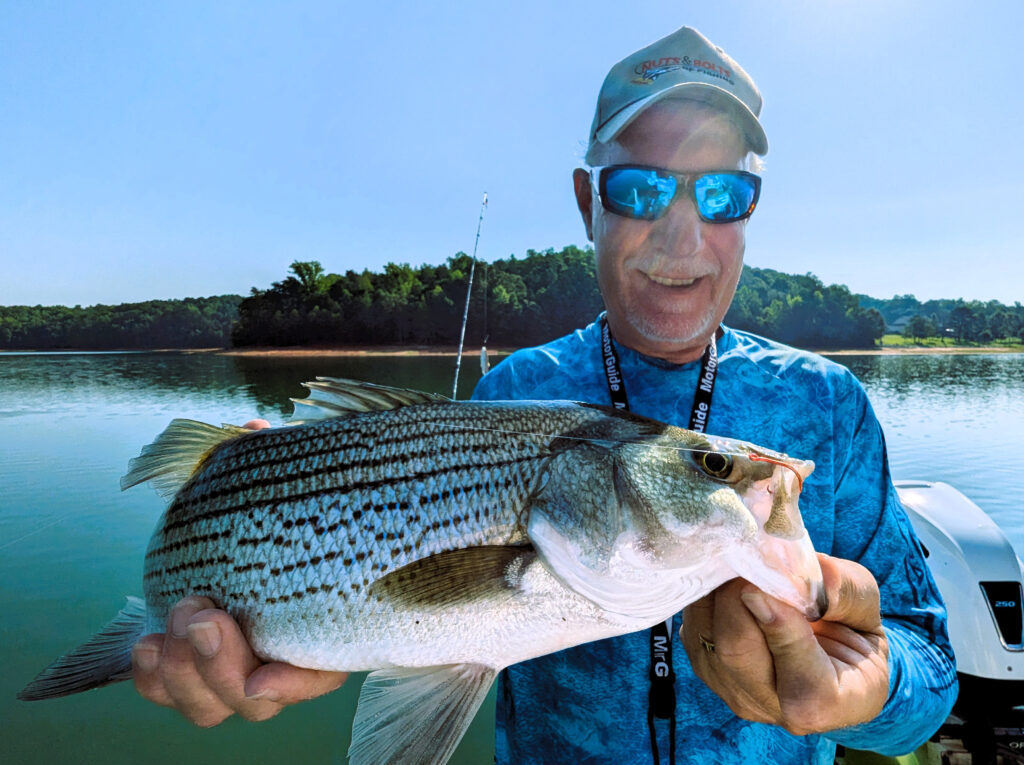
McRae (404-402-8329; https://nutsandboltsfishing.com/captains-blog/) uses a red Daiichi Bleeding Bait Circle Hook, and he said another key to his striper-fishing success is hook size.
“The key component to catching these fish is matching the right size of the circle hook to the bait used,” he said.
He said the tendency among anglers is to use hooks that are too large, because a large hook severely inhibits the lifelike action of live bait, eliminating the very advantage of fishing that wiggly morsel.
“I want the bait to swim freely, appearing natural,” McRae said. ”I have friends who trout fish and catch huge trout on hooks, so tiny it’s hard to see them. The hook doesn’t have to be big to land big fish, but it does have to match the size of the bait or lure to ensure a bite. For the bluebacks we use on Lake Hartwell during summer, a size 1/0 or 2/0 is plenty big.”
The day we fished with McRae, I paid much more attention to the baits being presented, and when watching the bait, I saw it moving freely and darting quickly; lifelike. Not fast enough to escape those frisky Lake Hartwell hybrids, but certainly enough to tempt the predator into running it down.
Helpful for catch-and-release
Also important is the ability to release fish so they can live and fight another day. Some of McRae’s clients don’t want limits of fish to clean and eat; they enjoy the abundant action. Others prefer to upgrade quality and safely release the smaller fish. The circle hooks McRae uses enabled us to release smaller fish unharmed because they usually hook the fish in the side of the mouth.
McRae said that during the seasonal changes throughout the year, when the forage is smaller or larger, he’ll alter his bait size to mimic the forage, and he’ll adapt to smaller or larger circle hooks as needed.
Like all guides, he uses his electronics to find the fish and employs the right rods and reels to make appropriate presentations. But the final link to hooking and catching these fish is the hook and bait. And the bait’s seasonal size, paired with a matching hook size, ensures his presentation is as natural as possible.
“My advice is matching hook size to the bait and letting that rig do the work for you,” he said. “A lifelike, active bait is often the final, but crucial, link to catching fish.” ■


Be the first to comment