

Everyone should be familiar with “fall back, spring forward” that will happen at midnight, Nov. 5.
That’s when clocks are set back one hour as the fall time change occurs. Happily, instead of day breaking around 7 a.m., it’ll be 6 a.m., at least for a while.
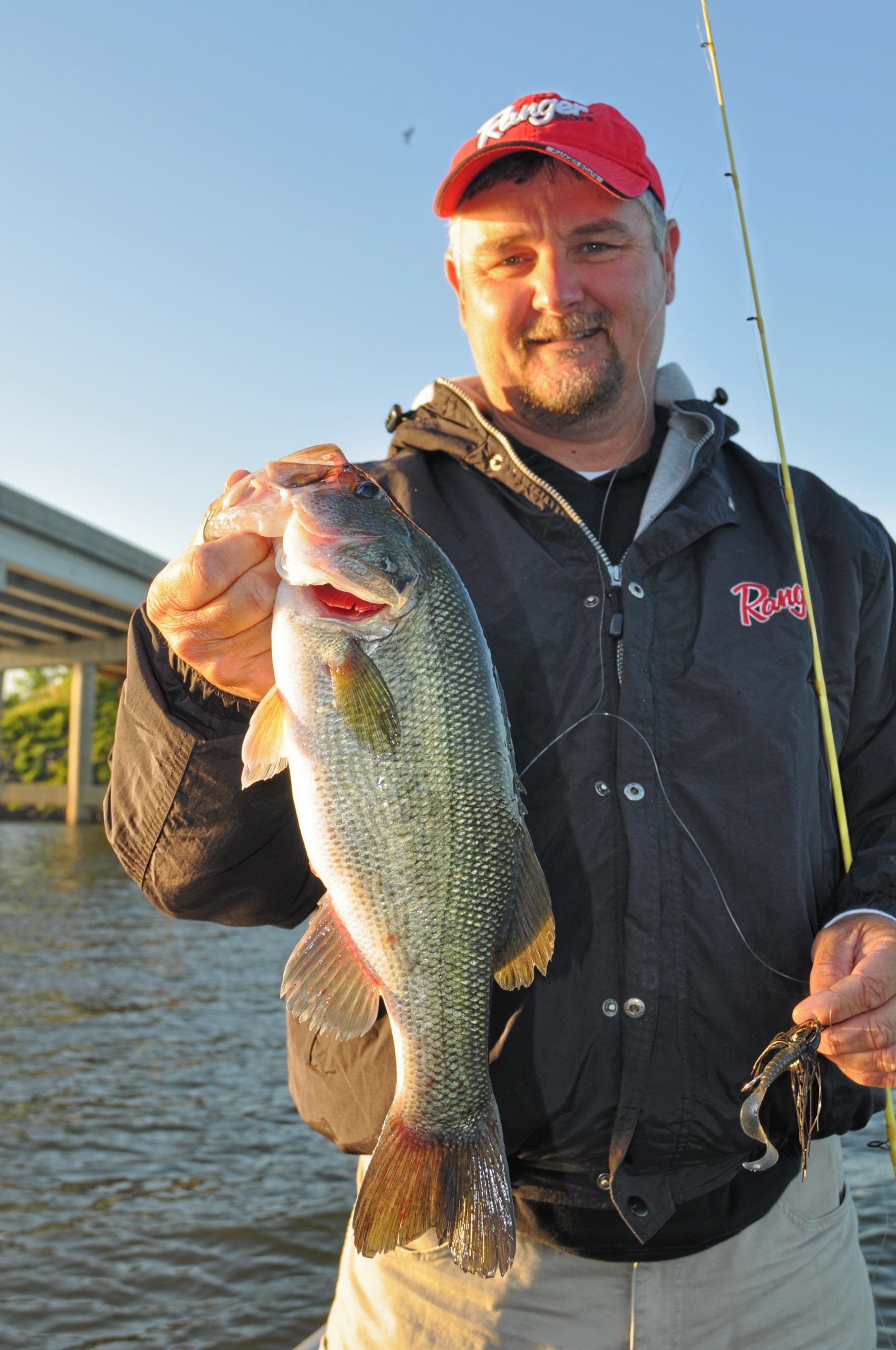
Fall also is prime time to fall back to a spinnerbait for piedmont bass angler Jeff Thomas. That’s when the change in water temperature almost matches early spring when blades are popular. His favorite spot to blade fish is Jordan Lake, followed by Falls and Shearon Harris, three impoundments near Raleigh and not too far from his Broadway home.
“When the leaves begin to fall, along with air temps, so does the water temperature,” said Thomas (Carolina Outdoors, 919-770-4654, www.carolinaoutdoors.net). “(Falling temps) trigger the fish — including shad and largemouths — to move to the banks. Falling temps also puts bass on the feed in preparation for winter months.”
One of Thomas’ favorite fall spinnerbait techniques he calls “ripping a blade.” He discovered this approach at Kerr Lake once while pre-fishing for a tournament.
“Just about every traditional seasonal method I’d tried had failed,” he said. “I decided to try something different to perhaps get a reaction strike.”
He found a pattern that under right conditions can produce big stringers at any lake, particularly during fall.
“It centers around a 3/8-ounce spinnerbait and a fast retrieve,” he said.
He started by casting a blade at wind-blown points that had cover (laydowns, timber, rip rap, rock or gravel) and he began getting blow-up strikes.
“They nearly took the rod out of my hands,” he said. “The faster I reeled the spinnerbait, the more determined bass were to hit it, sometimes coming out of the water”
Ripping a blade, almost so it wakes across the water, is needed along with a fast retrieve. Thomas likes reels with at least a 6-to-1 gear ratio, but a 7-to-1 offers better speed without reel fatique.
His second key is the spinnerbait, and Thomas likes a 3/8-ounce Hawg Caller triple spin. The size is easier to retrieve and produces a smaller profile, but its three blades project more flash in the water.
“To keep blades from running out of the water, I add weight to the hook shaft,” Thomas said.
He gets a 1-ounce core sinker, removes the bobber core, cuts it in half, then crips one half onto the blade’s shaft. Thomas also doesn’t use a plastic trailer or grub because they’ll make the blade tend to break the surface.
“I use a stinger hook to land short strikes,” he said.
Success also requires covering mucho aguar with long casts.
“If you establish a pattern like rip rap, rock or pea gravel or points, concentrate on that structure,” he said.
Rippin’ a blade also works best while temps are dropping, along with a light enough breeze to put a slight ripple on the water’s surface.
The technique will work as long as water temps are above 50 degrees.

Be the first to comment