

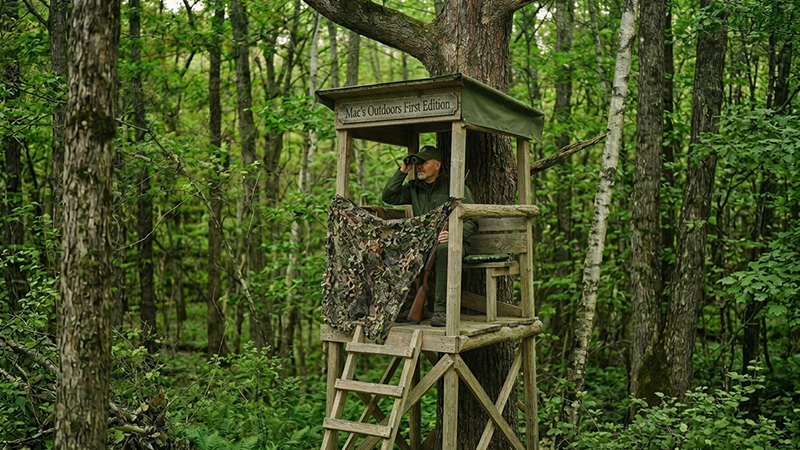
Don’t waver in the early season
Some years back, as the calendar rolled around to the middle of August, I felt the same anticipation I always do when South Carolina’s deer season arrived to Game Zone 3.
Around here, the first week of the season starts on Aug. 15, and after months of preparation, scouting, and wondering whether all the pieces would come together, it was finally time to climb into a stand. Every season teaches me something, but last year’s opening week reminded me why patience and trust-ing a plan are often more important than luck.
By the time opening day arrived, I already had a gameplan that I believed in. Throughout the summer, I’d spent countless mornings and evenings checking trail cameras, glassing soybean fields from a distance, and studying the travel routes that several mature bucks were using. One buck, in particular, stood out. He wasn’t the biggest deer I’d ever seen, but he was a mature whitetail with a heavy frame, tall tines, and the cautious habits that only come with age. His appearances were never predictable, but they were consistent enough that I felt confident I understood how he was using the property.
Helping the cause
Instead of constantly disturbing the woods, I limited my scouting to the edges. I stayed out of bedding cover, checked cameras only when conditions were favorable, and paid close attention to wind direction every time I stepped onto the property. If I wanted a realistic chance, I needed to let the woods stay as natural as possible.
Opening morning finally arrived before daylight. I slipped quietly into the stand I’d chosen months earlier, carefully following the same access route I’d practiced during the summer. The air was warm, just as August mornings usually are in South Carolina, and the woods slowly came alive as the sun climbed above the trees.
The morning itself wasn’t disappointing because I saw deer. Several does filtered through, fol-lowed by a pair of young bucks that played briefly before wandering away. It was encouraging to know deer were moving, but the mature buck I hoped to see did not show up.
That evening wasn’t much different. I watched squirrels race through the hardwoods, listened to songbirds, and enjoyed simply being back in the woods after the long offseason. More deer appeared before dark, but none matched the buck on my target list. As I climbed down after legal shooting light ended, I couldn’t help but feel a little frustrated.
Still, I wasn’t discouraged.
I’ve hunted long enough to know that abandoning a solid plan after one unsuccessful hunt usually creates more problems than it solves. Nothing I’d observed suggested the buck had disappeared. My trail-camera photos from late summer told a consistent story, and the sign I’d found still matched the movement I’d expected.
Too soon to switch gears
The only thing that hadn’t happened yet was the encounter.
Instead of changing stands or trying a completely different section of the property, I stuck with my original strategy. I spent the next morning hunting the same stand, because the wind was in my favor. The only change I would have made would have been not going at all if the wind had been unfavorable.
The woods were quiet for much of the morning. The August heat settled in quickly, making movement slow, but I reminded myself that mature bucks often appear when hunters least expect them. Every time I considered whether I should leave early, I stayed put.
It paid off
Late that morning, movement caught my attention at the edge of a patch of thick cover. Through the brush, I recognized the unmistakable shape of antlers long before I saw the rest of the deer. The buck stepped carefully into an opening, stopping every few yards to look and listen. Everything about his behavior confirmed what I’d learned from years of hunting mature whitetails. He wasn’t careless for even a second.
I’d practiced all summer with my rifle, and I knew the distance to every landmark around my stand. There was no need to rush.
The buck continued along the exact trail I’d hoped he would use, quartering slightly as he entered a narrow shooting lane. When he paused to survey the woods, I eased the rifle into position, found the shoulder in the scope, and squeezed the trigger.
The shot echoed across the timber, and the buck bolted into the cover.

All got quiet
Those moments after the shot always seem to last forever. Rather than climbing down immediately, I stayed in the stand and replayed the shot in my mind. The deer had reacted exactly as I’d expect from a well-placed shot. Still, some doubt lingered.
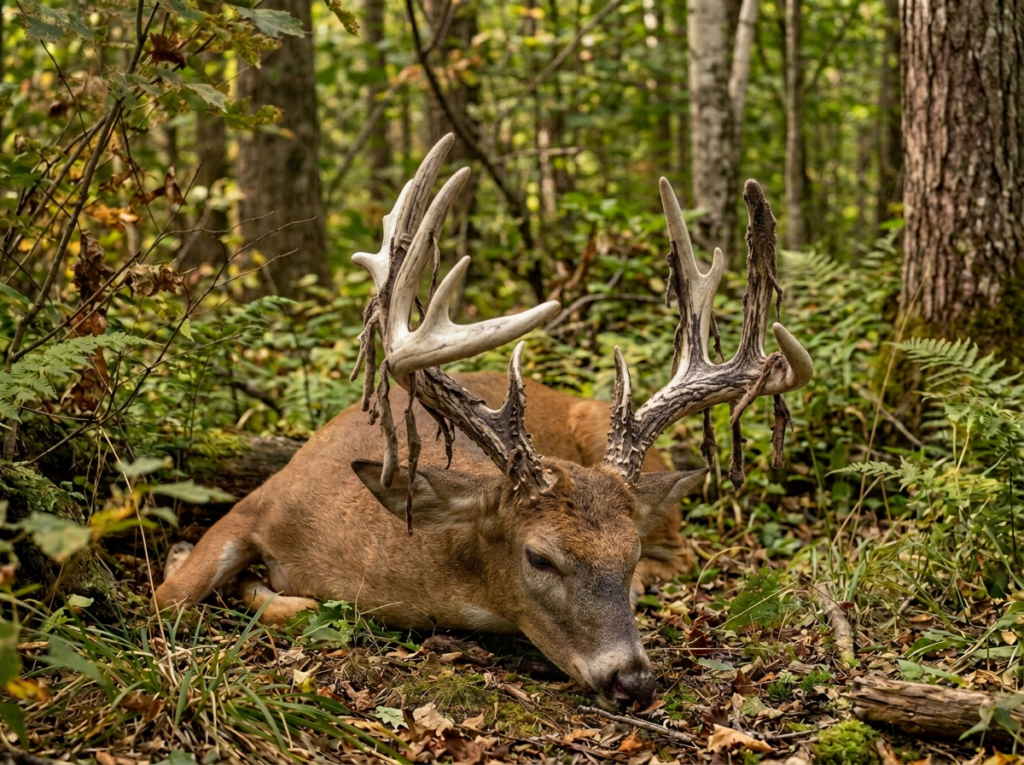
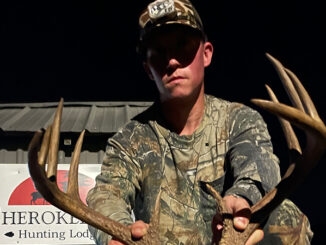
After giving the buck enough time, I climbed down and walked to the spot where he’d been standing. Bright, frothy blood immediately confirmed what I hoped to see. The trail was easy to follow through the understory, and less than a hundred yards later, I caught sight of antlers in partial velvet lying among the green vegetation.
There he was.
Walking up to a mature whitetail always fills me with gratitude and respect. This buck represented far more than a successful hunt. He represented months of preparation, disciplined scouting, careful planning, and the willingness to trust that preparation even after opening day hadn’t gone my way.
The Reward
As I admired his antlers and weathered face, I couldn’t help but think back to all the summer evenings spent checking cameras, watching fields from a distance, and resisting the temptation to overhunt the property before the season even began. Every decision had contributed to that moment.
Looking back now, what stands out most isn’t simply harvesting a mature buck during the first week of South Carolina’s deer season. It’s the reminder that consistency often wins over impatience. Opening day didn’t produce the result I’d hoped for, but it also didn’t change the facts I’d gathered through careful scouting. The deer was still using the area. The habitat hadn’t changed. My access route was still clean, and the wind still favored my setup.
Sometimes the hardest part of hunting isn’t finding deer. Instead, it’s believing in the work you’ve already done. That hunt reinforced that lesson in the best possible way. By staying optimistic after an uneventful first day and trusting the gameplan I’d built throughout the summer, I enjoyed one of the most satisfying hunts of my life and tagged a mature South Carolina whitetail I’ll remember for many seasons to come. ■


Be the first to comment