

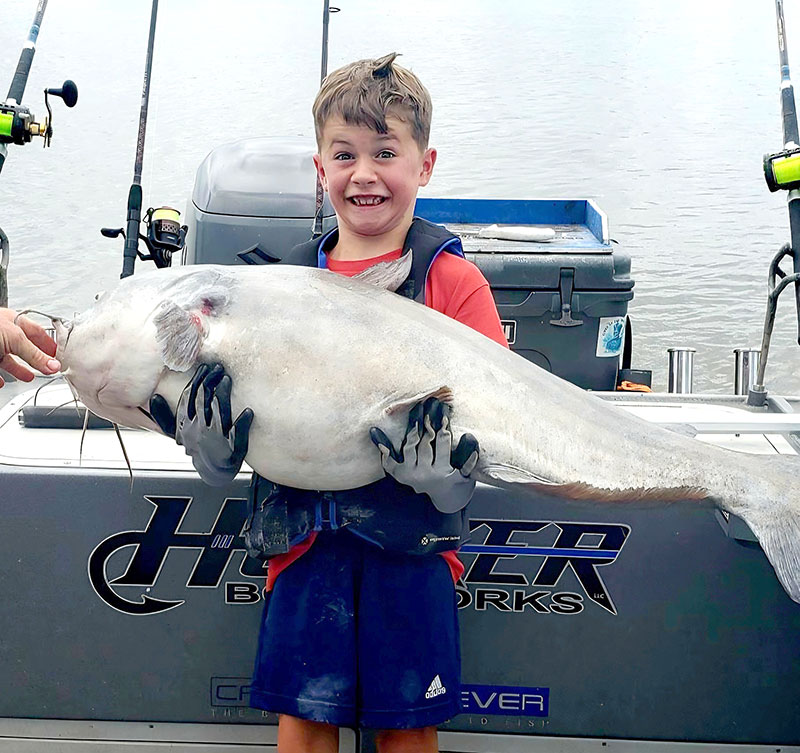
Blue catfish are not native to the east coast, but after they were introduced here decades ago, they became a top target for recreational anglers. Their status is under siege in the tidal portion of the James River, just above the NC/VA state line.
Virginia lawmakers are pushing to remove the one-fish daily limit for blue catfish measuring longer than 32 inches in these waters, as well as in two other Virginia rivers and their tributaries.
The move has failed twice, but it took a veto from the governor in April, after the bill passed in both the House and the Senate.
And lawmakers haven’t given up. They are still looking for ways to amend the current law and allow what would essentially be an unlimited number of trophy-sized blue catfish to be retained by both recreational and commercial fishermen. The state currently has no daily creel limit for blue catfish less than 32 inches long in the tidal portion of the James, and that’s what lawmakers are shooting for with blue catfish longer than 32 inches as well.
Lawmakers are commonly referring to blue catfish as “an invasive species” and are alerting the public to the fish’s predatory nature on the state’s native species. That’s one effort they’re using to turn the public’s opinion of the fish into a negative one.
Lawmakers are also touting the abundance of blue catfish in this section of the river, and discussing ways they can increase consumption, some even going so far as to recommend adding these fish to cafeterias in public schools across the state.
But that could be a problem, according to detractors, who point out that the James River is known to have higher concentrations of mercury, PCBs and PBDEs than most other rivers in the region.
Big trouble
Recreational anglers like Capt. Christian Moore of Reel Country Guide Service (336-988-1394), a North Carolina native, fear the impact of what lawmakers are pushing for. He moved to the area several years ago specifically to be a catfish guide.
Numerous clients from all over the world book trips to catch cats on the James River with Moore every year. But seeing the catfish regulations change in a way that would be detrimental to his buisness isn’t his only motivation for wanting the current regulation to stay in place.
“The bigger catfish typically have higher concentrations of PCBs, so if they want to feed catfish to kids in schools, the smaller ones would make the most sense,” he said. “And those fish already don’t have a limit, so it really doesn’t make sense for them to want to go after the trophy-sized blues.”
Maryland and Georgia already have no limit on blue catfish of any size, and with Virginia lawmakers pushing for the same, anglers and fisheries managers in the Carolinas could soon be surrounded by big trouble for big blues.

Be the first to comment