
The effects of warm-water discharge aren’t experienced only in the immediate areas, especially on sprawling Lake Norman.
Guide Andy Fox of Claremont said that, depending on how the wind is blowing, the “hot hole” effect from the Marshall Steam Station can extend across the lake.
“A wind sort of out of the northwest will blow the (warm water) all the way across the lake,” he said. “It really does help out, and you don’t need a whole lot of wind.”
Fox said that when a northwest wind is blowing and the Marshall Steam Station is flushing warm water into the main lake, he likes to set up on the eastern side of the lake and fish riprapped banks.
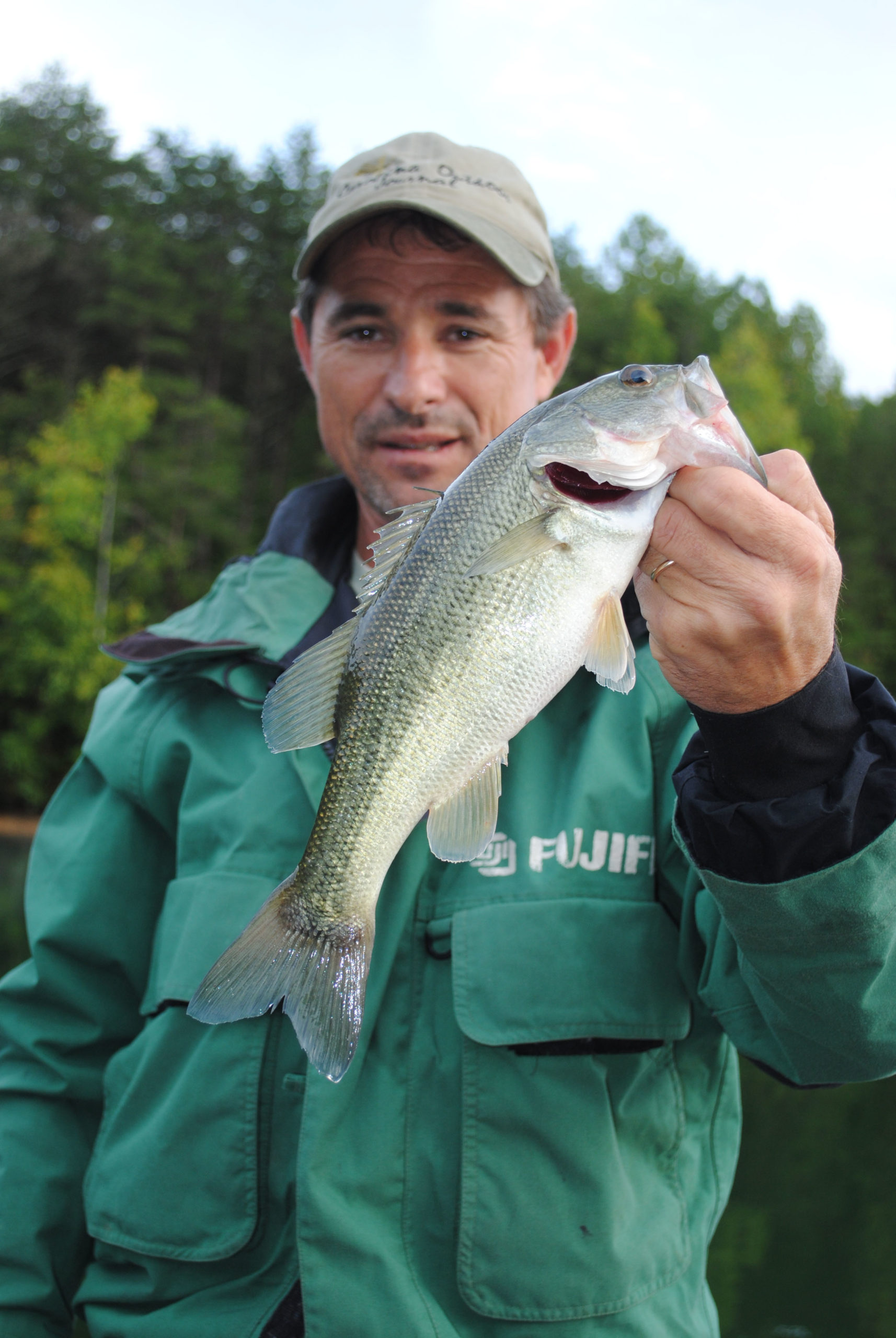
“When they start pulling water through the hot hole, I like to be across the lake, fishing riprap,” he said. “The spotted bass will really get on the riprap, and not just little spots but those 2- and 2 ½-pounders. You can catch them on a shaky head, a spinnerbait or a jerk bait. We’ll have water a couple of degrees warmer than the rest of the lake, and that really makes the fish feed.
“Two years ago, when we had the winter that was so cold, there was a school of baitfish that stayed in the back of this one cut — in McCrary Creek, past Queens Landing — all winter, because the warm water stayed in there, and the baitfish never moved. The wind kept blowing that warm water over in there, and it stayed warm and we caught fish all winter.”
Guide Joel Richardson of Kernersville agreed with Fox that wind can make the effects of warm-water discharges greater, depending on how and where the discharge canal is located.
“Wind can make the effects of the warm water more pronounced,” he said. “If it blows hard enough, it can get it into areas away from the hot hole. At Norman, the wind can put warm water into certain areas, especially if it’s blowing it into a big bay or a creek arm.”

Be the first to comment