

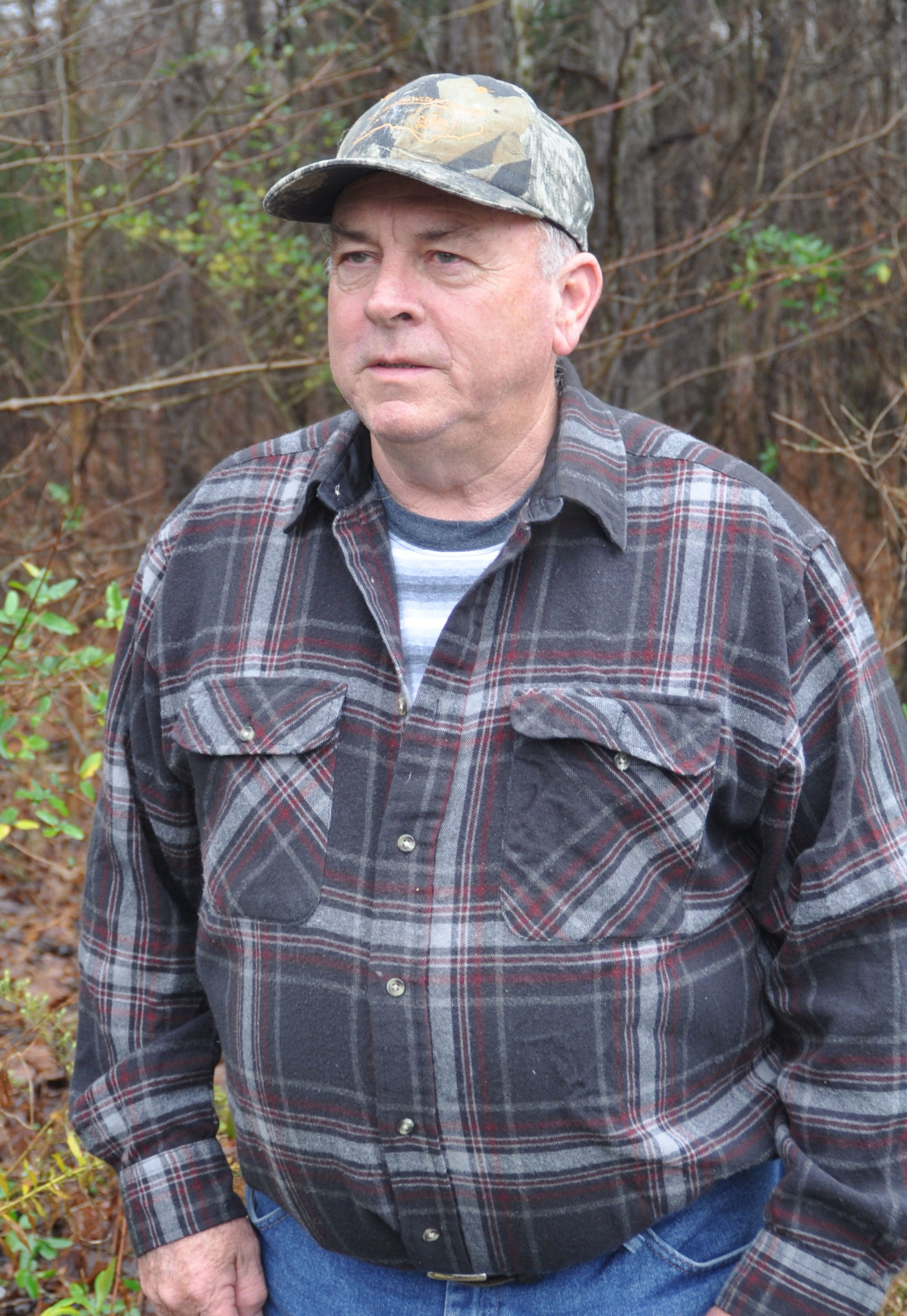
Richard “Dick” Hamilton had worked for 37 years in state government when he was forced 2½ years ago to resign as executive director of the North Carolina Wildlife Resources Commission.
He could have taken his retirement benefits, headed to his farm near Belhaven and enjoyed life growing mushrooms, far removed from the grind of running a state agency with a $75 million annual budget and having to answer to 19 bosses — most of whom possessed big egos, big bank accounts, political connections and little expertise about fish and wildlife management.
Instead, three days a week, Hamilton finds himself in a second-floor office about five miles from downtown Raleigh, working the back rooms of the state capitol building, making calls to the leaders of conservation organizations, still trying to do what’s best for the fish and wildlife that inhabit North Carolina’s woods and waters — and the sportsmen who pursue them.
“I felt like I had some unfinished business; I still had something to contribute,” said Hamilton, whose career with the Commission was unceremoniously ended because he refused to fire an employee targeted for dismissal by the political appointees on the 19-member Commission.
“Plus,” he said, chuckling, “my wife insisted that I find something to do.”
So Hamilton is back, as coordinator of the North Carolina Wildlife Federation’s Camo Coalition and a founding member of the Coastal Fisheries Reform Group, making daily inroads and probably getting as much or more done for North Carolina’s hunters and fishermen as he did when proudly wore a Commission patch on his cap, shirt and jacket.
In a large part because he refused to shut up and go away, Hamilton has been named North Carolina Sportsman’s fifth-annual “Sportsman of the Year.”
Over the past two years, he has built the Camo Coalition from the ground up, attempting to organize disparate conservation groups into a unified voice for sportsmen and wildlife, and he has given immediate credibility to the CFRG and championed its attempts to have North Carolina’ marine resources managed for the benefit of the many instead of the few.
To say that he remains a heavy hitter in North Carolina’s outdoors is an understatement.
“I feel blessed that we have Dick Hamilton working for us,” said Tim Gestwicki of Charlotte, executive director of the North Carolina Wildlife Federation. “He has been a wonderful plus for us, as an organization that is re-establishing its efforts to speak for the hunting and fishing population.
“Personally, for me as the director, it’s reassuring to me to have someone like Dick, who understands fully what we’re trying to accomplish.”
Hiring Hamilton was the cornerstone to creating the Camo Coaltion.
“With the proliferation of single-species conservation organizations in the state, we’d been thinking of an organization what would bring them together, and it was the perfect time to go forward when we brought Dick on board,” Gestwicki said. “The credentials he brings to us — he’s a huge asset. No. 1, he brings decades of experience in the (state legislature) and the (Commission). No. 2, he’s a certified wildlife biologist. No. 3, he’s a hunter and a fisherman who is involved with the hunting and fishing community.”
Hamilton, a Fredricksburg, Va., native who headed south to Raleigh in the early 1960s and never left, graduated from North Carolina State in 1966 with a bachelor’s degree in wildlife sciences, then added a masters degree. He started out on the Commission as a wildlife biologist, served as a division chief for inland fisheries and wildlife management, then was deputy director for 18 years before moving up to executive director, where he was widely lauded by staff members as an even-handed boss who recognized, appreciated and rewarded the hard work of his employees in almost three years in that job.
In July 2007, he received a “Mountain Community Access Award” for his work in helping improve handicapped access to recreational lands and waters through the Commission’s Disabled Sportsman’s Program.
But a month later, he refused to cave in to demands by commissioners to fire one of his employees, rules coordinator Joan Troy, ostensibly for her questions about a possible conflict-of-interest issue involving a commissioner. Given the choice of firing Troy or being fired, Hamilton retired.
The Commission has been involved in almost countless controversies since his departure — too numerous to fit into a single paragraph.
Hamilton was out of work for about three months before being contacted by Larry Thompson, then the executive director of the North Carolina Wildlife Federation, who basically offered him a blank slate and a piece of chalk and told him to make his mark. Hamilton hit the ground running, lobbying in the state legislature for bills that benefited North Carolina’s fish and wildlife, raising money to get the Camo Coalition off the ground and helping the CFRG almost immediately become a major player in coastal fisheries politics.
“I wanted to stay involved in things I was interested in, and (Thompson) knew I had a background with the Commission and in state government, that I had worked with the legislature,” Hamilton said, “and it has been fun. We’ve gotten a few things done.”
The fruit of his work with the CFRG was visible almost immediately, according to Joe Albea of Greenville, who along with Hamilton was one of six founders of that organization.
“I worked with Dick when he was still with the Commission during the OLF deal (the U.S. Navy’s plans to locate an Outlying Landing Field in northeast North Carolina),” Albea said. “He is very knowledgeable about the political side of things, about how things work in this state. He probably knows North Carolina’s outdoors better than anyone else. He understands the problems.
“We had been talking off and on, preparing to put this group together, but Dick’s hands were tied as long as he worked with the state. We finally got together after he left the Commission, me and him and a few other guys, because we wanted to see things done to get the politics out of natural resources in this state.”
Last winter, the CFRG proposed changes in creel limits and size limits for spotted sea trout (speckled trout), and when it found the North Carolina Marine Fisheries Commission unwilling to even consider its requests, it got a bill introduced in the state legislature to declare speckled trout and redfish as gamefish – a move aimed at prohibiting any further commercial sale. The bill, written by Hamilton, died in committee when the chairman — from a district where commercial fishing is king — would not allow it to move to the floor of the House for consideration.
That may have been the high-water mark in commercial fishing’s battle against the CFRG.
“When all is said and done, the trout thing will be the worst mistake they’ve ever made,” Albea said. “That was an effort to try and maintain some semblance of a commercial fishing system. That may have been their last chance.”
Be the first to comment