

Carolina angler handcrafts spoons and jigs
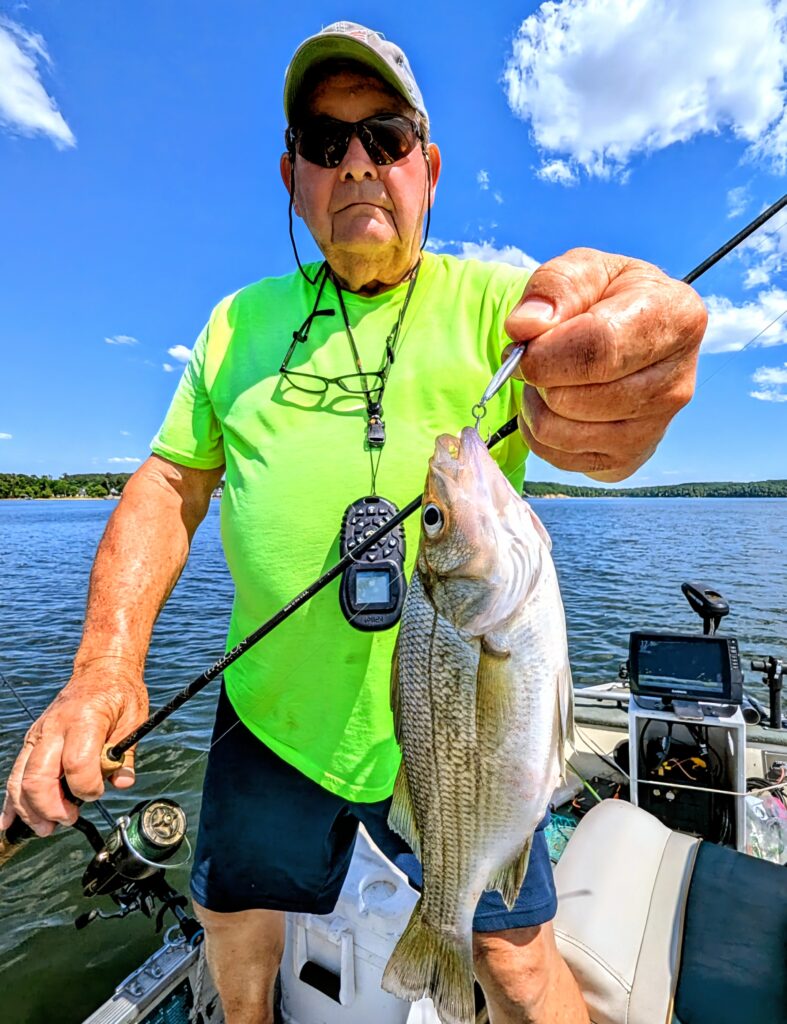
Herb Thompson from Darlington, SC, is a big fan of getting on the lake early, or staying until dark if he arrives in the afternoon. But the day we fished, he decided to make a day of fishing on Lake Wateree, despite the forecast for temperatures topping 90 degrees.
At 77, Thompson is a fisherman and handcrafted lure maker, and the two activities are linked as the core of his passion for fishing.
“I get pleasure from designing and making my own lures, and then going out on the lake and catching fish with them,” he said. “Lake Wateree is my home lake, and while I’ve learned many places to catch fish, my mind is always developing ways to be more effective.”
From hobby to business
Thompson’s desire to build his own lures began because he was often disappointed in the performance of lures available commercially. He decided to design and build what he thought would suit his style, and he quickly discovered he had a knack for crafting lures. That hobby grew into a handmade lure business he named Uncle Herb’s Lures.
His first product was crappie jigs, and he’s since added lethal jigging spoons for stripers and white perch.
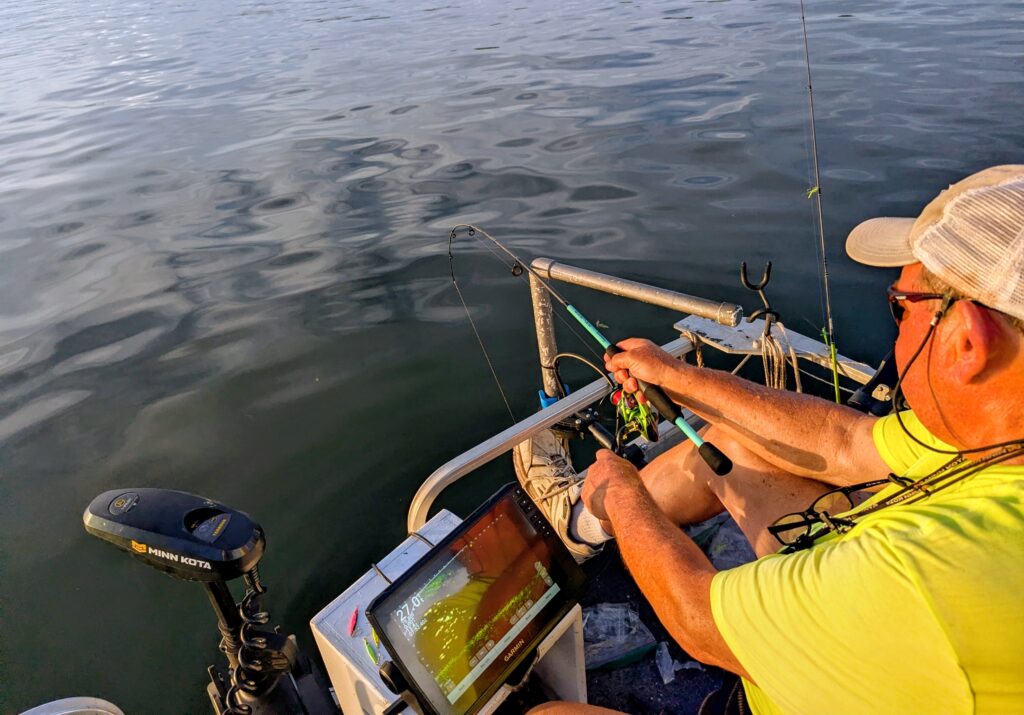
The day we fished, I couldn’t join him until midday, and when I boarded the boat, he’d already caught almost a limit of crappie. We caught a few more crappie, then turned our attention to white perch and stripers.
 The crush
 The crush
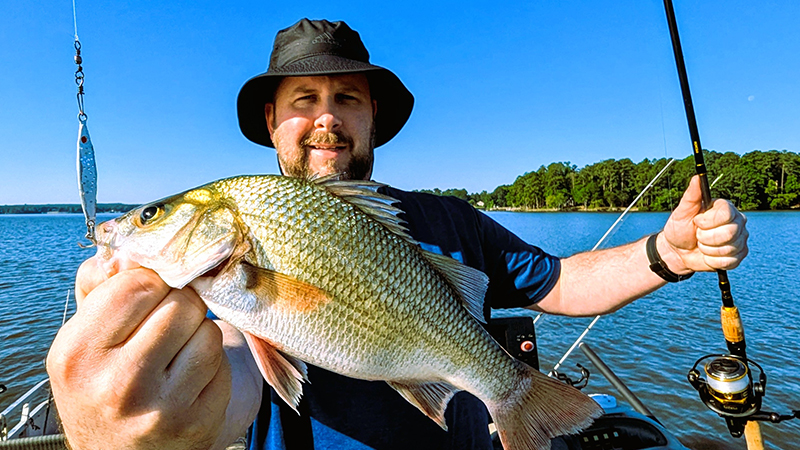
That afternoon, we enjoyed a classic Lake Wateree “perch crush.” We began the afternoon hunt for jumbo white perch using his chartreuse 1/2-ounce spoons, but as the evening progressed, the productive pattern shifted to a smaller spoon, the 1/4-ounce silver-and-white. He surmised this change was partly due to the fading light, a prime time for active feeding by perch and striper, combined with the size of the shad marked on his graph. The smaller lure seemed to “match the hatch” in terms of forage size.
And the fish mauled his handmade creations, providing exceptional action and a big box of fish for a buddy planning a fish fry.
Thompson didn’t catch a striper that afternoon, but he often catches multiple stripers while targeting perch.
“What we’re doing is working the forage areas on humps and ledges, where multiple species of fish are feeding on shad,” he said. “Catching hard-fighting white perch is plenty fun, and typically we’ll catch a few good stripers foraging on the shad. Anything that eats a shad is a potential target with the spoons, including bass, crappie, and catfish.”
Always changing
Thompson said catching fish is akin to chasing an ever-moving target in terms of their changing lure preferences, and to do so, an angler needs the right tools to do the job.
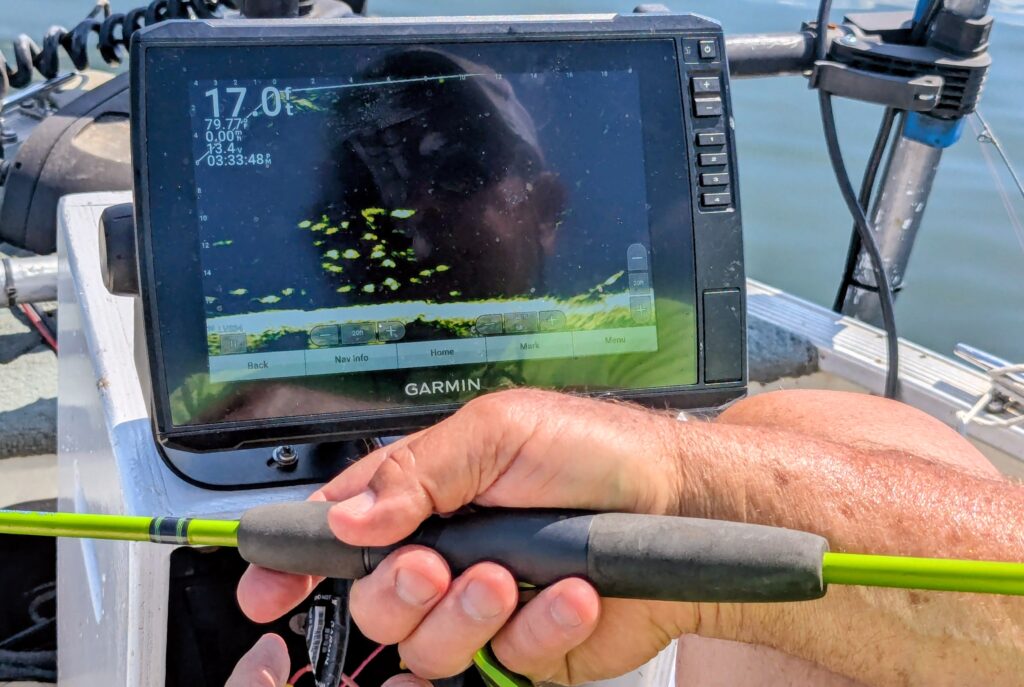
That’s where Thompson’s diligent “research and development” work provides him the confidence that the lures work, once he determines the color and size fish want at any given place and time. He employs Forward-Facing Sonar to analyze fish responses to different lures.
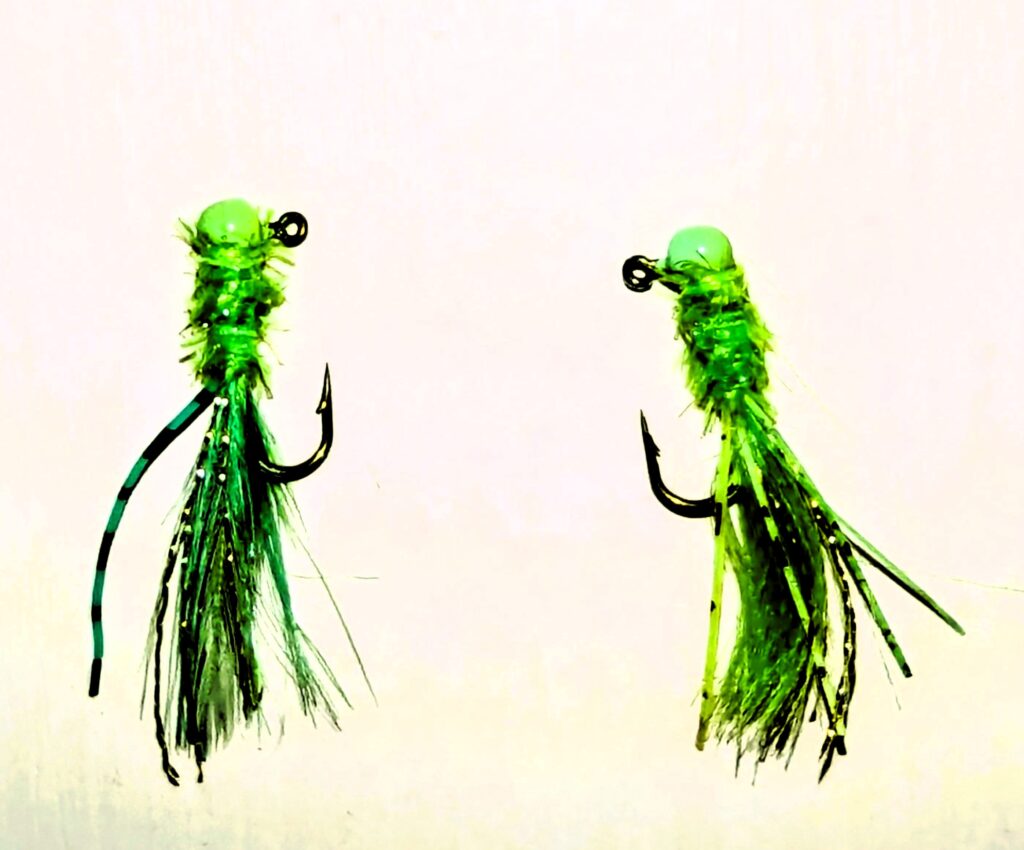
Thompson’s handmade jigs are effective on crappie, and targeting papermouths is often his first choice on a trip. When he began making crappie lures, his personal quest was to become a more complete crappie fisherman, and his learning curve to catch more slabs spiraled upward using his own crappie jigs.
His assortment of crappie lures includes jigs in various profiles and color schemes. But he devotes considerable effort to what his clientele prefers, and one jig is clearly the leader. Thompson refers to it as his “Green Crappie Lure.” This tiny treasure is available in 1/32- and 1/64-ounce sizes, but he makes lures in assorted sizes and colors for different water conditions.
Three keys
Thompson’s jewelry-making background made him an ideal candidate for making effective fishing lures. He began making and selling jewelry 15 years ago, and the skills he developed working on small projects translated well to creating fishing lures.
Thompson (843-621-0641; email: hct0641@live.com) builds his own lures because he didn’t accept the limitations of using only lures others thought he should use. He’s learned that three key factors are required in each lure to make a finicky crappie bite.
First, it must have lifelike movement in the water, something mimicking forage. Next, it must be the right color for the conditions fished, and third, a crappie lure needs flash.
“The flash patterns come in different color patterns, and I keep them subtle because I try to mimic the flash I see on live forage in the water,” he said.
The same development process is conducted for jigging spoons as well. Thompson developed four sizes of jigging spoons, and he’s proven them all to be effective on perch and stripers, with the larger sizes best for stripers.
His research and testing have taught him that the three keys to jigging spoon success are the spoon’s fall (shape), color (and sparkle), and size, all of which are crucial to determining the daily pattern.
Thompson said these factors may change within the same day, for example, as light conditions shift from midday to late evening.
Thompson said he also enjoys the challenge of working with anglers to design custom lures tailored to meet their specific needs.
As anglers, we all seek the perfect lure, but Thompson has learned it’s not a single lure that ensures success. The key is having quality lures in his tackle box, in diverse sizes and color patterns, to adapt to the fickleness of fish.
For him, the joy of building lures is matched only by catching fish with his personal creations. He enjoys tweaking the lure after testing a new design or upgrade. That’s where Thompson’s diligence provides confidence that the lure works.
“When I tell someone this lure catches fish, it’s not a sales pitch. I know it will because I did it,” he said. “I don’t claim to be a fishing expert, so when they work for me, I’m confident they’ll work for you.” ■


Be the first to comment