

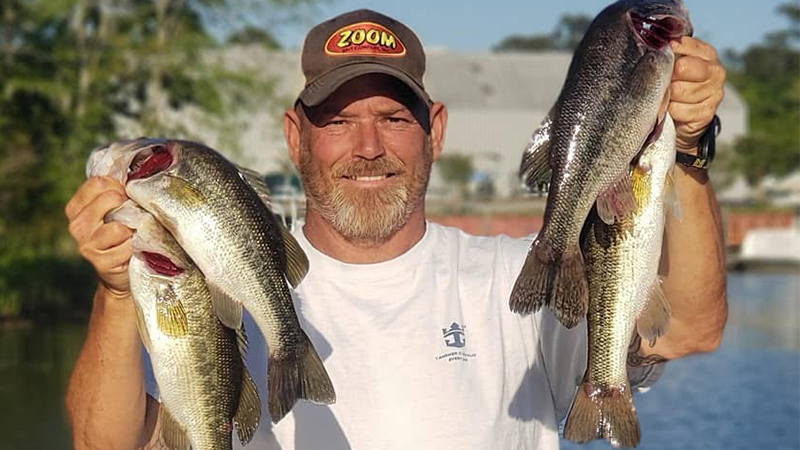
Soft plastic worms get it done in hot weather
As the temperatures continue to climb this month, the bass fishing heats up to on the tidal portion of the Waccamaw River, but it’s best for anglers who match their efforts to what the fish are doing.
“Many anglers that were catching good bass in the main river channel during the spring have a hard time once the summer weather takes over,” said Capt. Todd Vick of Fishin’ Freshwater Charters in Murrells Inlet. “Unless they are willing to adapt their tactics.”
Vick said that means getting off the main river and tucking back into secondary creeks (and even smaller creeks off of those creeks) where the bass are seeking shade and shelter. Wormin’ he said, is the way to go.
It’s also important for anglers to get off the main channel due to a big increase in boat traffic, which occurs once summertime hits.
“It’s just tough to fish on the main part of the river when there’s so many pleasure boaters, other anglers, personal watercraft, tour boats and even folks skiiing or inner tubing,” said Vick (843-333-8200).
And while he said some largemouth bass surely stick around in the main river channel, he believes the majority of them head into those smaller creeks.
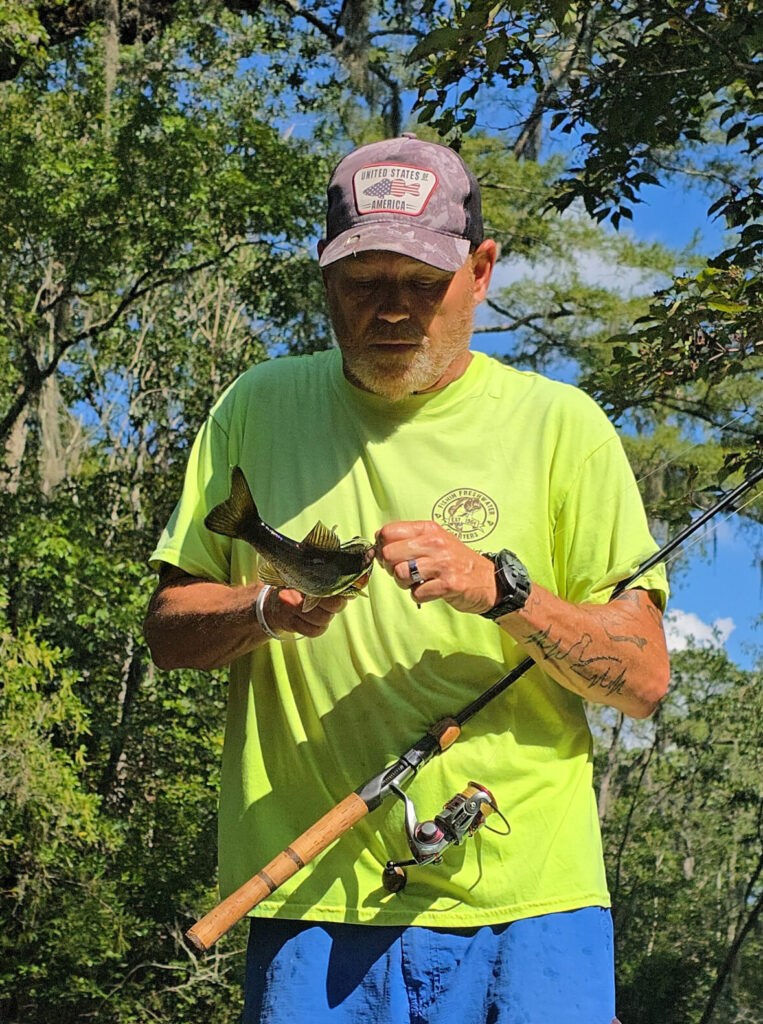
All they need
“These creeks have everything bass need to survive and thrive,” he said. “and they don’t have to fight as hard against the current and tides.”
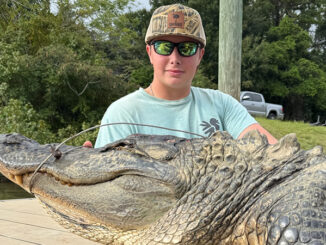
Although the numerous water skiiers and inner tubers he sees throughout the summer might not know it, a good number of alligators are in this river, which presents another threat to bass that the smaller creeks help them avoid. This river is also home to some large catfish, and they eat their share of bass as well.
“These creeks have plenty of gators and large catfish, maybe even more than the main river, but fish have an easier time finding shelter from them with all the submerged woody cover,” he said.
Food is abundant here for bass also, and the shade and downed trees offer plenty of ambush spots for the bass to hide.
Fishing primarily out of Wacca Wache Marina where the tides play an important factor, Vick said the tide chart is a much better tool for fishing here than sunrise and sunset.
“I would, of course, love the early morning hours and the late afternoon hours to coincide with the proper tide cycle,” said Vick. “But nothing is more important, especially in these smaller creeks, than the tide cycle.”
One reason for that is that if you stay too long in these creeks, your boat will end up high and dry when the tide falls out.
“Aside from that, the bass move certain steps as the tide falls. So without knowing the tide cycle, you’re just guessing,” he said.
Mainly, Vick wants to know what time high tide is when he’s going fishing.
“I want to start when the tide is high, but beginning to fall,” he said. “So as long as you’re in there at high tide, you can watch the banks and the trees to gauge when the tide is falling. You’ll see the water marks and can adjust your fishing. But you really want to know what time low tide is too, so you’ll have an idea of how long you have before it’s all the way out.”
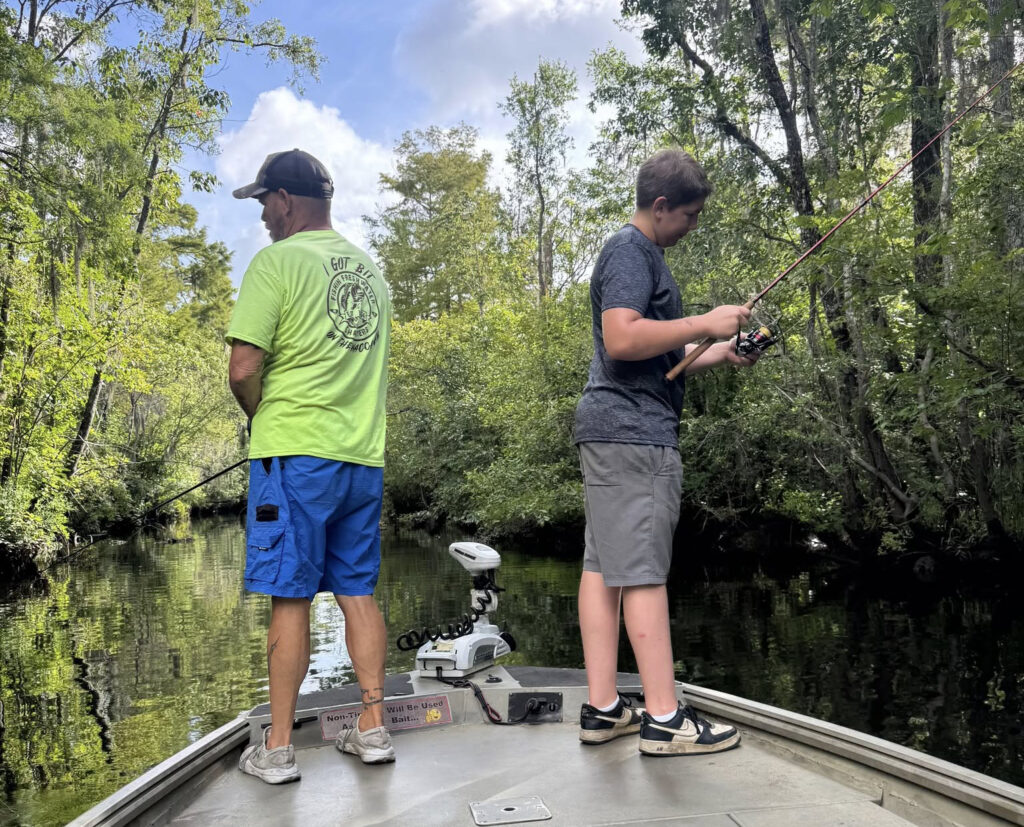
Tricks are for high tide
At high tide, Vick said lots of bass are in the flooded trees, which is difficult to cast to. But as the tide begins to fall, he said casting a trick worm to the edge of the main part of the creek is a great plan.
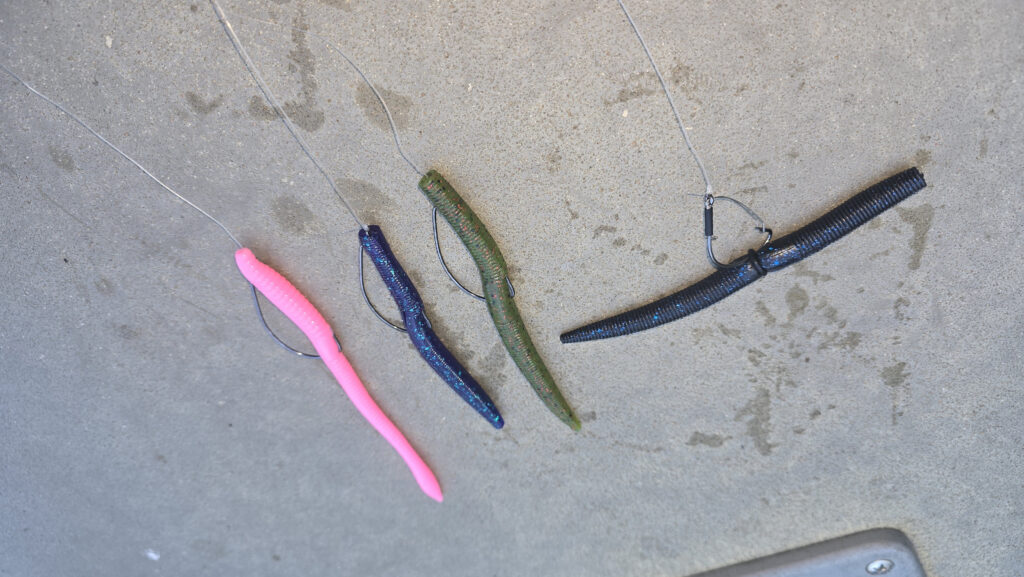
“White worms and pink worms are all you need. Some days, one outperforms the other, but they’re usually both good,” he said. “Cast to the base of flooded trees or on top of any surface grass you see,” he said.
He fishes these worms without a weight, and said anglers should just allow the worm to sink freely.
“A hungry bass will hit these worms as they are falling,” he said.
“Don’t get lulled into a daze when nothing is happening, because when a bass hits, it will be a hard hit, so you need to stay ready.”
Each cast and retrieve is a quick process in these small creeks.
“There’s not a lot of room in here, so once you cast, you’ll get just one or two twitches,” he said. “If you don’t get hit by then, just reel in and cast again.”
Next up
As the tide drops lower, the places that are good for the trick worm are now out of water. Vick turns to a weightless Senko-type worm now.
“Just let the Senko sink. Reel in the slack, but don’t try to give the lure any motion. Its tail will naturally twitch as it falls,” he said.
Sight becomes more important than feel with this lure.
“And pay attention to your line,” he said. “because when a bass hits a Senko, it will not hit it hard. It will just start moving off with it. So you probably won’t feel a thing. Watching your line will tell you when to set the hook.”
Get heavy
As the tide drops even more, Vick sticks with the Senko, but he adds a 1/8-ounce bullet sinker, pegging it in place against the worm’s head with a bobber stopper.
“When you see the base of the trees exposed even more, and you’re seeing wood that was completely under water earlier, it’s time to add a weight to your Senko,” he said. “With the water at this level, bass are looking for food on the bottom. So let your lure sink, and lift your rod tip ever so slowly. This will pull the worm along, making it look like a slug crawling. Bass will eat that up.”
Wack out
Once the tide has dropped all the way out, the water that’s remaining is all the bass have left to patrol. This is when it’s time to break out the wacky worm. This is an unweighted worm with the hook in the middle. When the angler twitches his rod, the wacky worm will dangle freely at both ends. It’s a fun way to fish.
“Make a cast and let the worm sink, then give your rod a couple of sharp twitches,” he said. “This gives the worm a butterfly action. Then let it fall again, count to two or three, give another twitch, then let it fall once more. If you haven’t gotten a hit by then, it’s time to reel in and cast to another spot,” he said.
Book your trip with Fishin’ Freshwater Charters at 843-333-8200. ■


Be the first to comment