

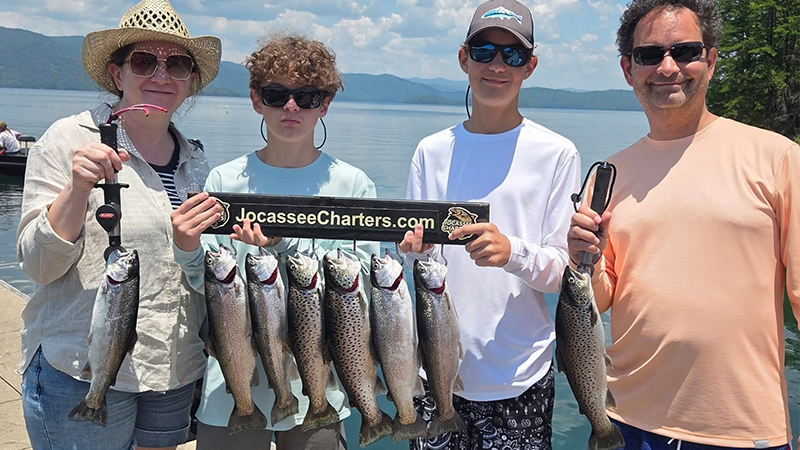
Go deep for consistent action
In May, Lake Jocassee becomes a focal point for trout anglers seeking both consistency and trophy potential. It is usually one of the most productive periods of the year.
The lake’s cold, clear, mountain-fed waters provide an ideal habitat for brown and rainbow trout, and during this time, fish behavior is strongly influenced by rising surface temperatures and increased baitfish activity. Trout remain highly active, often suspending at mid-depths where water temperatures and oxygen levels are most favorable.
According to Sam Jones of Jocassee Charters (864-280-9056), May represents a key window when trout are both accessible and aggressive. He said the warming surface combined with the persistence of colder water below creates a narrow band where trout concentrate and feed heavily. This transitional zone, often ranging between 20 and 50 feet deep depending on conditions, becomes the primary target area for anglers using trolling techniques.
A defining feature of trout fishing on Lake Jocassee this time of year is the presence of blueback herring, which spawn along the shoreline early in the morning. This event draws trout closer to the surface during low-light hours, creating brief opportunities for more active feeding.
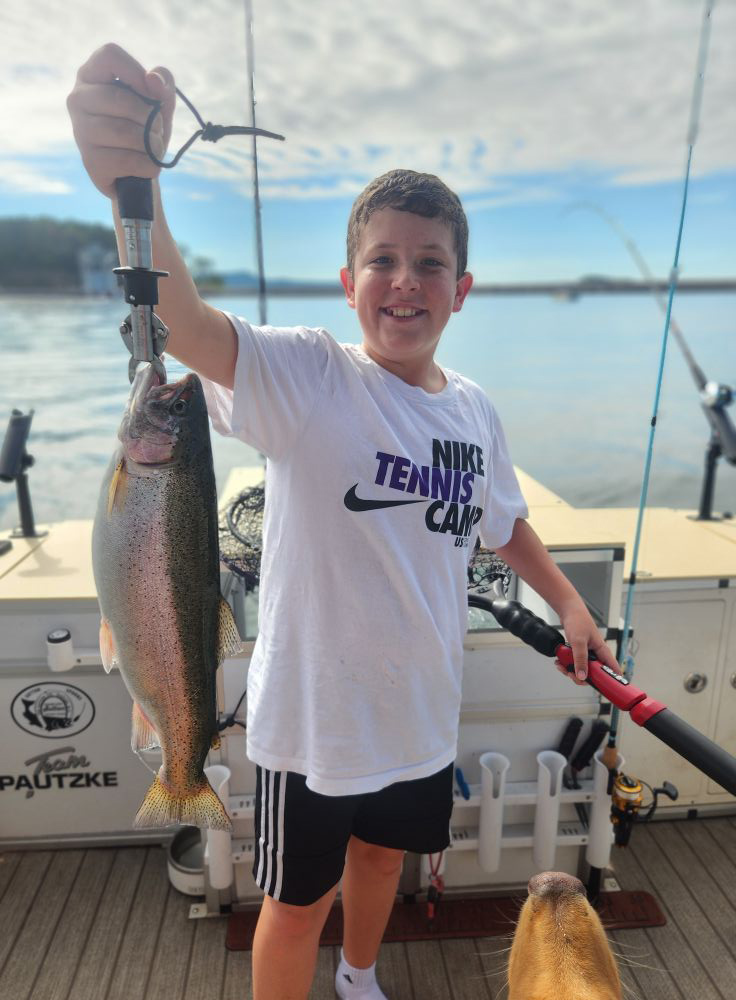
FIND THE DEPTH
Jones said trout will often chase bait near the surface at first light, but this activity lasts only briefly. At daylight, the fish typically return to deeper, cooler water, where they resume a more consistent feeding pattern suited to trolling methods.
Precision is essential when targeting trout under these conditions, said Jones. Maintaining the correct depth is critical, as even minor deviations can reduce success. Many anglers rely on downriggers or weighted lines to keep their lures within the strike zone. Spoons, plugs, and live bait are commonly used, with adjustments in color and presentation based on light levels and the lake’s exceptional clarity.
The clarity of the lake also plays a significant role in trout behavior. Jones points out that the fish’s visibility requires anglers to adopt a more natural presentation, often using longer leaders and lighter line to avoid detection. This can make fishing more challenging, but also more fun according to many anglers.
Weather patterns in May are generally stable, though occasional rain and shifting conditions can influence trout positioning.These changes may cause fish to move higher or lower in the water column, requiring anglers to adapt throughout the day. Jones said consistent success depends on the ability to adjust to these subtle changes rather than relying on a fixed approach. ■


Be the first to comment