

Keep your eyes peeled
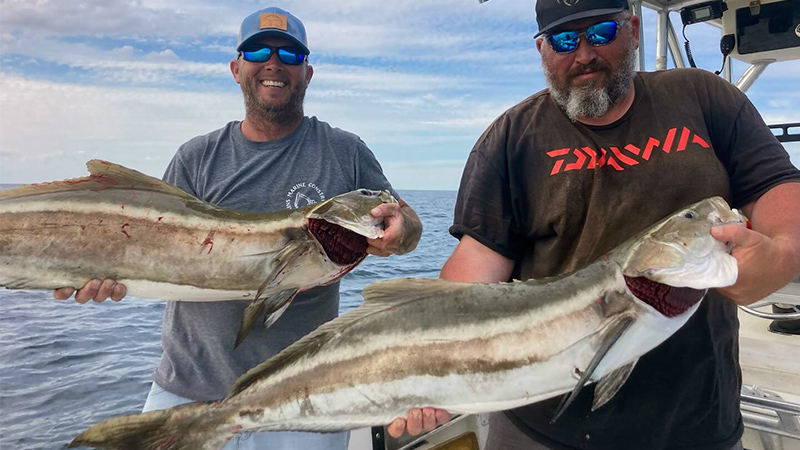
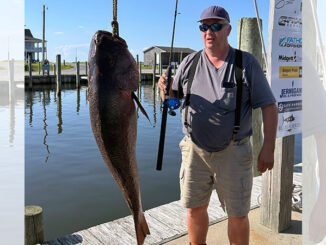
When May arrives in the Wanchese area, so do the cobia, said Capt. Randy Thornton of RipTide Charters (252-331-3248).
“Depending on the water temperature, the cobia show up in May, sometimes in the first few days of the month,” he said.
He usually has a one- or two-day notice before they arrive.
“Usually, they come up through Hatteras first, and we’ll get those reports and know that we have a day or two until we see them. It’s really almost always been that way, but for whatever reason, that wasn’t the case last year,” he said.
But when they do arrive, Thornton said it’s easy to tell.
“You’ll see them up near the surface, and we mainly sight fish for them,” he said.
The presence of big, migrating turtles is another sign that it’s time to cobia fish.
“It’s possible to fish for them on the bottom when you see those big turtles, but aren’t seeing the cobia near the surface,” said Thornton. “But sight fishing is a lot more fun, and you get a lot of shots at a lot of fish. It’s a much more active way of fishing, and there’s just nothing like being able to see them as they make that turn to your bucktail or whatever you’re using, then watching them bite. You really get to see the whole process even before the fight starts, and that really adds another dimension for anglers.”
Watch the wind
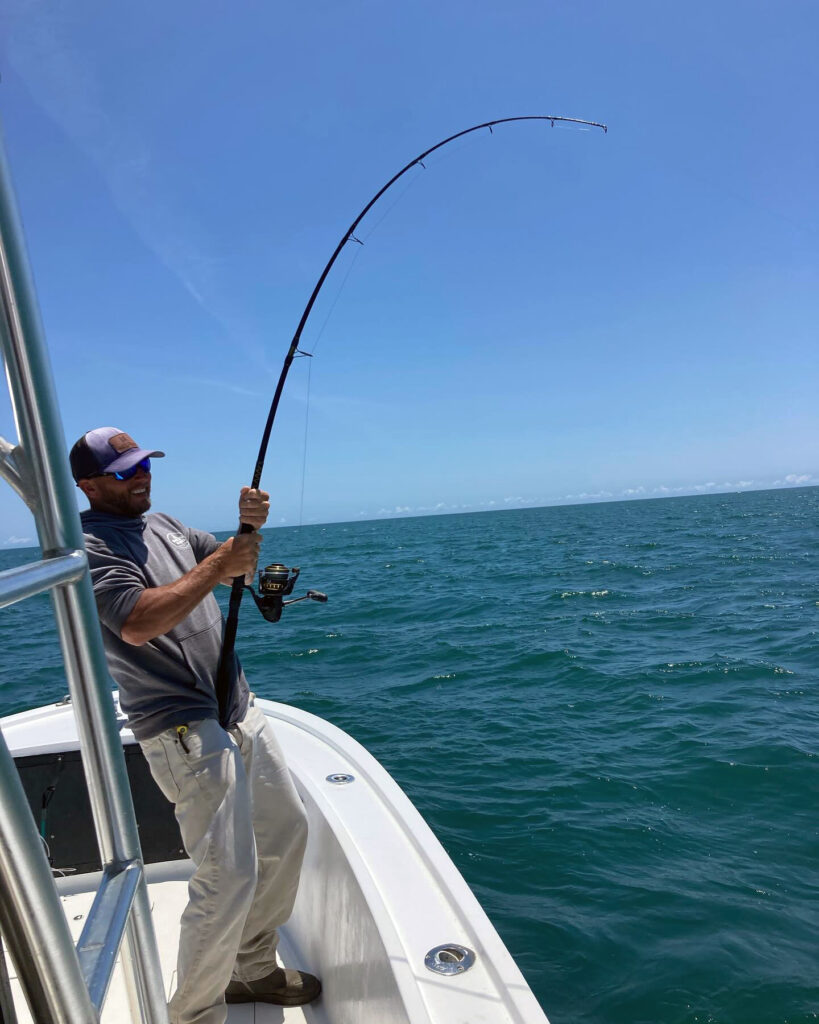
Bucktails are one of the most popular lures for catching these fish while sight fishing, and Thornton said live eels are also top-notch baits.
One deterrent to chasing cobia in that area this month is the wrong wind.
“A northeast wind is not friendly to boaters on Oregon Inlet. So that can really put a damper on the cobia fishing this month,” he said.
Thornton said most of the cobia are in the nearshore waters, where the depths range from 20 to 40 feet deep.
While conventional fishing wisdom says the earlier the better, that’s not the case when sight fishing in these waters.
“The glare is really tough first thing in the morning, and it makes it hard to see the fish in the water. Waiting a little later in the morning is usually the best bet for this type of fishing,” he said.
Take it slow
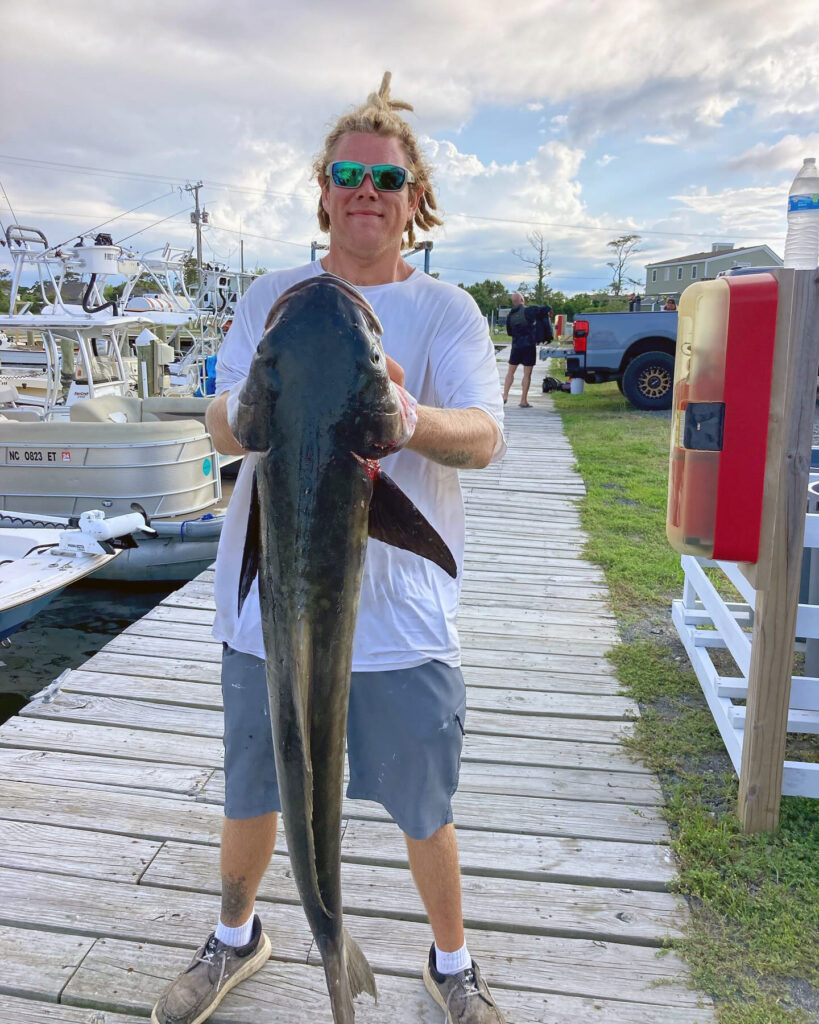
These fish are sometimes in groups of varying sizes, but it’s not uncommon to see them wandering alone.
“Sometimes you’ll see singles, and sometimes you’ll see them in small groups,” Thornton said. “And sometimes you’ll see groups of small fish early in the day, then groups of larger fish later. You really never know from one day to the next, but you’re going to see your share of them on any given day.”
Thornton said it’s important to go slow when looking for cobia.
“It’s easier to see them when you’re going slow,” he said. “But even more importantly, you want to go slow, because if you’re going too fast and you see fish and want to make a cast, you have to slow down, and when you back off the throttle, these fish will sense that, and there is something about that feeling that makes them go down deep, and they’ll disappear quickly.”
Aside from cobia fishing, Thornton also guides for numerous other inshore and nearshore species. To book a trip with RipTide Charters, give them a call at 252-331-3248 or book online at www.riptidechartersnc.com. ■

Be the first to comment