

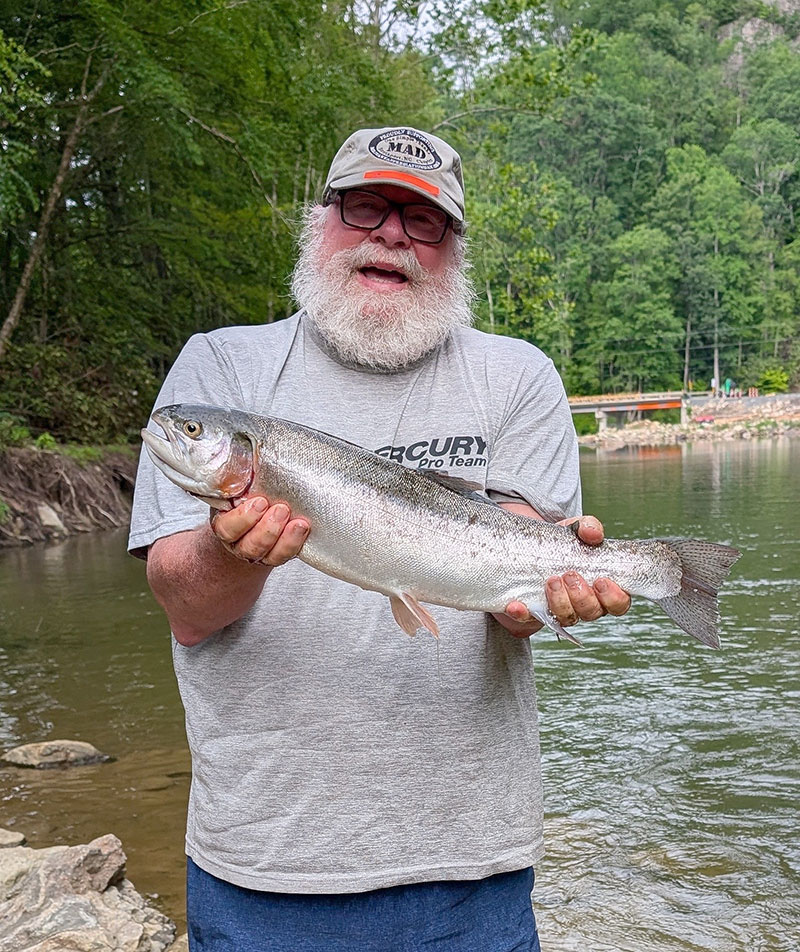
Seasonal change hits the mountains in September
September in the mountains of North Carolina marks the transition from summer’s warm, bustling creeks to the cooler, calmer flows of early fall. Trout anglers find this month particularly rewarding, as dropping water temperatures spark renewed activity in rainbow, brook, and brown trout. The weather is more forgiving, the scenery is painted with the first hints of autumn color, and the fish begin feeding more aggressively in preparation for the colder months ahead.
In early September, water levels can still be a bit low from summer, making stealth a key part of success. Approaching the water quietly, wearing drab or earth-toned clothing, and keeping a low profile all help avoid spooking fish. Many anglers also scale down their tippet size, with 6X or 7X leaders often producing more strikes in clear water. Often, by late September, rainfall becomes more common, increasing flow and giving fly fishers a bit more forgiveness in presentation.
Choose your flies
Fly selection in September leans heavily on matching the smaller aquatic insects still active this time of year. Blue-winged olives are among the most reliable hatches, especially during overcast afternoons. Size 18 to 22 patterns can tempt even the wariest trout. Terrestrials remain in play, with grasshoppers, beetles, and ants still tumbling into the streams from bankside vegetation. Foam-bodied hopper patterns in tan or olive, combined with a trailing nymph, can be deadly in riffled runs. Black ant imitations, often overlooked, can produce surprising results on calm, sunny afternoons.
For subsurface fishing, pheasant tail and hare’s ear nymphs in sizes 14 to 20 remain staples. September trout, especially in the higher elevations, are often quick to take these imitations drifted naturally through deep pools and seams. When waters rise after rain, larger stonefly nymphs or woolly buggers in olive or black can draw aggressive strikes, particularly from brown trout preparing for their fall spawn.
Techniques in September often revolve around versatility. Dry-dropper rigs allow anglers to cover both surface and subsurface feeders in one presentation. In the clear headwaters, a small dry fly paired with a lightly weighted nymph can coax fish from undercut banks and rocky pockets. In larger rivers, swinging soft hackles across current seams can imitate emerging insects and trigger reaction strikes.
Late in the month, as daylight hours shorten and water cools further, streamers in natural colors, like sculpin or small rainbow trout patterns, become more effective. Stripping these flies along the edges of pools or across deep runs can entice aggressive territorial strikes from larger fish.

Be the first to comment