

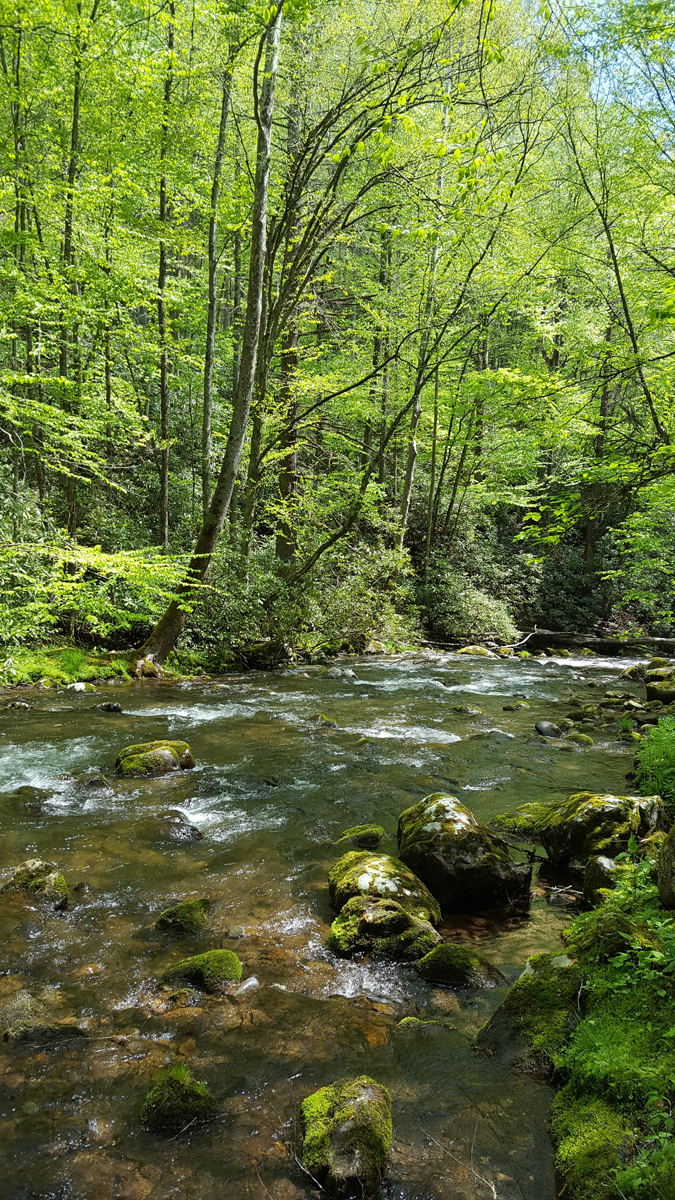
Oconaluftee is one of North Carolina’s top trout streams
The Oconaluftee River is widely considered one of the top trout streams in North Carolina’s mountains, offering a mix of wild rainbow trout and a smaller population of brown trout in its upper reaches and large stocked trout in the lower section. It is also a rarity in that is has three distinct fisheries.
The upper portion in the Great Smoky Mountains National Park is regulated by the U.S. Park Service. The middle portion flows through the Cherokee Indian Reservation and is regulated as Tribal Enterprise Waters. The third section, and the smallest, is undesignated trout waters regulated by N.C. Wildlife Resources.
Formed at the junction of Beech Flats Prong and Kephart Prong in northeastern Swain County, the river flows along US 441 for about 7 miles before leaving the park and entering the Cherokee Indian Reservation. After leaving the reservation, the river flows west to merge with the Tuckasegee River above Bryson City.
I fished all three sections in late April, camping at Smokemont Campground in the park, spending a full day fishing the park waters, a second full day fishing Enterprise Waters, and part of a day fishing the lower section of the river above Bryson City.
Although heavily canopied, the park section is a delight to fly-fish, the stream offering a good mix of pools and rippled runs, most of it easy wading. Pull-offs are numerous along US 441, providing good access to the water. The stream does veer from the road in places, requiring a hike across grassy fields or wooded areas. Starting at the Kephart Prong trailhead, I fished downriver, surprised and pleased that I didn’t encounter another angler the entire day. I fished with two flies: a March Brown until I reached the stream’s confluence with Bradley Fork at Smokemont Campground, switching to an Elk Hair Caddis for the bigger water, hoping to snag a large brown.
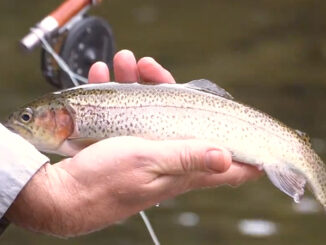
Most of my catches were beautifully colored rainbow trout, small but feisty, the majority running 6 to 7 inches. In only a couple of places did I fail to get a strike. My only disappointment was not catching a large brown, having been told that the lower section holds some large ones, but the one and only brown I caught measured 9 inches. I didn’t keep a single trout the first day, choosing instead to drive the four miles into Cherokee to eat at Paul’s, an Indian-owned restaurant that specializes in fare such fare as fresh trout, bison burgers and Indian tacos.
Day two, I drove to Cherokee, purchased a $10 daily tribal permit and fished the lower section of the river below the bridge on US 19. Expecting to catch some large fish, I used a brown Woolly Bugger, alternating with another streamer called a Sculpzilla and switching to a Squirmy Wormy when I wore out both streamers. The river obviously had been recently stocked, because the trout were hitting. I caught at least 20 trout, all rainbows except for two brook trout, the majority running 10 to 12 inches, releasing all but the two brook trout, which I kept for a non-guilt trout dinner.
Before moving to the last section of Enterprise Waters at Birdtown on US 19, I took a break and visited the recently opened Fly Fishing Museum of the Southern Appalachians in downtown Cherokee, a stop I strongly recommend for anyone interested in the history of trout fishing in the western North Carolina mountains.
The lower section of Enterprise Waters is not as accessible as the upper portion. Access areas are limited, and wading can be difficult in places because the stream is much larger and deeper than the upper portion of the river. I caught fewer fish in this section, but all of them were at least 12 inches.
That evening, back at my campsite, I enjoyed a fine trout dinner, accompanied by fried potatoes and fresh ramps I found at a roadside produce stand, and I spent a pleasant evening sitting in front of a campfire. The next morning, I finished fishing the last section of the Oconaluftee all the way to its confluence with the Tuckasegee River without getting a single strike, but I wasn’t disappointed. I had two days of great fishing and excellent weather, and I had the rare experience of fishing a river from its beginning to its end.
Only a North Carolina or Tennessee state fishing license is required for trout fishing in the Great Smoky Mountains National Park. The daily creel limit is five, with a 7-inch size limit. Only artificial flies or lures with a single hook may be used. To fish Cherokee Enterprise Waters, you must purchase a tribal permit. No other license is required, Daily creel limit is 10 trout of any size with no bait or lure restrictions, Fishing undesignated trout waters regulated by the N.C. Wildlife Commission requires a comprehensive trout-fishing license. Daily creel limit is seven fish with no bait or lure restrictions.

Be the first to comment