


Every time a hunter leaves home to go after some venison, freezer, he or she should always expect that the hunt is going to be successful, and they had better be prepared to track their quarry under any conditions.
Most hunters start and end the day under dark skies. While a morning hunt will give hunters plenty of daylight, available light during late-afternoon hunts is limited and often nonexistent. Every hunter needs a good light — a powerful light at that — and it never hurts to have a backup, either.
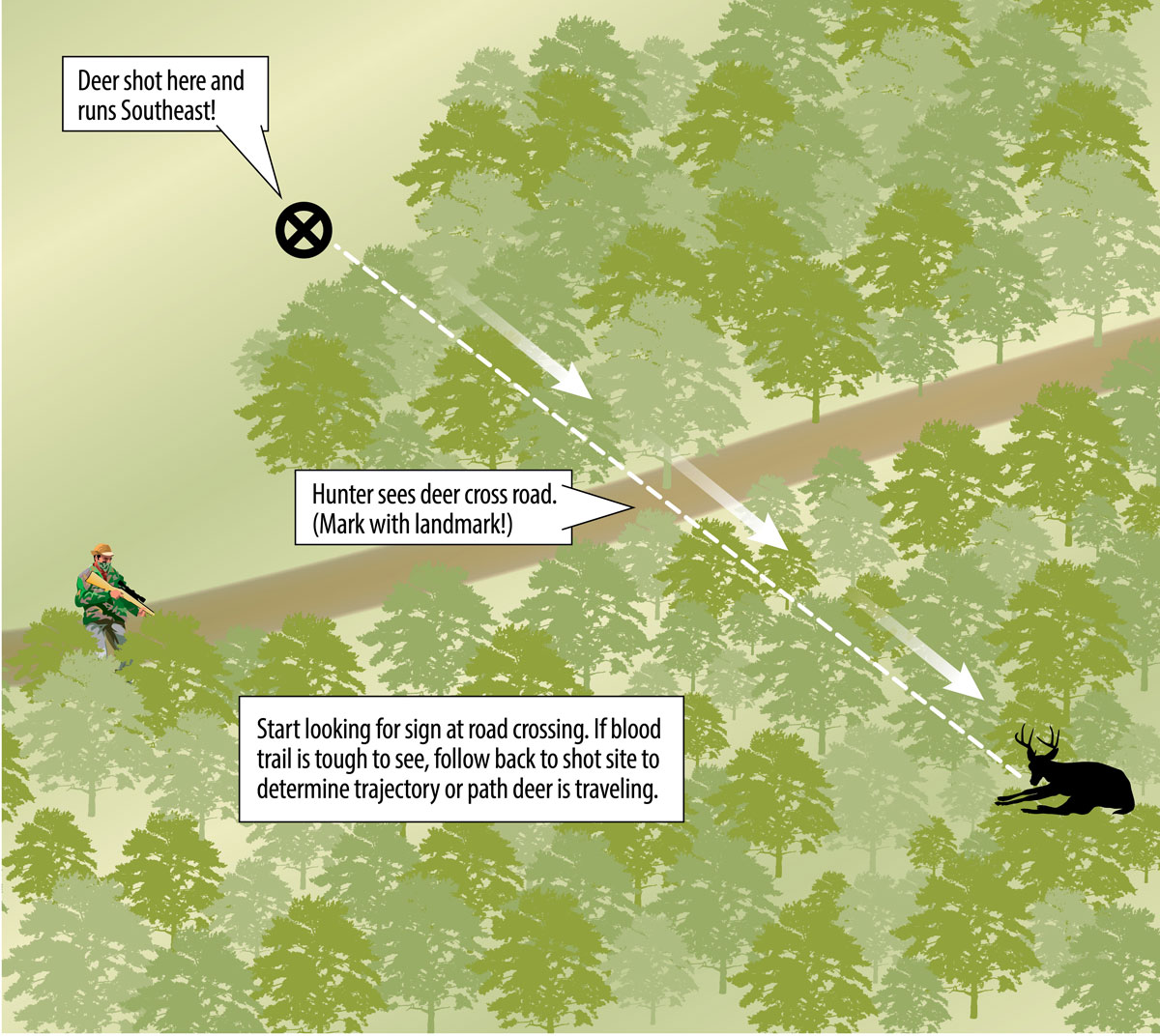
Trailing deer can be easy or difficult, but having flagging ribbon, toilet paper or something to mark the trail will significantly help hunters tell where the deer is likely headed. Knowing where the deer came from will often show hunters where it is going, and the marker material will help illustrate the direction of travel.
While not required, a handheld GPS unit is a good tool to take into the woods. It will help hunters identify where they are, where they have been and what natural terrain is around, plus, it will help them find roads and a way out of the woods if a deer takes them a long way from where they started.
Finally, hunters should never start trailing an animal without a sidearm or a weapon. Sometimes, the shot may not have been completely accurate, and when a wounded deer is found, a reliable sidearm is crucial to ending the trailing saga and securing a trophy buck.

Be the first to comment