

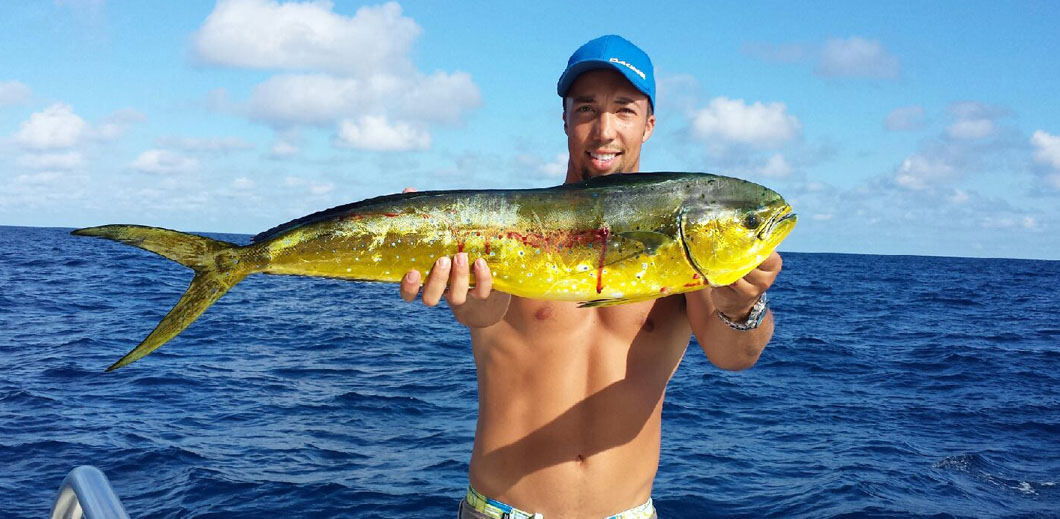
Dolphin, especially at smaller sizes, will in tight schools to protect themselves from larger predators, and fishermen can take advantage of these instinctive traits to put a limit of 10 fish in the boat in relatively little time.
In addition to being a very fast swimmer, dolphin are attracted to floating objects, including weed lines, chunks of floating debris and even boats. A school will readily swim up to boats as a way to avoid predation.
Dolphins’ belief in safety in numbers is one thing Capt. Rich Harris uses against them.
“If you catch one, keep the fish in the water right next to the boat,” said Harris. “Keep the boat in motion and pitch baits to the other fish in the school. You can easily pick them off.”
If not being pressured, a hooked dolphin will swim right next the boat, appearing to other dolphin to be unharmed.
“The pitch baits and artificial baits on standby become crucial at this time; the worst thing you can do is pull the fish out of the water,” he says.
Most of the dolphin in a school will want to stay around the hooked fish, giving anglers an opportunity to feed the hungry in more ways than one.
Live menhaden, mullet or pinfish are deadly, but chunks of dead bait will turn on schooling fish, and Harris advises anglers to keep an artificial lure tied on and ready, especially when natural bait is limiting.
“Keep a smaller inshore rod rigged with a ½-ounce red jighead and an electric chicken curlytail grub like you would use fishing for trout. Dolphin love this joker,” he said.



Be the first to comment