

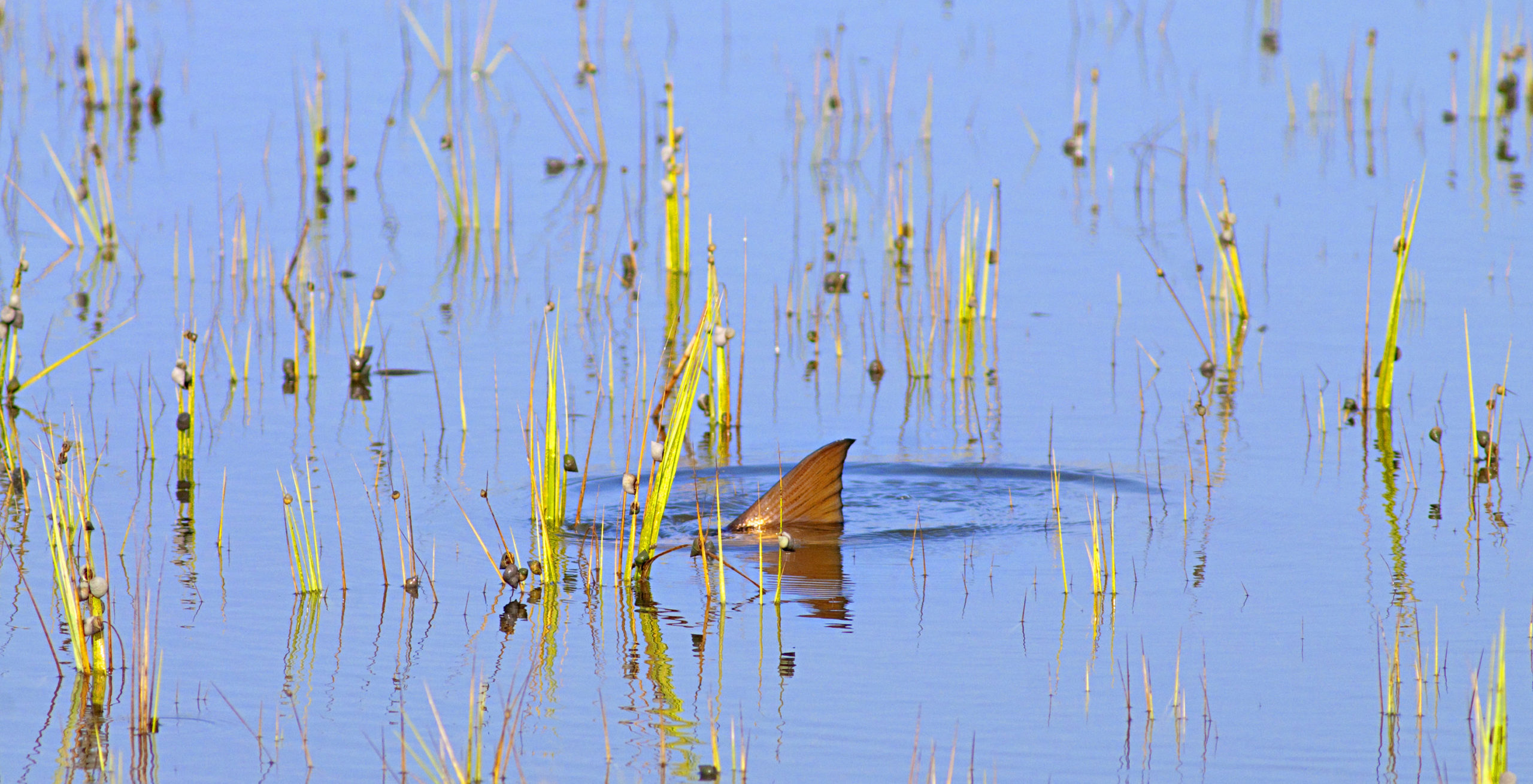
A few days per month, the moon’s gravity bushes a few more inches of water into the estuaries on what are known as flood tides. The water may only rise an extra 12 to 18 inches, but that makes a big difference back in the skinny marsh, and the spot-tail bass take full advantage.
Flood tides are also known as tailing tides because spot-tail bass will venture onto these areas and nosedive into the mud, with their tails flashing out of the water. They are searching for fiddler crabs, and it sometimes takes a little excavation to unearth them.
Mark Dickson of Shallow Minded Fishing Charters in LIttle River spends countless hours scouting the flats, and he said the best places to fish for spot-tails on tailing tides are those with the most available food.
“There are a lot of flats that look good, but if they don’t hold fiddlers, you are wasting your time,” he said. “Knowing where the flats are that hold fiddlers is the name of the game.”
Generally, tailing flats have short grass and a firm bottom. They will be covered by 12 to 18 inches of water at the top of a flood tide. The height of the tide can be predicted, but the wind can have a dramatic affect ,too.
“The wind will push or hinder the amount of water that makes it inland on a flood tide. Three or four inches of extra water can make all the difference in the world,” Dickson said.
Greg Holmes of Fish Skinny Charters takes advantage of every flood tide during the spring, summer and fall to catch nose-diving spot-tails. He thinks the best time to hit those flats is right when the water first arrives.
“They bite better on the rise than on the fall. They will rush the flat as soon as they can get up there, and they will take about anything that looks appetizing,” he said. “If you can get a bait or lure in there line of sight, they will usually eat it.”
While an entire flat will generally flood over the course of a flood tide, the water will enter and leave the flats in the same places — critical spots to locate.
“It is good to know where the on- and off-ramps are, because the fish sure know where they are located,” he said.
Right before and during the flood, spot-tails will travel up these routes, and anglers need to make sure they don’t spook the fish and keep them from entering. And it is always good to know how to get back off the flat to make sure you don’t get stranded.
Even though spot-tails are typically searching for fiddler crabs, any bait that shows up is fair game and will not be rejected. Holmes and Dickson will use weedless soft plastics on the flats.
Targeting tailing fish is 100-percent sight-fishing. Accurate casting is required; cast close enough to the forward direction the fish is traveling without hitting the fish in the head. If a cast goes awry, a quick second cast is possible.

Be the first to comment